
Abalone breeding method capable of saving energy and reducing emissions
An energy-saving and emission-reducing technology for abalone, which is applied in the direction of microorganism-based methods, chemical instruments and methods, biochemical equipment and methods, etc., to achieve the effects of improving the physique of abalone seedlings, good safety, and improving the survival rate
Patent Information
- Authority / Receiving Office
- CN · China
- Patent Type
- Applications(China)
- Current Assignee / Owner
- Publication Date
- 2011-04-06
- Estimated Expiration
- Not applicable · inactive patent
Smart Images
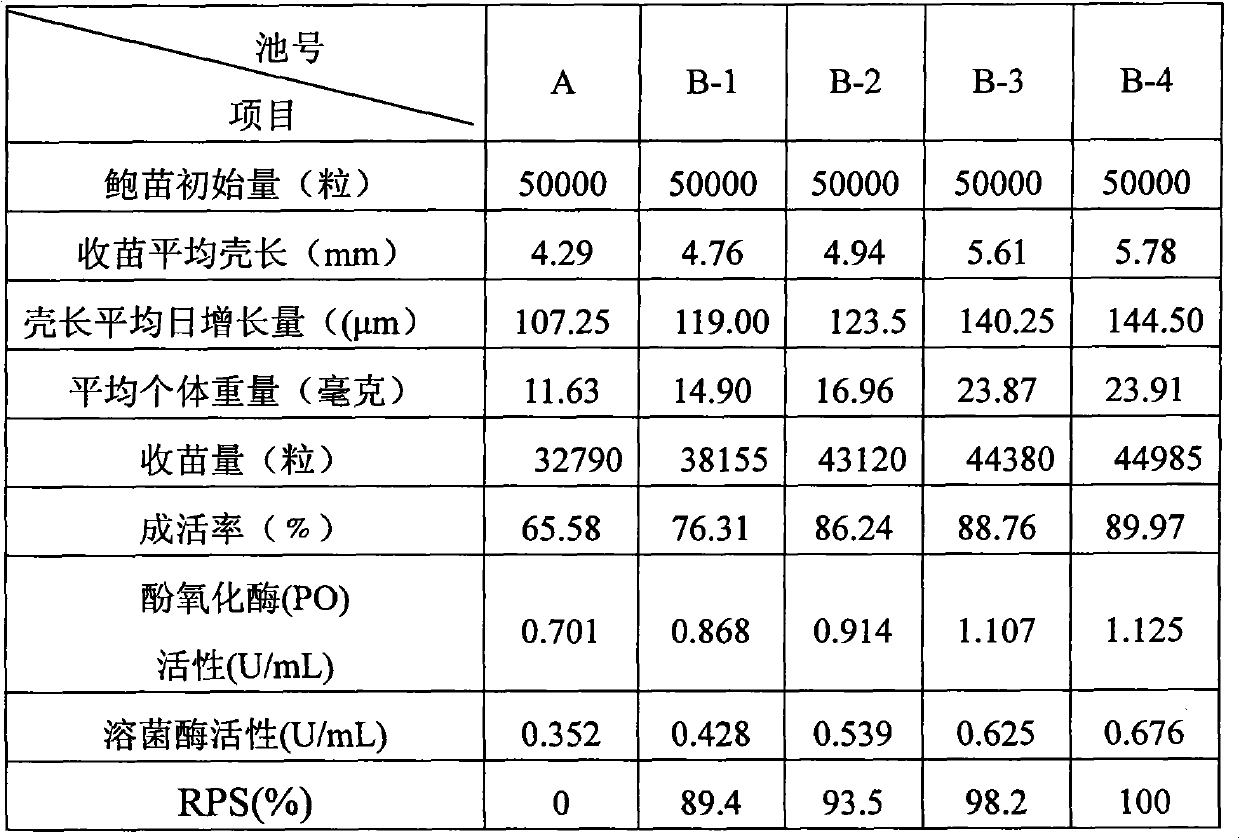
Figure 1 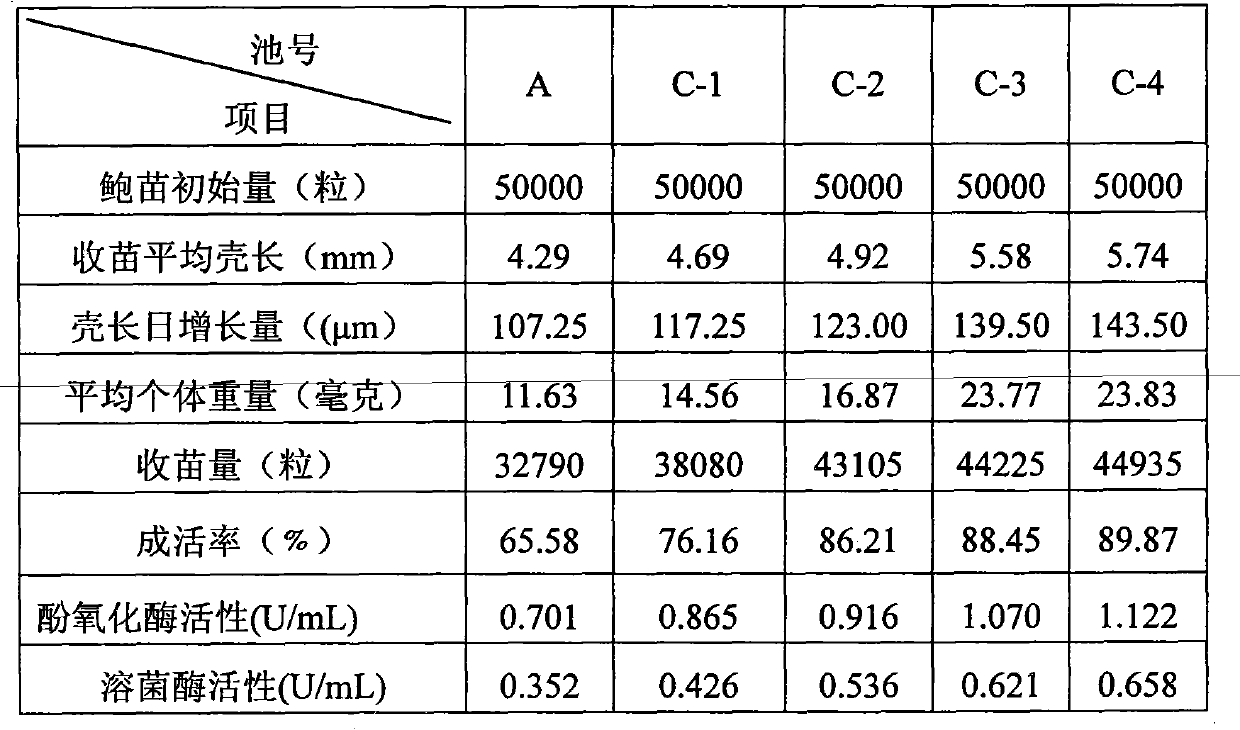
Figure 2 
Figure 3
Abstract
Description
technical field
[0001] The invention relates to a method for raising seedlings of aquaculture shellfish, in particular to a method for promoting rapid growth of abalone seedlings, enhancing immunity and improving the survival rate of abalone seedlings. Background technique
[0002] Abalone is a kind of marine shellfish, also known as "Shicai Ming", and its scientific name is "Haliotis". The meat of abalone is delicious and has high nutritional value. The curative effect of abalone meat is good for intestines, nourishing yin and strengthening kidney. The shell has the function of improving eyesight and lowering blood pressure. The abalone extracted from abalone has obvious effect on inhibiting tumors. Therefore, abalone is not only a nutritious food but also a rare marine drug. Recently, Australia and other countries have successfully cultivated pearls in abalone, which has further improved the economic benefits of the abalone industry. my country is one of the first countri...
Examples
Embodiment 1
[0036] Preparation of Bdellovibrio Bdeloidoplasts
[0037] The Bdellovibrio sp. (Bdellovibrio sp.) BDFM05 can form a transparent circular phage plaque with a diameter of 2-3 mm when cultured at 28° C. for three days with a double-layer plate method. The Bdellovibrio sp. Fermentation method of hiruplasma Fermentation: Inoculate 0.5mL10 in conical flask with 100mL nutrient broth (peptone 10g, beef extract powder 3g, sodium chloride 5g, pH 7.4±0.2) 7 cfu / mL Vibrio parahaemolyticus (Vibrio parahaemolyticus, purchased from American Type Culture Collection, American Type Culture Collection, No.: ATCC 17802), 200rpm, 28 ℃ shaker culture for 18 hours, the culture solution was centrifuged at 4 ℃, 5000rpm for 15min , with 5mL normal saline to suspend and precipitate the bacteria, and then add it to a liquid medium containing 100mL DNB (dilute nutrient broth) (nutrient broth 0.8g, casein acid hydrolyzate 0.5g, yeast extract 0.1g, sea crystal 28g, dissolved in 1000mL distilled water, pH ...
Embodiment 2
[0039] 1. Application of Bdellovibrio brucoplasma in seedling cultivation
[0040] The present invention can be divided into two stages altogether. The first stage is algae cultivation. In the nursery pond, sand-filtered and sediment-treated seawater is injected and aerated. The attachment base is polyethylene corrugated board. The algae cultivation time is 40 days. No Bdellovibrio biliplasma is added in this stage. The second stage is seedling cultivation, and the second stage is the seedling raising stage. The content of the present invention is mainly carried out at this stage. After cultivating algae for 40 days, begin to cloth abalone fertilized eggs in the seedling pond, and the seedling time is 40 days. The experimental group of this stage Add Bdellovibrio bdelloplasts immediately after each water change. The Bdellovibrio bdelloplasts obtained in Example 1 were injected with different concentrations of Bdellovibrio bdelloplasts into the cultured water body at different...