
A kind of acetate fluorescent probe compound and application thereof
A fluorescent probe, acetate technology, used in fluorescence/phosphorescence, luminescent materials, organic chemistry, etc., can solve the problems of indistinguishability of the three ions, less identification research, etc., and achieve excellent luminescence performance and molecular planarity. Good, the effect of eliminating systematic errors
Patent Information
- Authority / Receiving Office
- CN · China
- Patent Type
- Patents(China)
- Current Assignee / Owner
- Publication Date
- 2016-03-30
Smart Images
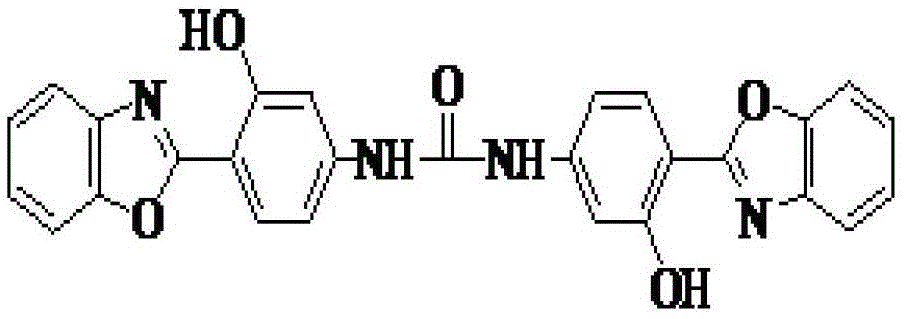
Figure 1 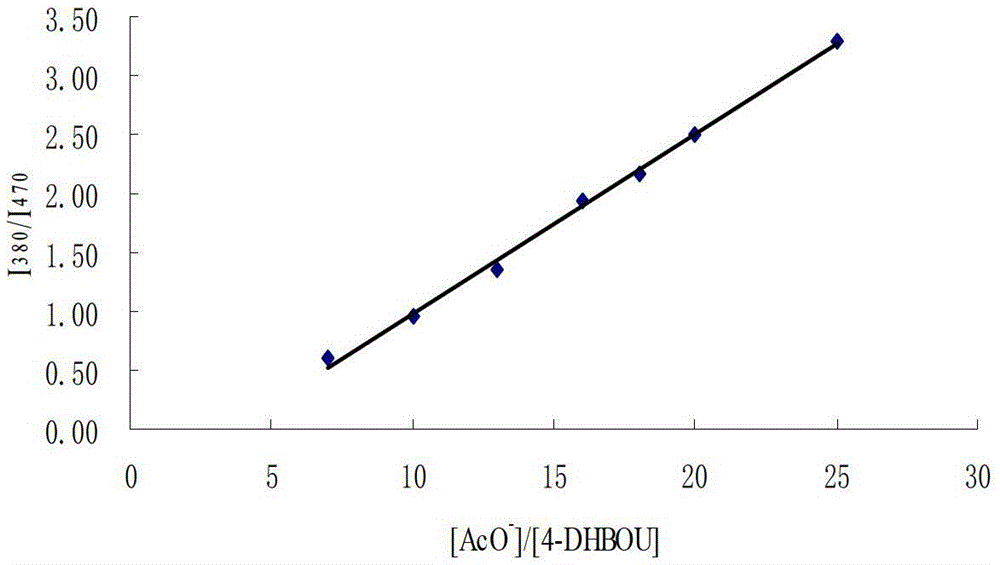
Figure 2 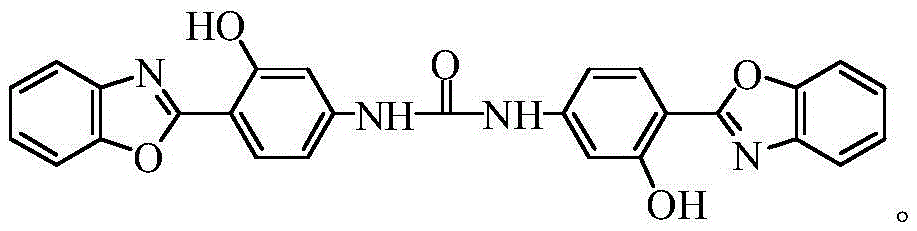
Figure 3
Abstract
Description
technical field
[0001] The invention belongs to the field of anionic fluorescent probe compounds, in particular to a method for acetate (AcO - ) Fluorescent probe compounds and their applications. Background technique
[0002] Anions widely exist in biological systems and play a pivotal role in biology, chemistry, medicine, and environmental science. Therefore, the identification of anions has broad application prospects in disease diagnosis and treatment and environmental modification. For example, AcO in hemodialysate - The determination of concentration is directly related to the dialysis effect and safety of patients with kidney disease (Ke Linnan et al. Journal of Drug Analysis, 2009, 29(10):1696), which can be obtained by AcO - Changes in content monitor the decomposition of organic matter in marine sediments; changes in the content of fluoride ions in the human body can cause dental diseases, osteoporosis, etc.; pollutant anions are closely related to the eutrophica...
Examples
Embodiment 1
[0019] Add 0.226g (1mmol) 2-(4-amino-2-hydroxyphenyl) benzoxazole and 0.097g (0.6mmol) carbonylimidazole to 20mL toluene, stir and reflux for 12h under the condition of drying and nitrogen protection , a large amount of pale yellow solid appeared, and the reaction was stopped. The crude product was obtained by filtration and purified by crystallization with DMSO to obtain 0.212 g of a yellow solid substance with a yield of 89%.
Embodiment 2
[0021] Add 0.226g (1mmol) 2-(4-amino-2-hydroxyphenyl) benzoxazole and 0.065g (0.4mmol) carbonylimidazole to 15mL toluene, stir and reflux for 15h under the condition of drying and nitrogen protection , a large amount of pale yellow solid appeared, and the reaction was stopped. The crude product was obtained by filtration and purified by crystallization with DMSO to obtain 0.162 g of a yellow solid substance with a yield of 85%.
Embodiment 3
[0023] Add 0.226g (1mmol) 2-(4-amino-2-hydroxyphenyl) benzoxazole and 0.129g (0.8mmol) carbonylimidazole to 25mL toluene, stir and reflux for 8h under the condition of drying and nitrogen protection , a large amount of pale yellow solid appeared, and the reaction was stopped. The crude product was obtained by filtration and purified by crystallization with DMSO to obtain 0.193 g of a yellow solid substance with a yield of 81%.