
Quinacridone borate, and preparation method and application thereof
A technology of boronization and reaction, which is applied in the fields of chemical instruments and methods, semiconductor/solid-state device manufacturing, photovoltaic power generation, etc. It can solve the problems of difficult stannization or boronization, etc.
Patent Information
- Authority / Receiving Office
- CN · China
- Patent Type
- Patents(China)
- Current Assignee / Owner
- Publication Date
- 2015-07-01
- Estimated Expiration
- Not applicable · inactive patent
Smart Images
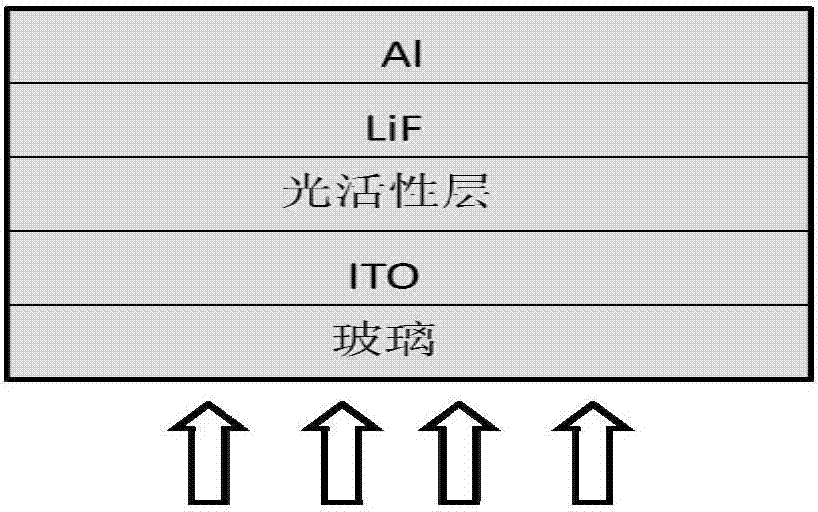
Figure 1 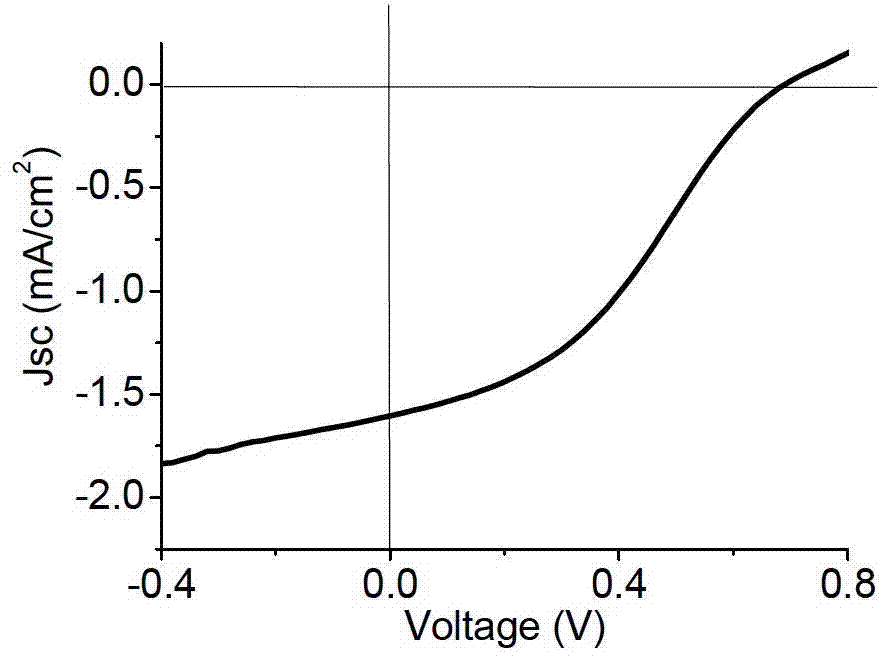
Figure 2 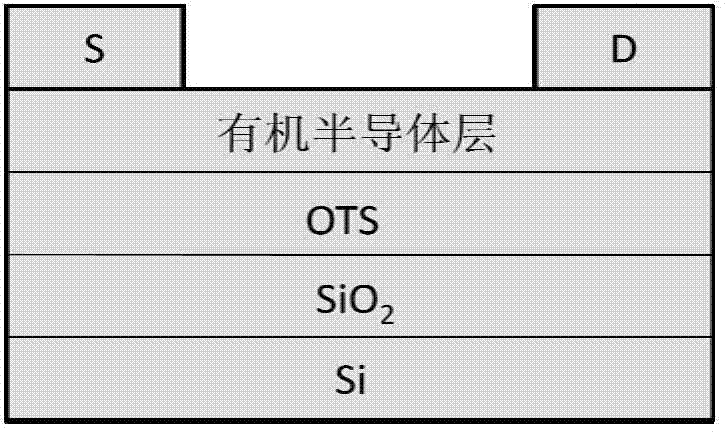
Figure 3
Abstract
Description
technical field
[0001] The invention belongs to the technical field of organic photoelectric materials, and in particular relates to quinacridone borate and its preparation method and application. Background technique
[0002] Compared with traditional inorganic optoelectronic devices, organic optoelectronic devices have the advantages of low cost, light weight, easy processing, and large-area flexible devices, and have become a research hotspot in recent years. The structure of organic molecules determines the performance of optoelectronic devices to a large extent, so it is very important to design and synthesize molecules with excellent structures and properties. Organic molecules used in solar cells must have a wide absorption band to absorb sunlight to the greatest extent; secondly, the molecules must have good planarity and crystallinity to form effective carrier transport channels (Ergang W., Zai F.M., Zhen Z., Koen V., Patrik H., Olle I., Feng L.Z., Mats R.A.J.Am.Ch...
Examples
Embodiment 1
[0080] Embodiment 1: the synthesis of quinacridone borate ester shown in formula I (R 1 for 2-octyl-dodecyl)
[0081] Synthesize compounds A-1 and B-1 first, and the structural formula is as follows:
[0082]
[0083] First, add 3 grams of quinacridone, 4.3 grams of tetrabutylammonium bromide, and 2.2 grams of sodium hydride into a 500 ml two-necked bottle, use toluene as a solvent, protect the temperature with argon, raise the temperature to 120 ° C for 2 hours, and drop 1 -Bromo-2-octyl-dodecane, cooled after reacting overnight, spin-dried toluene, and the solid was chromatographed on a silica gel column, eluted with petroleum ether: dichloromethane = 3: 1 to obtain a yellow-green powder that is A- 1. The yield is 35%. Molecular ion peak: 873.2.
[0084] In a 250 ml two-necked bottle, add 700 mg of A-1, 170 mg of potassium acetate, and 150 ml of acetic acid, heat to 80°C, and inject 0.1 ml of Br 2 After reacting for 4 hours, it was extracted with dichloromethane, chro...
Embodiment 2
[0090] Embodiment 2: the synthesis of quinacridone borate ester shown in formula I (R 1 for decanyl)
[0091] Synthesize compounds A-2 and B-2 first, and the structural formula is as follows:
[0092]
[0093] First, add 1 gram of quinacridone, 2.1 grams of tetrabutylammonium bromide, and 0.8 grams of sodium hydride into a 500 ml two-necked bottle, use toluene as a solvent, protect the temperature with argon, raise the temperature to 120 ° C for 2 hours, and drop 1 -Decane bromide, cooled after reacting overnight, spin-dried toluene, and the solid was subjected to silica gel column chromatography, eluting with petroleum ether: dichloromethane = 2:1 to obtain light green powder A-2 with a yield of 30%. Molecular ion peak: 592.6.
[0094] In a 250 ml two-necked bottle, add 400 mg of A-2, 0.8 mg of potassium acetate, and 100 ml of acetic acid, heat to 80°C, and inject 0.05 ml of Br 2 After reacting for 4 hours, it was extracted with dichloromethane, chromatographed on silic...
Embodiment 3
[0099] Embodiment 3: compound shown in preparation formula II (R 1 is 2-octyl-dodecyl, Ar is preferably Ar-1)
[0100]
[0101] The preparation of compounds D, E, and F is involved in the process of preparing Ar-1, and the structural formula is as follows:
[0102]
[0103] Preparation of compounds D, E, F:
[0104] Under strong basic conditions, cyanothiophene and dimethyl succinate react to obtain compound D;
[0105] Compound D reacts with 1-bromo-2-octyl-dodecane in DMF solution containing weak base and phase transfer catalyst to obtain E. In chloroform, compound E and N-bromosuccinimide are added to obtain F;
[0106] Specific preparation process reference: Macromolecules, 2010, 43, 821.
[0107] The reaction equation for the preparation of small molecules with quinacridone borates is shown below:
[0108]
[0109] The specific preparation process is: under the protection of argon, in a round bottom flask, add 54 mg of quinacridone borate, 100 mg of compound...