
A method for resolution of racemic polyhedral cage compound
A compound and polyhedron technology, applied in the field of chemistry, can solve the problems of time-consuming disassembly process and complexity, and achieve the effect of good disassembly effect, simple operation method and high efficiency
Patent Information
- Authority / Receiving Office
- CN · China
- Patent Type
- Patents(China)
- Current Assignee / Owner
- Publication Date
- 2015-11-11
- Estimated Expiration
- Not applicable · inactive patent
Smart Images
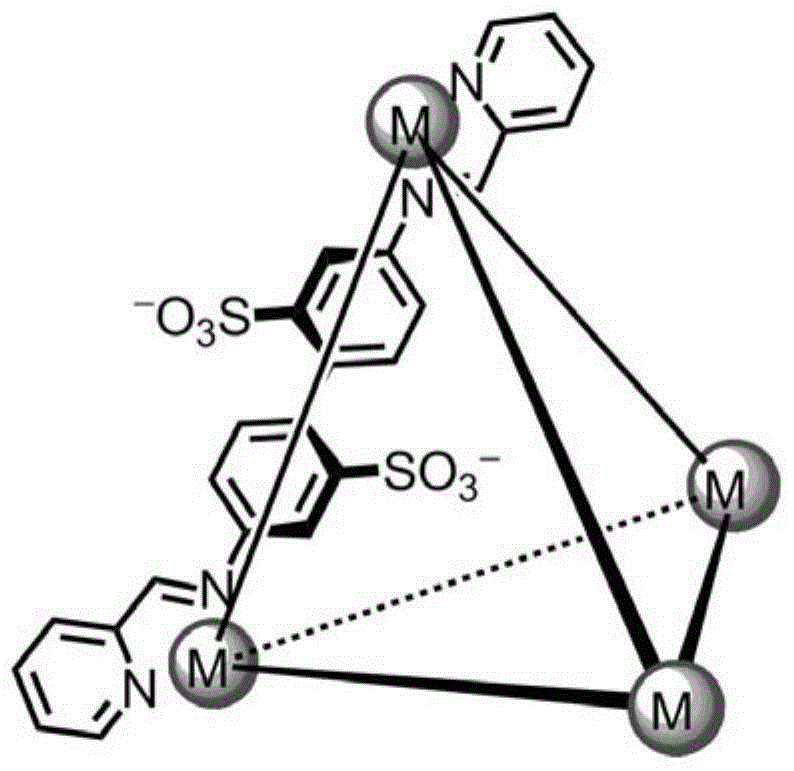
Figure 1 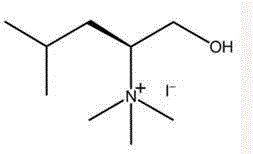
Figure 2 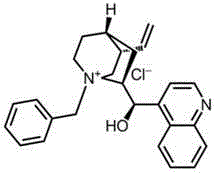
Figure 3
Abstract
Description
technical field
[0001] The invention belongs to the technical field of chemistry, and in particular relates to a method for resolving racemic polyhedral cage compounds. Background technique
[0002] The main methods for the separation of racemates are chemical methods and chiral chromatography. Among them, chiral HPLC technology can be used for direct resolution and is efficient and convenient, but polynuclear metal clathrates usually have a high charge, and it is difficult to use this technology to effectively separate them. Chemical resolution is also a general method, which requires that diastereoisomers (possibly salts, inclusion complexes or covalent compounds) must be easily formed between the resolving agent and the resolved racemate. etc.), the two diastereoisomers should have considerable differences in solubility, and can be easily resolved back to the original components under certain conditions. Successful chemical resolution is a complex chemical and physical ...
Examples
Embodiment 1
[0019] The resolving agent of the present embodiment adopts the chiral quaternary ammonium salt derived from leucinol, and its structural formula is:
[0020]
[0021] (1) 35 mg of resolving agent and 108 mg of racemic polyhedral cage compound are put into a 25 mL flask and mixed, and 50 mL of methanol is added as a solvent, and reacted at 20 to 50° C. for 1 to 24 hours (preferably, the reaction temperature is 50° C., The reaction time is 1 hour).
[0022] (2) Separating the product obtained after the above reaction is completed, the separation method is mainly to use centrifugation (rotating speed: 3500r / min) to separate the precipitation part and the solution part, and the solution part is decompressed (equipped with a water pump) rotary evaporator) to remove the solvent to obtain the insoluble salt and the easily soluble salt respectively, the resulting insoluble salt and the easily soluble salt are vacuum-dried and the resolving agent is removed by a cation exchange res...
Embodiment 2
[0024] The resolving agent of the present embodiment adopts cinchonine chloride, and its structural formula is:
[0025]
[0026] (1) Put 17mg resolving agent and 36mg racemic polyhedron cage compound into 25mL flask and mix, add 50mL methanol as solvent, react at 20~50°C for 1~24 hours (preferably, the reaction temperature is 50°C, The reaction time is 1 hour).
[0027] (2) Separating the product obtained after the above reaction is completed, the separation method is mainly to use centrifugation (rotating speed: 3500r / min) to separate the precipitation part and the solution part, and the solution part is decompressed (equipped with a water pump) rotary evaporator) to remove the solvent to obtain the insoluble salt and the easily soluble salt respectively, the resulting insoluble salt and the easily soluble salt are vacuum-dried and the resolving agent is removed by a cation exchange resin to obtain the racemic polyhedral cage compound A pair of enantiomers.
Embodiment 3
[0029] The resolving agent of the present embodiment adopts chiral three (o-phenanthroline) ruthenium complex cations, and its structural formula is:
[0030]
[0031] (1) Put 9 mg of resolving agent and 36 mg of racemic polyhedral cage compound into a 25 mL flask and mix, add 15 mL of methanol as a solvent, and react at 20 to 50° C. for 1 to 24 hours (preferably, the reaction temperature is 50° C., The reaction time is 1 hour).
[0032] (2) Separating the product obtained after the above reaction is completed, the separation method is mainly to use centrifugation (rotating speed: 3500r / min) to separate the precipitation part and the solution part, and the solution part is decompressed (equipped with a water pump) rotary evaporator) to remove the solvent to obtain the insoluble salt and the easily soluble salt respectively, the resulting insoluble salt and the easily soluble salt are vacuum-dried and the resolving agent is removed by a cation exchange resin to obtain the ra...