
a kind of wo 3 Preparation method and application of nanosheet array thin film
A nanosheet array and thin film technology, applied in the field of nanomaterials, can solve the problems of inability to prepare nanostructured thin films, poor reproducibility, disordered thin films, etc., achieve good visible light absorption performance, good effect, and overcome the effects of thin film inhomogeneity
Patent Information
- Authority / Receiving Office
- CN · China
- Patent Type
- Patents(China)
- Current Assignee / Owner
- Publication Date
- 2017-09-15
- Estimated Expiration
- Not applicable · inactive patent
Smart Images
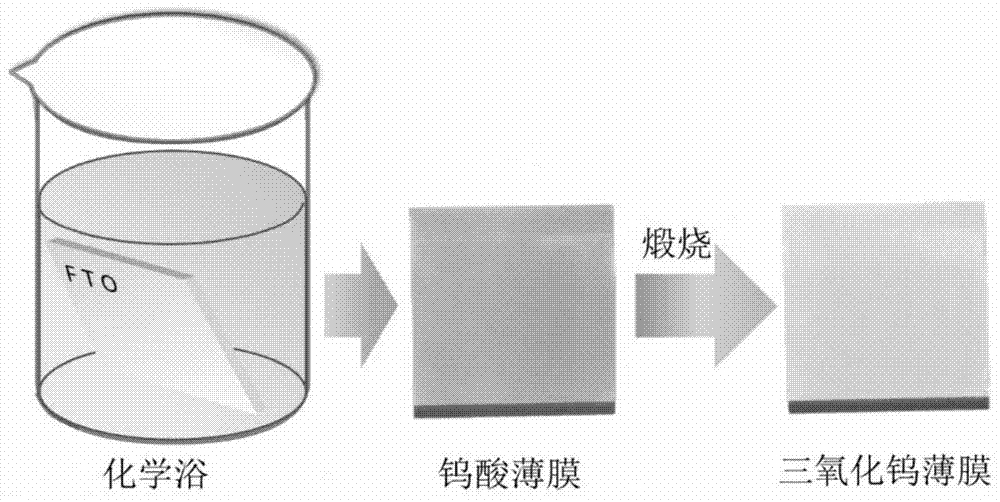
Figure 1 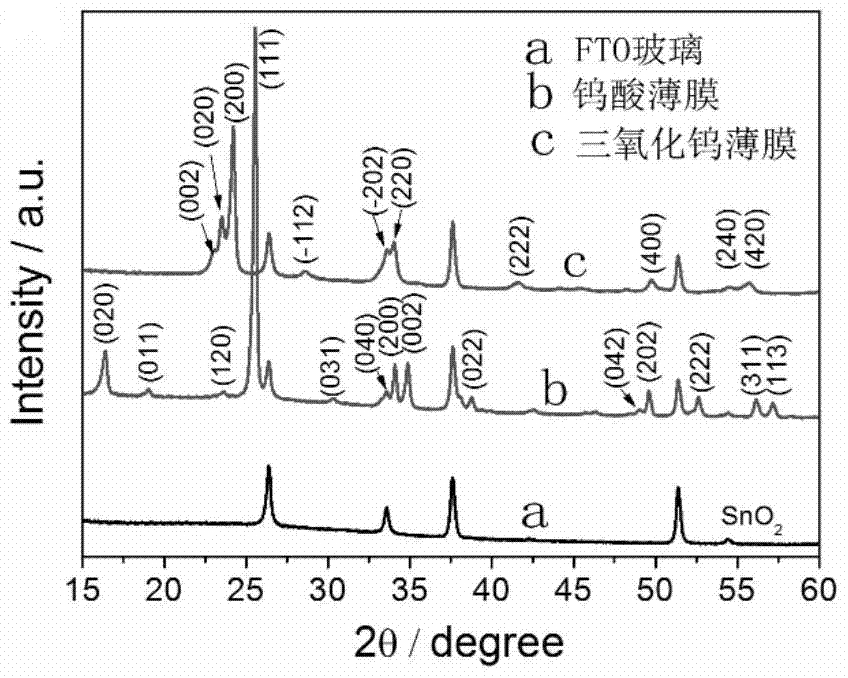
Figure 2 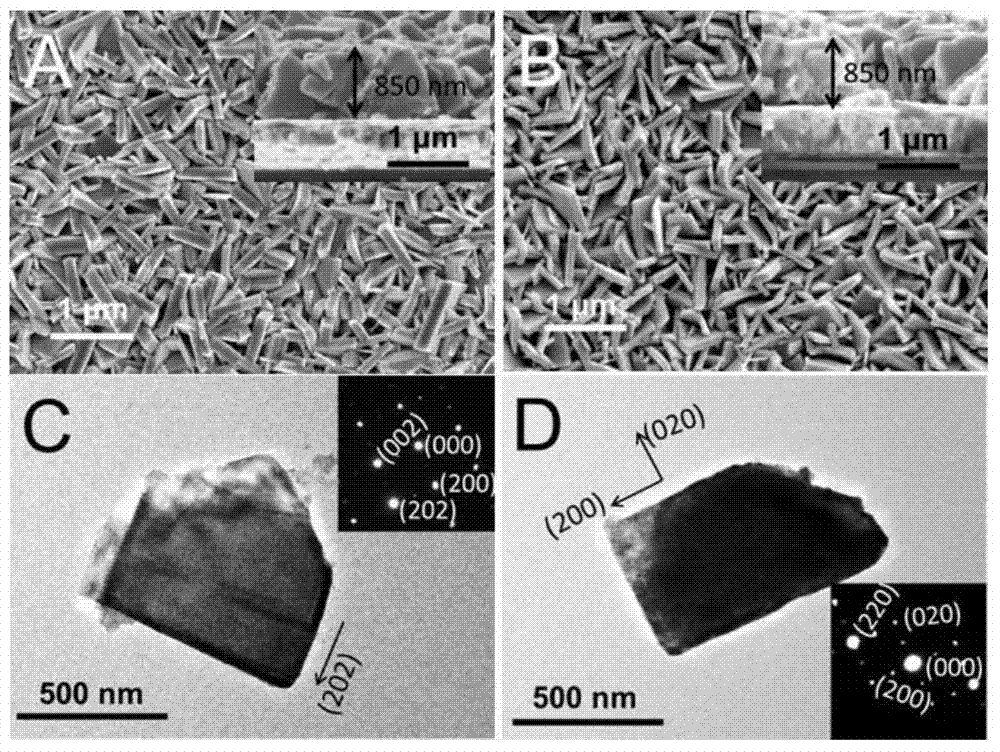
Figure 3
Abstract
Description
technical field
[0001] The invention relates to a photoelectrocatalytic electrode material, in particular to a visible light-responsive WO 3 The invention relates to a preparation process of a nanosheet array thin film photoelectric catalysis electrode, which belongs to the field of nanometer materials. technical background
[0002] Solar photodegradation of organic matter and hydrogen production based on photocatalytic technology is a new technology with promising application prospects. In this technology, the performance of the photocatalytic electrode directly affects the effect of the photocatalytic system. Therefore, the preparation of photocatalytic electrode materials is a research hotspot in the field of photocatalysis.
[0003] At present, it is generally believed that the characteristics that an excellent photocatalytic electrode should have are: good visible light absorption performance, stable in aqueous solution, non-toxic, easy to prepare, and cheap. Among t...
Examples
Embodiment 1
[0035] 1) Add 0.4g Na 2 WO 4 2H 2 O and 0.15g of ammonium oxalate were dissolved in 30mL of deionized water, and 9mL of 37% hydrochloric acid was added to obtain a yellow tungstic acid precipitate. After stirring for 10 minutes, 8mL of 37% H 2 o 2 , the precipitate was dissolved and a clear peroxytungstic acid solution was obtained. After stirring for 10 minutes, 30 mL of ethanol was added and stirred for another 10 minutes. The fluorine-doped tin oxide (FTO) conductive glass was used as the substrate, and the FTO leaned against the wall with the face down. Water bath at 85°C for 200 minutes, and slowly precipitate tungstic acid on the FTO substrate to obtain a uniform tungstic acid film. The above tungstic acid film is rinsed with deionized water and dried at about 50°C for more than 1 hour;
[0036] 2) heat-treat the dry tungstic acid film obtained in step 1) at a temperature of 500°C for 2 hours, and obtain the WO after natural cooling 3 Nanosheet array thin film electr...
Embodiment 2
[0042] 1) Add 0.2g Na 2 WO 4 2H 2 O and 0.06g of ammonium oxalate were dissolved in 30mL of deionized water, and 5mL of 37% hydrochloric acid was added to obtain a yellow tungstic acid precipitate. After stirring for 10 minutes, 5mL of 37% H 2 o 2 , the precipitate was dissolved and a clear peroxytungstic acid solution was obtained. After stirring for 10 minutes, 30 mL of ethanol was added and stirred for another 10 minutes. The fluorine-doped tin oxide (FTO) conductive glass was used as the substrate, and the FTO leaned against the wall with the face down. Water bath at 95°C for 120 minutes, and slowly precipitate tungstic acid on the FTO substrate to obtain a uniform tungstic acid film. The above tungstic acid film is rinsed with deionized water and dried at about 50°C for more than 1 hour;
[0043] 2) The dried tungstic acid film obtained in step 1) was heat-treated at 400°C for 6h, and the WO was obtained after natural cooling. 3 Nanosheet array thin film electrodes. ...
Embodiment 3
[0046] 1) Add 0.6g Na 2 WO 4 2H 2 O and 0.2g of ammonium oxalate were dissolved in 30mL of deionized water, and 15mL of 37% hydrochloric acid was added to obtain a yellow tungstic acid precipitate. After stirring for 10 minutes, 10mL of 37% H 2 o 2 , the precipitate was dissolved and a clear peroxytungstic acid solution was obtained. After stirring for 10 minutes, 30 mL of ethanol was added and stirred for another 10 minutes. The fluorine-doped tin oxide (FTO) conductive glass was used as the substrate, and the FTO leaned against the wall with the face down. Water bath at 75°C for 220 minutes, and slowly precipitate tungstic acid on the FTO substrate to obtain a uniform tungstic acid film. The above tungstic acid film is rinsed with deionized water and dried at about 50°C for more than 1 hour;
[0047] 2) heat-treat the dried tungstic acid film obtained in step 1) at a temperature of 550°C for 1 hour, and obtain the WO after natural cooling 3 Nanosheet array thin film elec...