
Crystalline oxides, preparation thereof and conductive pastes containing the same
A technology of conductive coatings and oxides, applied in conductive coatings, conductive materials dispersed in non-conductive inorganic materials, circuits, etc., can solve the problems of inability to provide pulling force, insufficient density of electrode structure, and inability of electrodes to form ohmic contact, etc.
Patent Information
- Authority / Receiving Office
- CN · China
- Patent Type
- Applications(China)
- Current Assignee / Owner
- Publication Date
- 2017-08-25
Smart Images
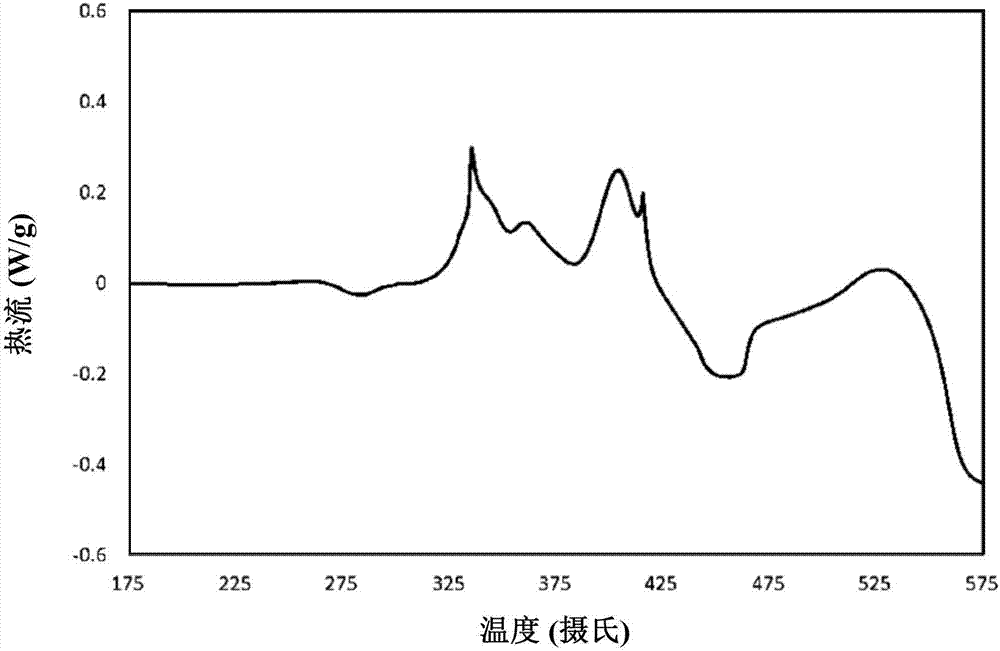
Figure 1 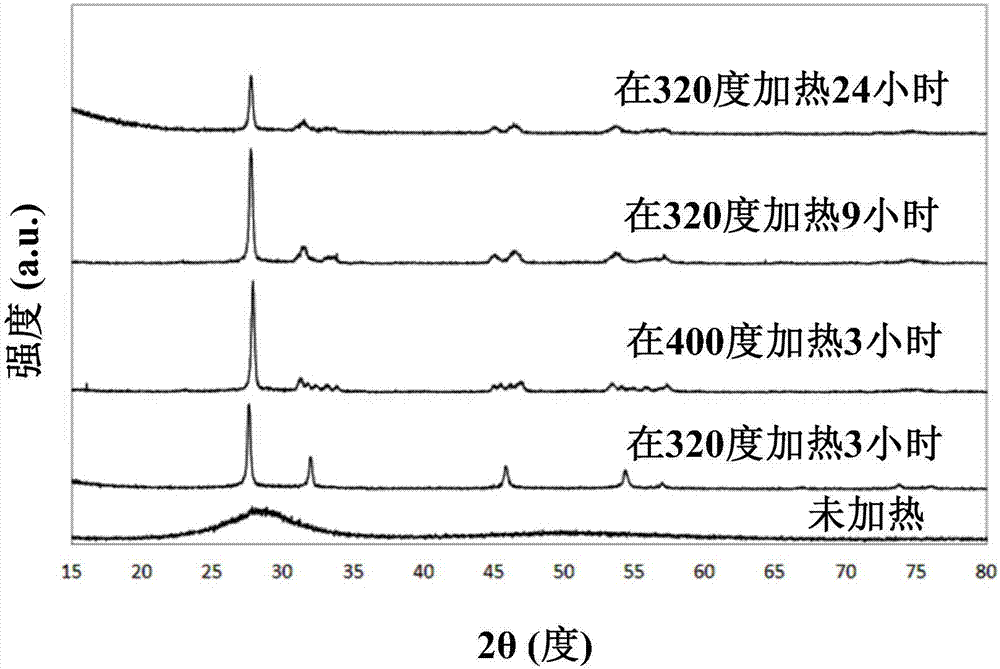
Figure 2 
Figure 3
Abstract
Description
technical field
[0001] The present application belongs to the field of oxide crystals, and in particular, relates to a novel oxide crystal, a preparation method of the oxide crystal, a conductive coating containing the oxide crystal, and an object including a substrate and the conductive coating applied to the aforementioned substrate. Background technique
[0002] Conductive paints for solar cells generally contain conductive metals or their derivatives such as silver particles, glass powders such as glass containing lead oxide, and organic vehicles. Glass powders typically used for conductive paints are amorphous.
[0003] Glass powder is used as an inorganic binder phase in conductive coatings. If the content of glass powder is too small, the electrode structure formed after firing will not be dense enough, and the physical properties will be reduced, so that it will not be able to provide proper pulling force, which will make the reliability of solar cells and Reduced du...
Examples
preparation example Construction
[0047] Another aspect of the present application is to provide a method for preparing oxide crystals, especially the preparation of lead-tellurium-bismuth-oxide crystals. In one embodiment, the application provides a lead-tellurium-bismuth-oxide crystal preparation method comprising the following steps: (i) providing PbO-TeO 2 -Bi 2 o 3 For the substrate glass, (ii) subjecting the glass to its crystallization temperature for about 3 to 24 hours. In step (i) PbO-TeO 2 -Bi 2 o 3 The glass as the base will be in the form of powder, block, powder, etc., but preferably in the form of glass powder. In (i) step, the glass may be placed at its crystallization temperature for 6, 8, 9, 12, 15, 18, 21 hours. According to this application, for PbO-TeO 2 -Bi 2 o 3 The crystallization temperature of the glass used as the substrate for heat treatment in step (ii) must be higher than its Tg glass transition temperature (glass transition temperature). In one embodiment, for PbO-TeO i...
experiment example
[0073] Preparation of lead-tellurium-bismuth-oxide crystals
[0074] First, the differential scanning calorimetry (DSC) was used to examine the PbO-TeO 2 -BiO 2 is the crystallization temperature of the glass powder of the substrate. To measure the crystallization temperature, 20 mg of PbO-TeO 2 -BiO 2 The glass powder used as the substrate was heated from room temperature to 600°C at a heating rate of 20°C per minute, and then cooled using nitrogen as a carrier gas. The analysis results of the differential calorimetry scanning method are shown in Fig. 1 .
[0075] According to the analysis result of differential calorimetry, PbO-TeO 2 -BiO 2 The glass transition temperature of the glass as the substrate is about 266 degrees Celsius, and at least two crystal phases exist, because there are two crystallization temperature peaks (ie about 320 degrees Celsius and 400 degrees Celsius).
[0076] Then, the PbO-TeO 2 -BiO 2 The glass powder used as the base is heat-treated...