
Detection method of miRNA and lateral flow chromatography test strip for detecting miRNA
A detection method and lateral flow chromatography technology, applied in the field of miRNA detection, can solve the problems of poor protein stability, inability to quantify qualitatively, and inability to achieve high PCR sensitivity, and achieve the effect of overcoming variability
Patent Information
- Authority / Receiving Office
- CN · China
- Patent Type
- Applications(China)
- Current Assignee / Owner
- Publication Date
- 2021-08-06
Smart Images
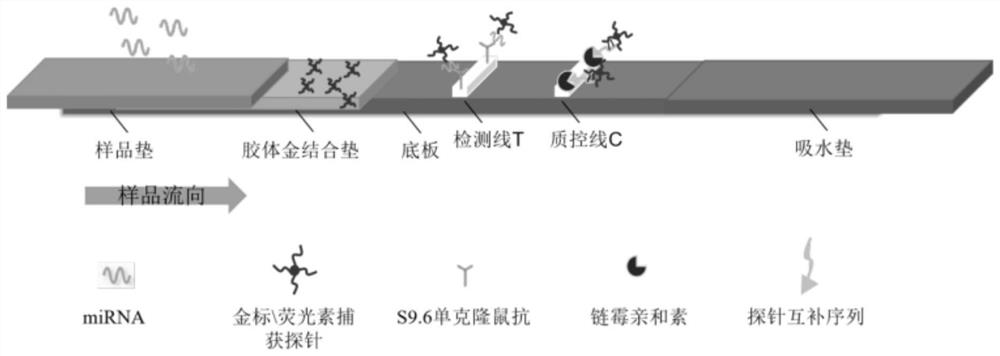
Figure 1 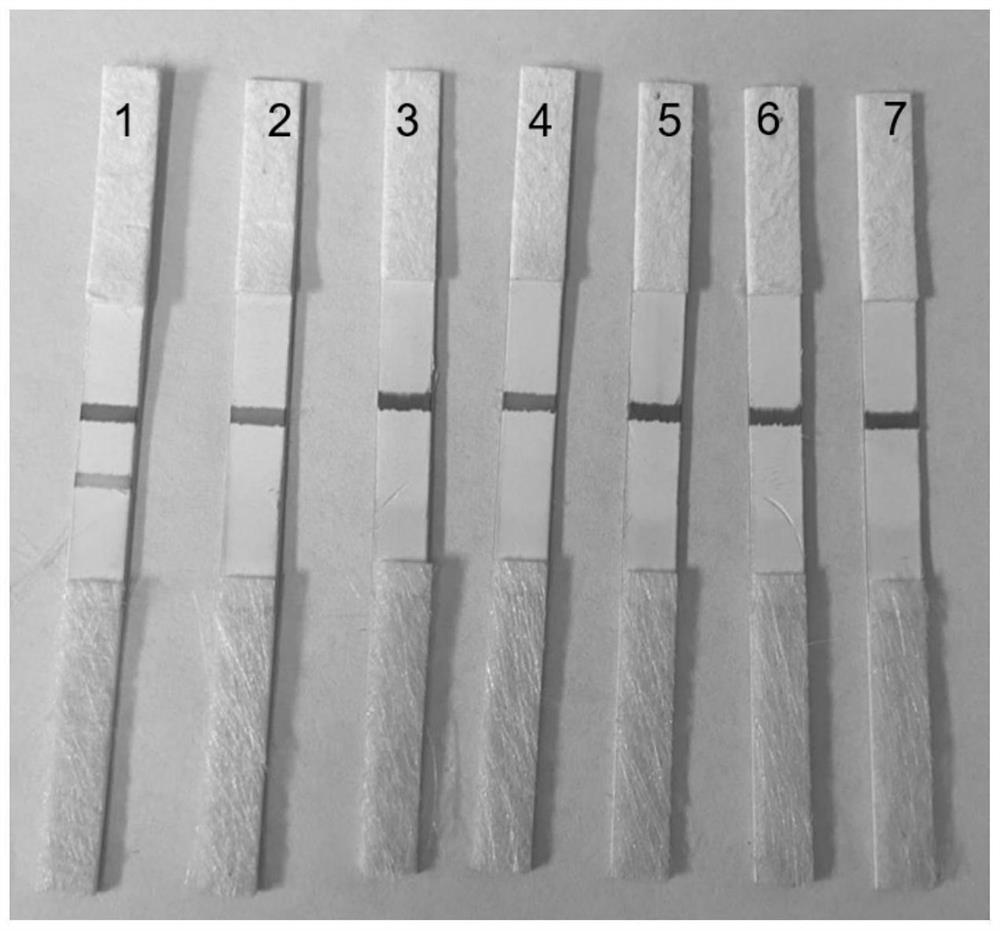
Figure 2 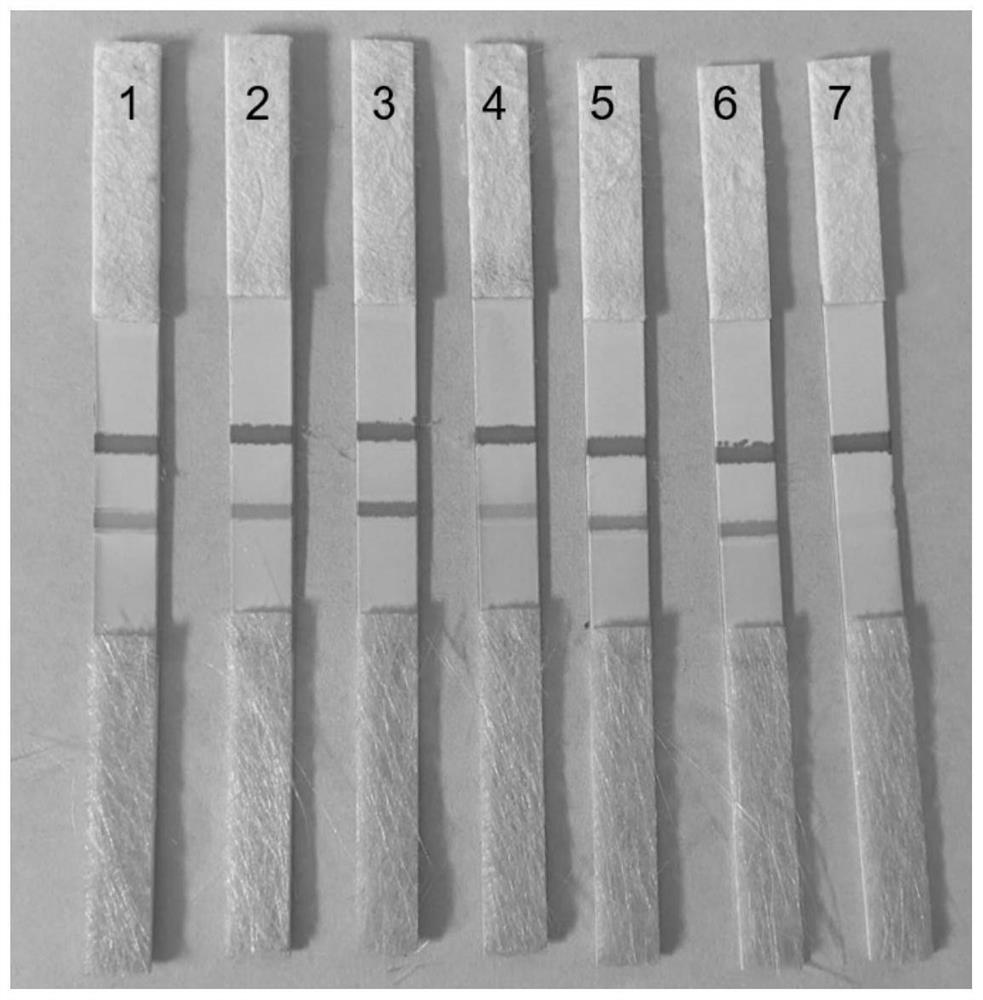
Figure 3
Abstract
Description
technical field
[0001] The invention relates to the technical field of miRNA detection, in particular to a method for detecting miRNA and a lateral flow chromatography test strip for detecting miRNA. Background technique
[0002] Food adulteration has become one of the hot issues in current food safety. In 2013, the "horsemeat scandal" broke out in Europe, and horsemeat was sold as beef, which has aroused widespread global concern about food fraud such as meat adulteration. In my country, the most prominent phenomenon of meat adulteration is the adulteration of mutton kebabs, which is the main means of adulterating mutton kebabs with duck meat as mutton.
[0003] The current adulteration identification of mutton skewers mainly needs to solve two problems: fast and quantitative. At present, the identification methods of meat adulteration mainly include mass spectrometry analysis methods based on species-specific peptides and nucleic acid detection methods based on DNA. The...
Examples
Embodiment 1
[0047] Example 1. High-abundance, stable and species-specific mutton miRNA screening
[0048] Mutton samples of common varieties in my country and roasted mutton products were collected, and the miRNA expression profiles of different samples were studied by using deep Small RNA sequencing technology. Screen for miRNA sequences that are consistently expressed in high abundance in different samples. At the same time, bioinformatics and other means were used to compare and analyze miRNA databases such as miRBase, miRecords, CoGeMiR, and TargetScan, and to confirm species-specificity using software such as Blast, and finally screened out high-abundance, stable and species-specific mutton. Sex miRNA sequence (5'-CACAAGUUAGGGUCUCAGGGA-3').
[0049] 2. S9.6 antibody-DNA-miRNA enzyme-linked immunoassay verification
[0050] Extract miRNAs from different meat and cooked food products, add the designed single-stranded DNA to form a DNA-miRNA hybrid complex, then add the ELISA plate co...
Embodiment 2
[0060] 2.1. Screening of high-abundance, stable and species-specific duck miRNAs
[0061] Duck samples of common species in my country and roasted duck products were collected, and deep Small RNA sequencing technology was used to study the miRNA expression profiles of different samples. Screen for miRNA sequences that are consistently expressed in high abundance in different samples. At the same time, bioinformatics and other means were used to compare and analyze miRNA databases such as miRBase, miRecords, CoGeMiR, and TargetScan, and to confirm species specificity using software such as Blast, and finally screened out duck (5'-UUCUCUAGUGUAGUGGUUAUCACGUUC-3' ) high abundance stability and species-specific miRNA sequences.
[0062] 2.2 S9.6 Antibody-DNA-miRNA ELISA Verification
[0063] Extract miRNAs from different meat and cooked food products, add them to the enzyme-linked plate immobilized with the designed single-stranded DNA to form a DNA-miRNA hybrid complex, add HRP-...
Embodiment 3
[0080] 3.1 Preparation of test strips for simultaneous detection of mutton and duck
[0081] Two different wavelengths of fluorescein Cy5 and Cy3 were labeled at the 5' end of the single-stranded DNA probe capable of recognizing sheep miRNA and duck miRNA, respectively, and biotin was labeled at the 3' end, and then immobilized on the binding pad. The T line of the test strip was fixed with S9.6 antibody, and the C line was fixed with streptavidin. Other preparation methods of test strips are the same as above.
[0082] 3.2. Preparation and detection of mixed meat samples
[0083] The homogenized mutton and duck are mixed according to weight ratios of 10:0, 7:3, 5:5, 3:7 and 0:10 respectively. The miRNA is then extracted and added to the sample pad of the test strip for detection.
[0084] Experimental results:
[0085] 1. Mixed mutton and duck test results
[0086] The results are shown in Table 4. It can be seen from the results that when the sample is pure mutton, there...