
Cell Free Biosynthesis of High-Quality Nucleic Acid and Uses Thereof
a nucleic acid and cell-free technology, applied in the field of high-quality nucleic acid production, to achieve the effects of facilitating rapid uptake, prolonging the lifespan of expression of the cassette once, and stabilizing or minimizing the degradation of the linear in vivo
Patent Information
- Authority / Receiving Office
- US · United States
- Patent Type
- Applications(United States)
- Current Assignee / Owner
- Publication Date
- 2008-12-11
- Estimated Expiration
- Not applicable · inactive patent
Smart Images
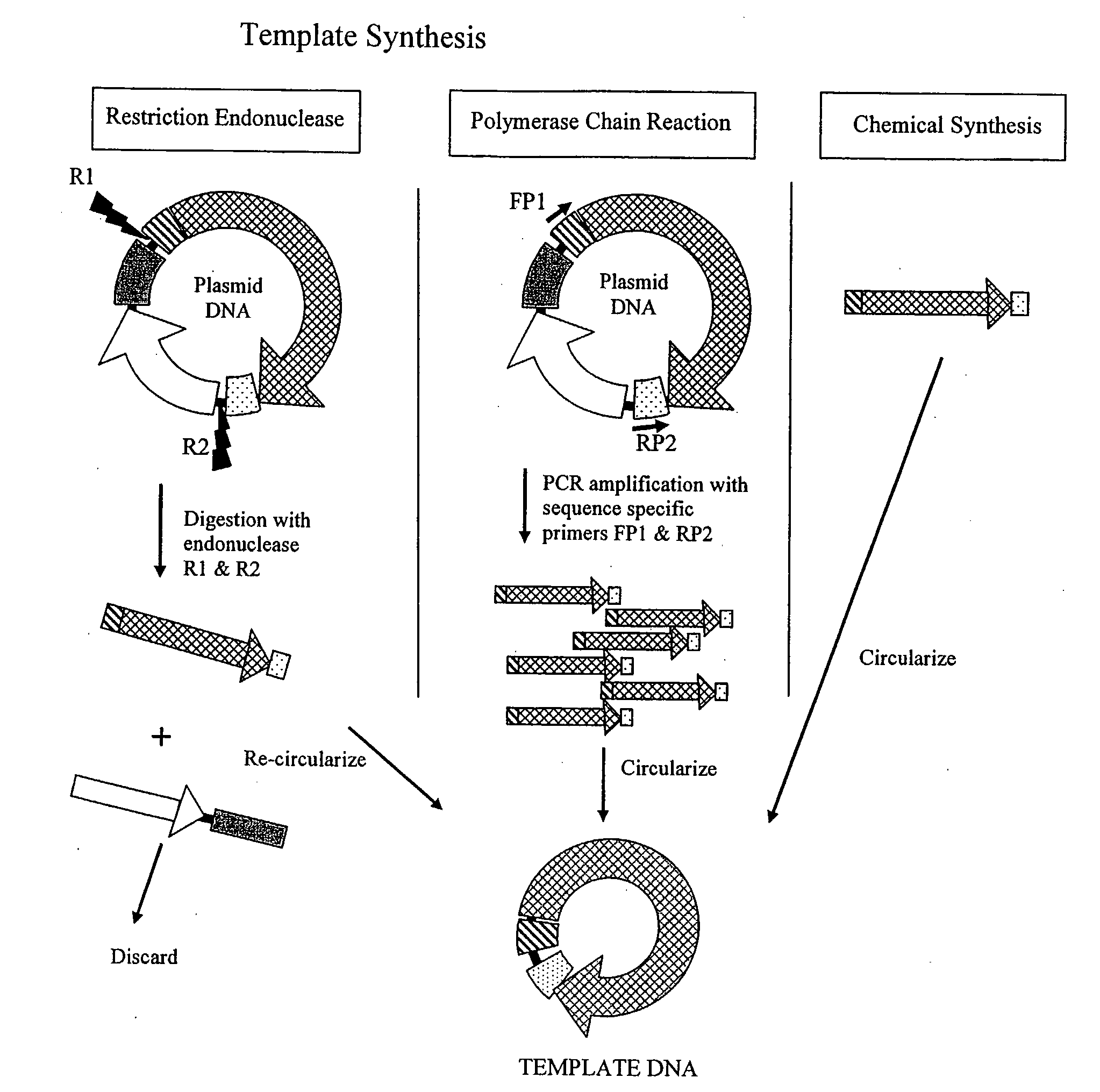
Figure 1 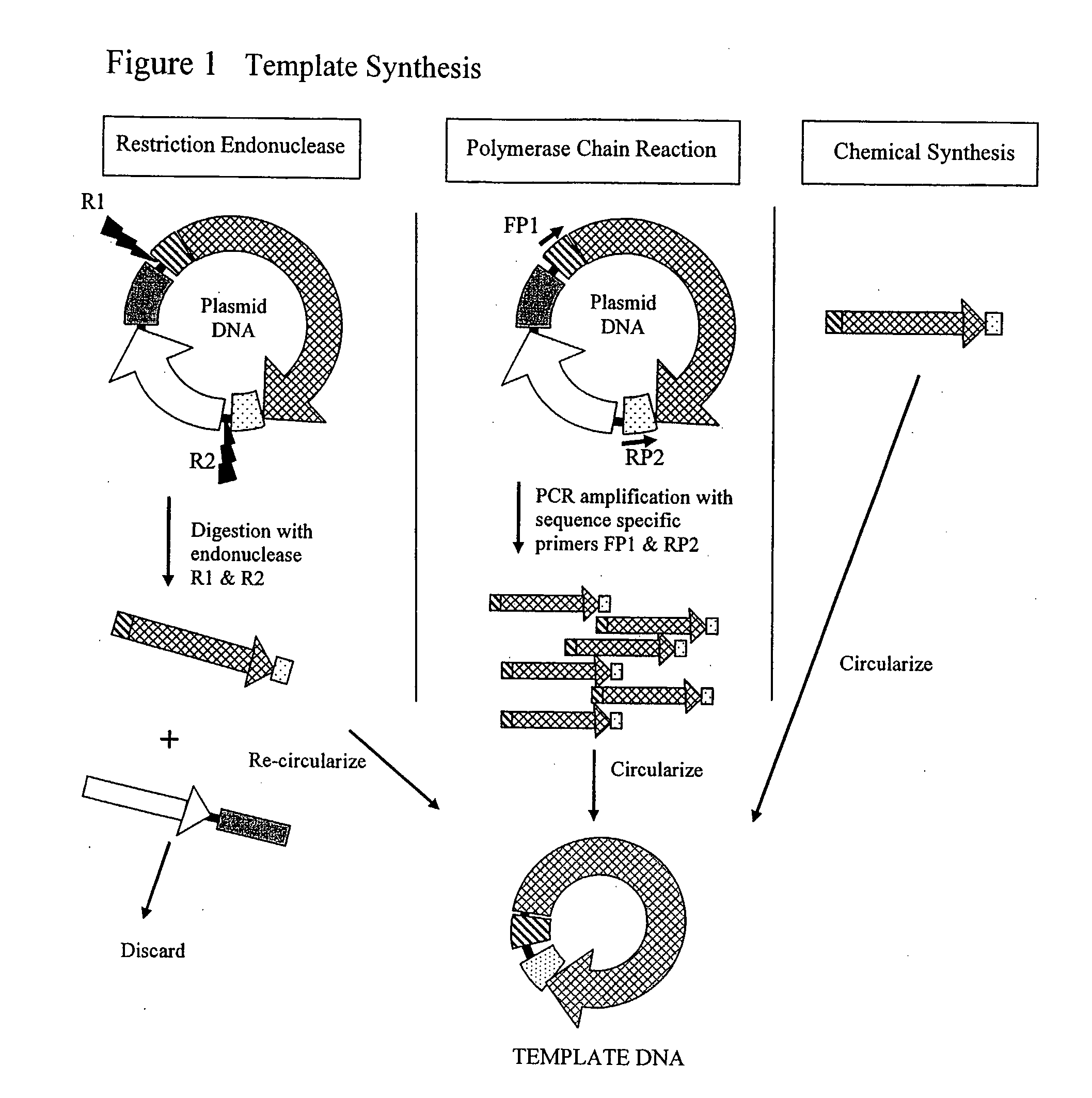
Figure 2 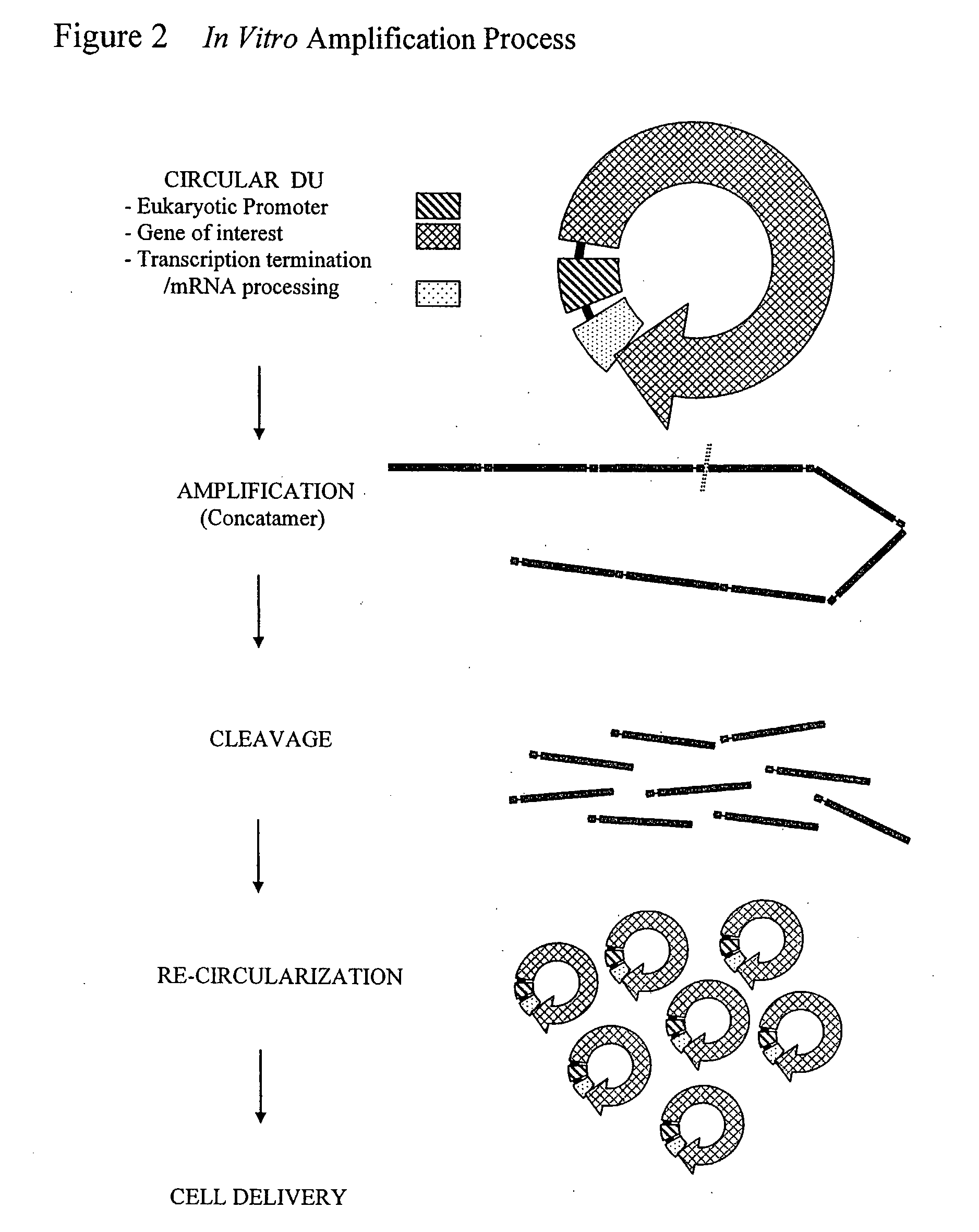
Figure 3
Abstract
Description
FIELD OF THE INVENTION
[0001] The invention relates to a process for making high quality nucleic acids and the use thereof.BACKGROUND OF THE INVENTION
[0002] The advent of DNA-based therapeutics in gene transfer, gene therapy and DNA vaccination has increased the demand for large-scale production of DNA that meets stringent quality criteria in terms of purity, potency, efficacy and safety. Because the efficacy and duration of gene expression in target tissue is relatively low, large amounts of DNA are typically needed for such applications.
[0003] The current state of the art relies upon the growth of plasmids in bacterial culture and expensive purification techniques for the production of therapeutic quality nucleic acids. Typical plasmid purification procedures from bacteria and other cell sources include methods that use organic, mutagenic and toxic compounds including phenol, ethidium bromide and cesium chloride, and enzymes, such as lysozyme, proteinase K, and RNase A. All these can ...
Examples
example 1
Synthesis and Cell Free Amplification of β-Galactosidase (LacZ-DU)
[0091]a) Plasmid-Based Template. pSV-β-Galactosidase vector (Promega Corp. Madison, Wis., USA) was partially digested with EcoR I and Pst I. A fragment of about 4.2 kb containing the CMV promoter, Lac Z ORF and SV40 small T antigen termination sequences (LacZ-DU) was isolated, blunt ended with T4 DNA polymerase and cloned into the Sma I site of pGEM™-7Zf(+) (Promega Corp. Madison, Wis., USA) creating the pGEM-LacZ-DU vector. The LacZ-DU was subsequently excised from pGEM-LacZ-DU with Xba I, gel purified, and circularized using T4 DNA ligase (New England Biolabs, Beverly, Mass., USA) as per manufacturer recommendations.
b) PCR-Based Template. LacZ-DU was amplified from the pVAX™200-GW / lacZ vector (Invitrogen Carlsbad, Calif., USA ) using forward (5′-CGGGATCCGACTCTTCGCGATG TAC-3′) and reverse (5′-CGGGATCCCAGCATGCCTGC-3′) primers containing the BamH I endonuclease recognition site. LacZ-DU was amplified in 50 μl reactions...
example2
Synthesis and Cell Free Amplification of Luciferase (Luc-DU)
[0092]The pGL3 vector (Promega Corp. Madison, Wis., USA) was digested with Sal I and Xho I. A fragment of about 2.17 kb containing the SV40 promoter, Luciferase ORF and SV40 small T antigen termination sequences (Luc-DU) was isolated, purified and re-circularized using T4 DNA ligase (Invitrogen, Carlsbad, Calif., USA) as per manufacturer recommendations.
a) Cell Free Amplification. Reactions containing hexamers 5′-ApApTpTpsGpsC-3′ and 5′-ApGpCpApsApsT-3′ at 400 pmol each and 10 ng / 25 μl reaction of circular Luc-DU were heated to 95° C. for 3 min in 40 mM Tris-HCl pH 8; 10 mM MgCl2 and cooled to room temperature. Phi29 DNA polymerase (10U, New England Biolabs, Beverly, Mass., USA); 1 mM dNTPs (25 / 25 / 25 / 25); 5% glycerol; 0.7 U yeast inorganic pyrophosphatase (Sigma, St. Louis, Mo., USA) and 100 μg / ml BSA were added. Amplification was carried out in 25 μl reaction at 30° C. in 50 mM Tris-HCl pH 7.5; 10 mM MgCl2; 10 mM (NH4)2SO4...
example 3
Expression of Amplified DNA in Human Cells
[0093]Human A549 lung carcinoma cells (ATCC) were cultured in Dulbecco's modified Eagle's medium (DMEM; Invitrogen Carlsbad, Calif., USA) supplemented with 10% heat-inactivated fetal bovine serum (Hyclone, Logan, Utah, USA), 100 U / ml penicillin, 100 μg / ml streptomycin (Invitrogen Carlsbad, Calif., USA) and incubated at 37° C. in 5% CO2 environment.
a) DNA Transfection. The day prior to transfection, A549 cells were seeded in 6-well plates at a density of 1×10⁵ cells / ml. GenePORTER 2 transfection reagent (Gene Therapy System, San Diego, Calif., USA) was used for cell transfection as directed by manufacturer. Briefly, cell free amplified DU or parental plasmid DNA (Promega Corp. Madison, Wis., USA) were mixed with 2 μg of carrier pssXE DNA (Chen and McMicken, Gene Ther 10: 1776-1780, 2003) in 50 μl of DNA diluent B and incubated at room temperature for 5 min. DNA solution was then mixed with 7 μl of GenePORTER 2 reagent pre-diluted in 50 μl of ...