
Polyimide nonwoven fabric and process for production thereof
Patent Information
- Authority / Receiving Office
- US · United States
- Current Assignee / Owner
- Publication Date
- 2010-07-15
- Estimated Expiration
- Not applicable · inactive patent
Smart Images
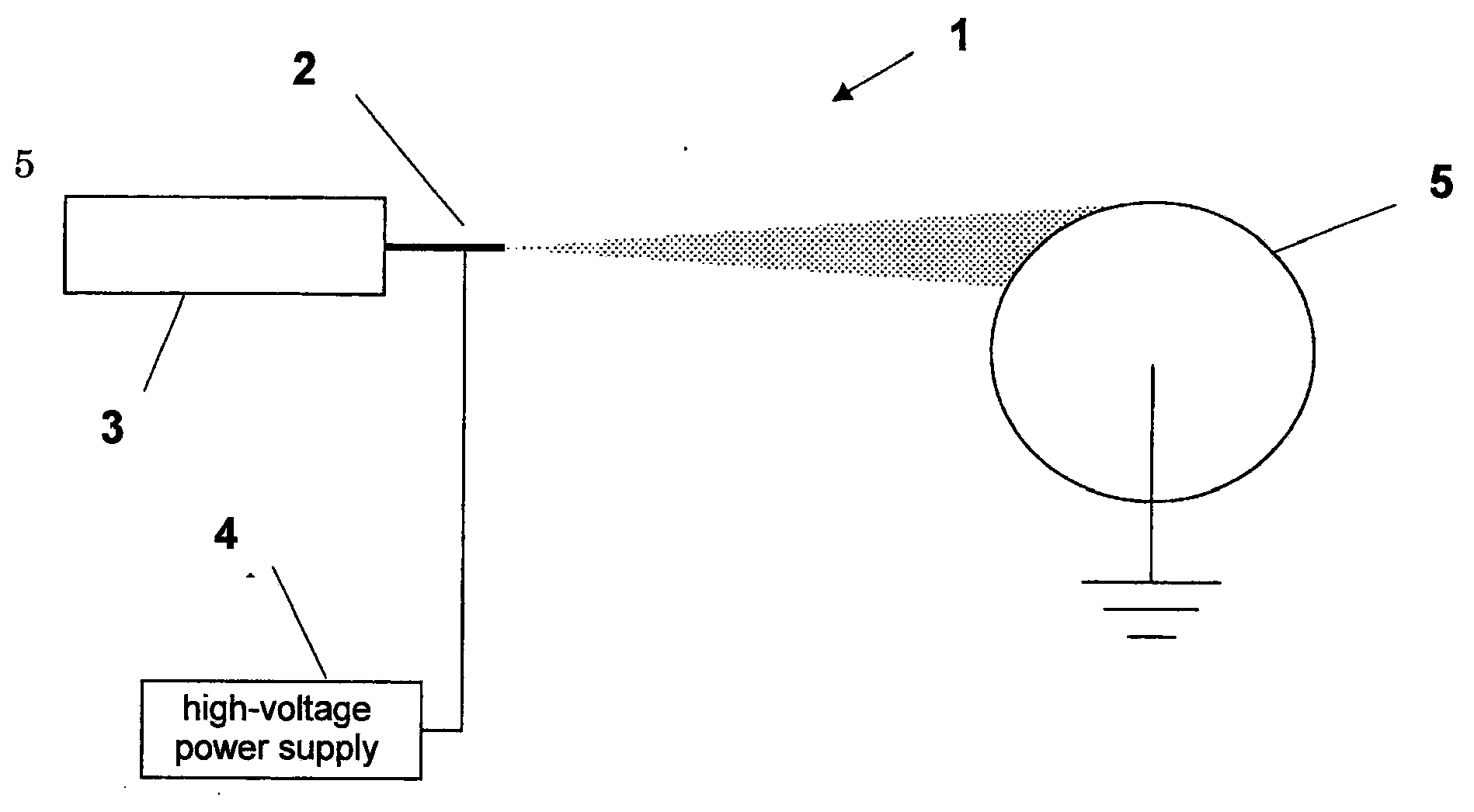
Figure 1 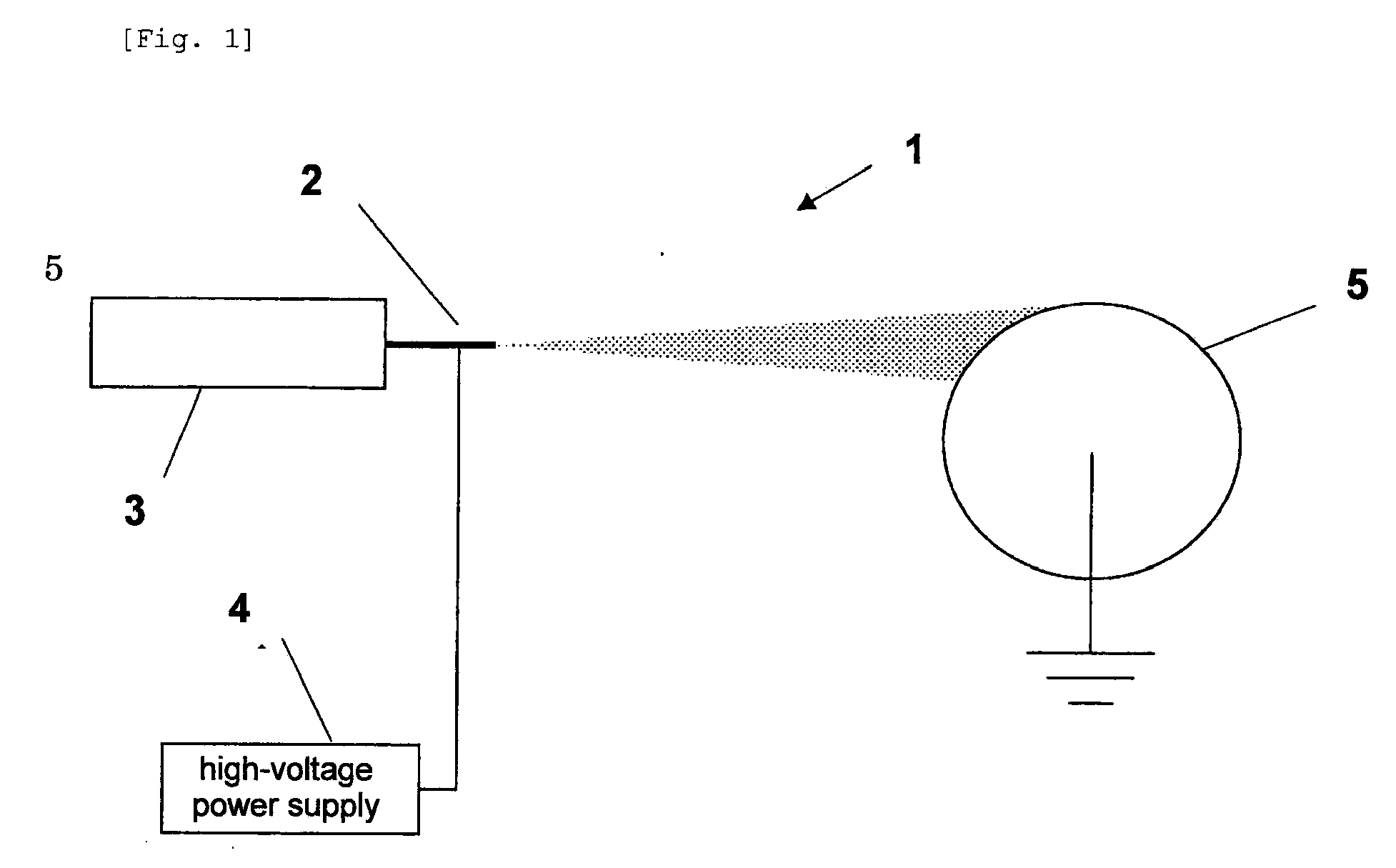
Figure 2 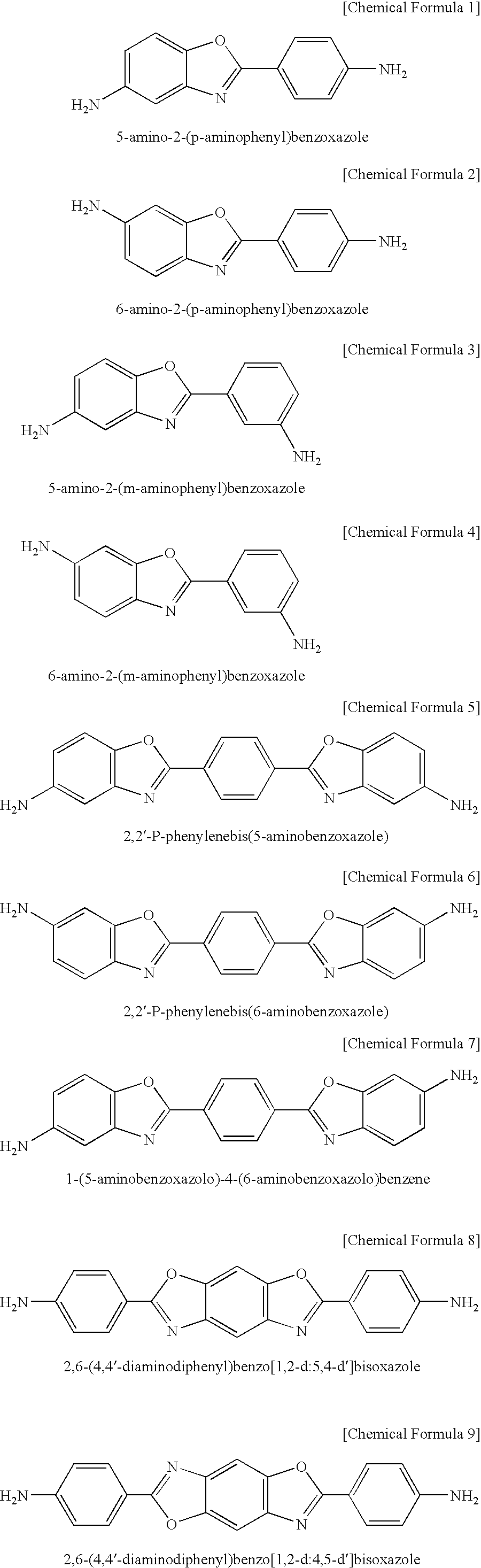
Figure 3
Abstract
Description
TECHNICAL FIELD
[0001] The present invention relates to a non-woven fabric which is composed of polyimide fibers with a fiber diameter in the range of 0.001 μm to 1 μm and has a low coefficient of linear expansion, and relate to a process for production thereof. Specifically, the present invention relates to a non-woven fabric obtained from a polyimide prepared by polycondensation of at least an aromatic tetracarboxylic acid and an aromatic diamine having a benzoxazole structure.BACKGROUND ART
[0002] Recently, excellent thermal resistance, excellent mechanical properties, and excellent electrical properties are required more than ever in development of organic materials in an electronics field such as a semiconductor, a crystal liquid panel, and a printed wiring board; an environmental field such as a bag filter; a space and aviation field, and the like. For example, in the electronics field, this is because internal devices and batteries therein are reduced in size in accordance with a...
Examples
reference example 1
Preparation of a Polyamic Acid Solution
[0074]A liquid-contactable portion in a reaction container equipped with a nitrogen introduction tube, a thermometer and a stirrer and the inside of the reaction contained with transport tube made of an austenite stainless steel, SUS316L, was filled with nitrogen gas. Subsequently, 223 mass parts of 5-amino-2-(p-aminophenyl)benzoxazole and 4448 mass parts of N,N-dimethylacetamide were added and completely dissolved, and then, 217 mass parts of pyromellitic dianhydride was added. The solution was stirred at 25° C. for 24 hours, resulting in producing a brown and viscous polyamic acid solution A1. The reduced viscosity (ηsp / C) of the polyamic acid solution A1 was 4.0 dl / g.
reference example 2
Preparation of a Polyamic Acid Solution
[0075]A liquid-contactable portion in a reaction container equipped with a nitrogen introduction tube, a thermometer and a stirrer and the inside of the reaction contained with transport tube made of an austenite stainless steel, SUS316L, was filled with nitrogen gas. Subsequently, 200 mass parts of diaminodiphenyl ether was put therein. Then, after 4202 mass parts of N-methyl-2-pyrrolidone was added and completely dissolved, 217 mass parts of pyromellitic dianhydride was added. The solution was stirred at 25° C. for 5 hours, resulting in producing a brown and viscous polyamic acid solution B. The reduced viscosity (ηsp / C) of the polyamic acid solution B was 3.7 dl / g.
reference example 3
Preparation of a Polyamic Acid Solution
[0076]A liquid-contactable portion in a reaction container equipped with a nitrogen introduction tube, a thermometer and a stirrer and the inside of the reaction contained with transport tube made of an austenite stainless steel, SUS316L, was filled with nitrogen gas. Subsequently, 108 mass parts of phenylenediamine was put therein. Then, after 4042 mass parts of N-methyl-2-pyrrolidone was added and completely dissolved, 292.5 mass parts of diphenyltetracarboxylic dianhydride was added. The solution was stirred at 25° C. for 12 hours, resulting in producing a brown and viscous polyamic acid solution C. The reduced viscosity (ηsp / C) of the polyamic acid solution C was 4.5 dl / g.
[0077](Producing of a Non-Woven Fabric)
[0078]The polyamic acid solutions indicated in the Reference Examples were discharged to the collection electrode 5 for collecting a fibrous material for 30 minutes by using the equipment shown in FIG. 1.
[0079]The obtained fiber bundl...