
Catalyst, exhaust gas purifying catalyst, and method of producing the catalyst
Patent Information
- Authority / Receiving Office
- US · United States
- Current Assignee / Owner
- Publication Date
- 2009-09-24
- Estimated Expiration
- Not applicable · inactive patent
Smart Images
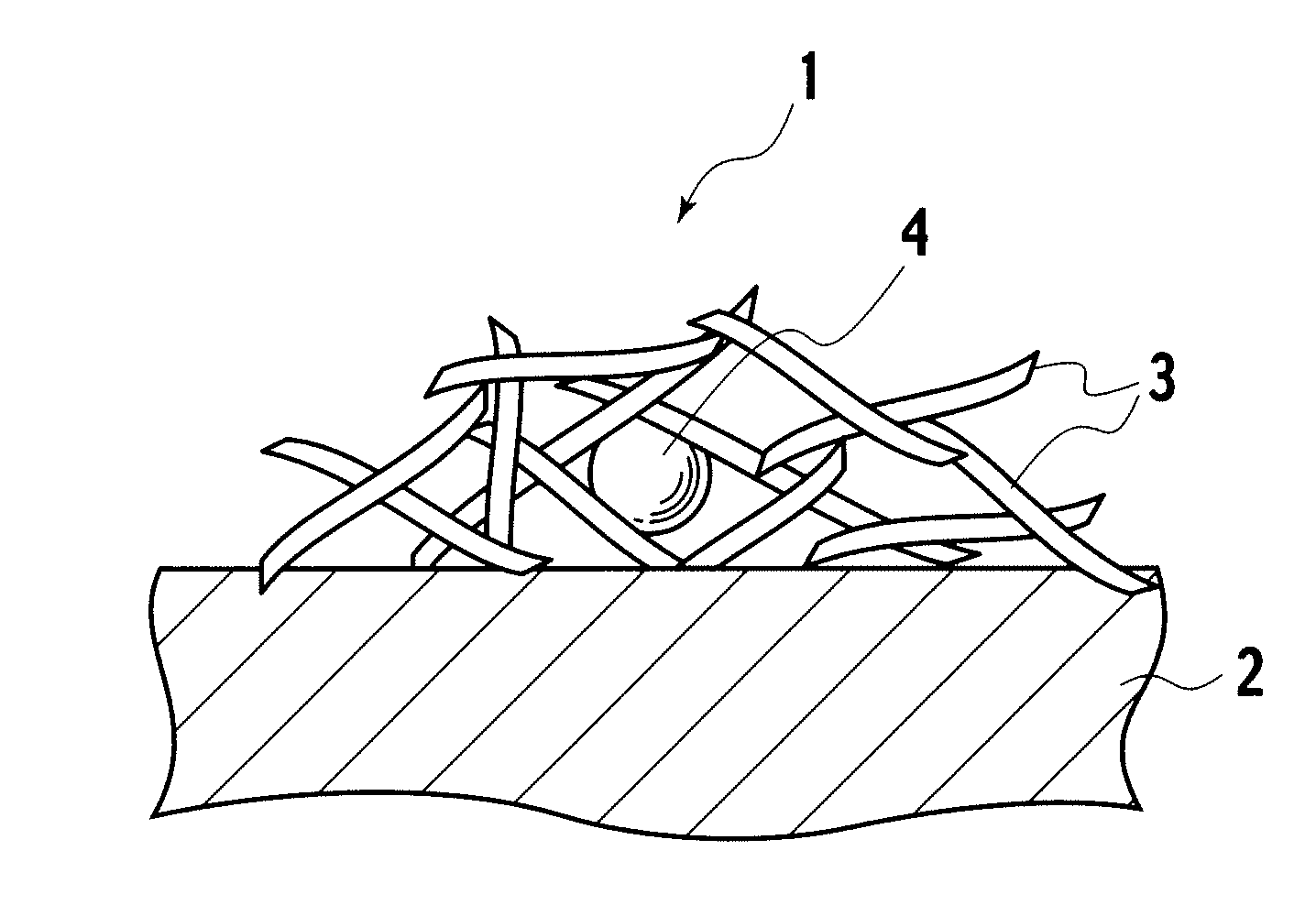
Figure 1 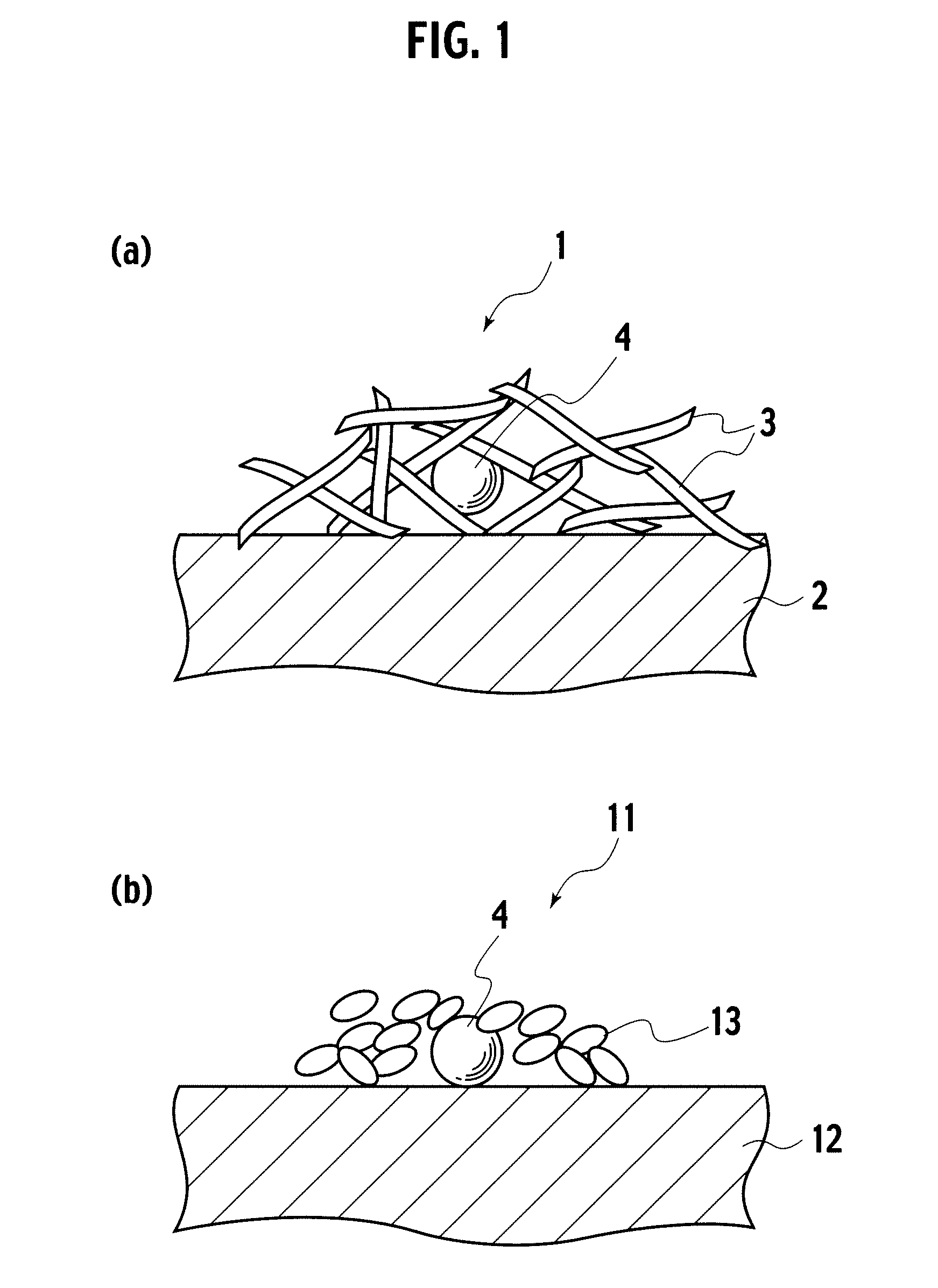
Figure 2 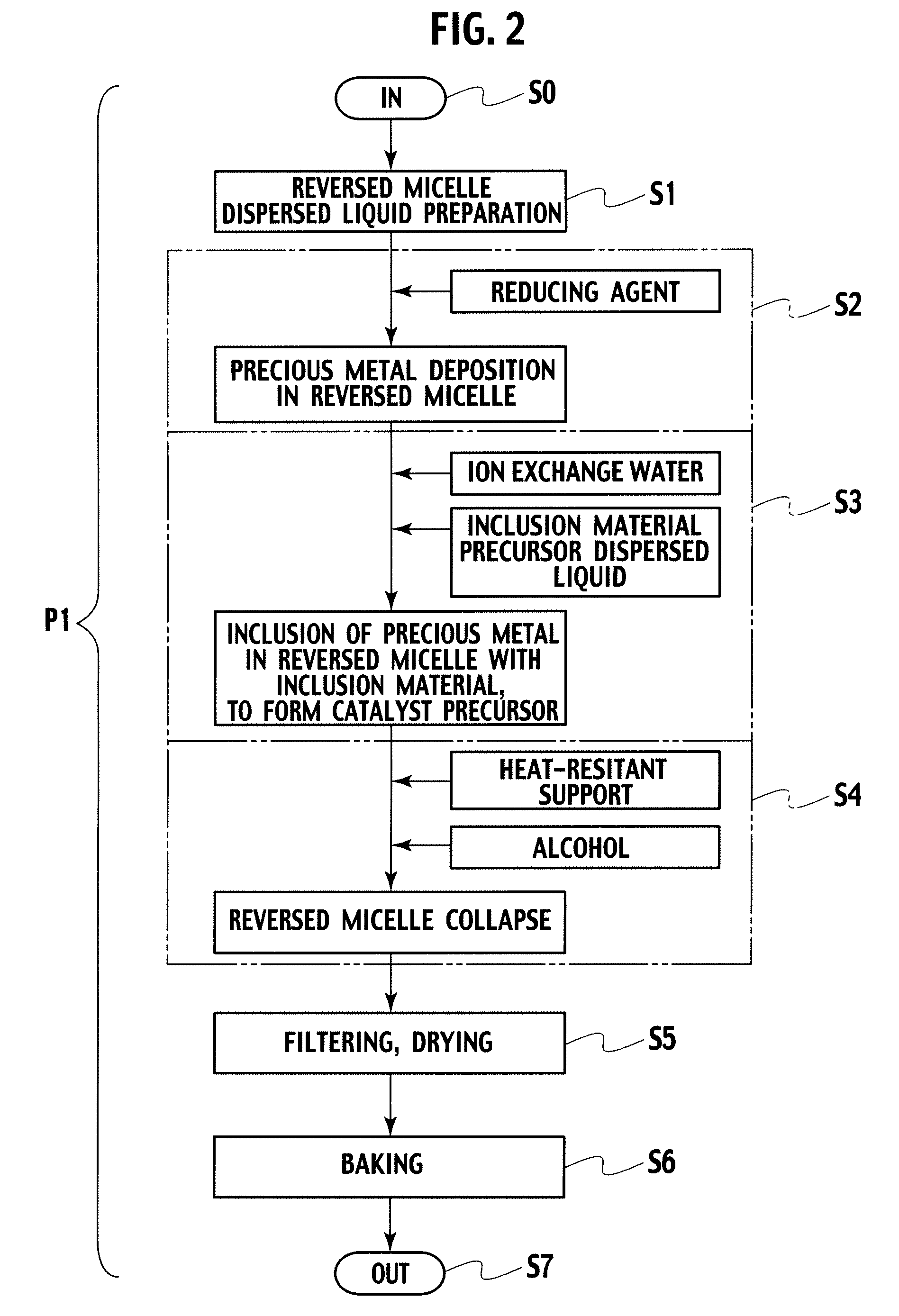
Figure 3
Abstract
Description
TECHNICAL FIELD
[0001] This invention relates to a catalyst, an exhaust gas purifying catalyst, and a method of producing the catalyst, and in particular, to an exhaust gas purifying catalyst for purifying an exhaust gas to be exhausted from an internal combustion engine.BACKGROUND ART
[0002] With a global spread of the emission control on automobiles, for purification of hydrocarbon (HC), carbon monoxide (CO), and nitrogen oxide (NOx) in exhaust gases, there have been used three-way catalysts in which microparticles of precious metals such as platinum (Pt), palladium (Pd), and rhodium (Rh) are supported on supports such as alumina (Al2O3) as a porous carrier, while the supports are further coated on a substrate such as a honeycomb of Cordierite make.
[0003] As an active site of catalyst, precious metals have a reduced active site surface area at high temperatures of a level of several hundreds of degrees centigrade, where a sintering tends to occur. To suppress the sintering, there have ...
Examples
embodiment example 1
[0040]In embodiment example 1, a catalyst precursor having Pt included by alumina inside a reversed micelle was formed, and thereafter, the catalyst precursor was supported on alumina baked at 700° C. To 5 liters of cyclohexane, 330 g of polyethyleneglycol—mono 4—nonylphenylether (NP5) was added as a surfactant, and thereafter, as a precious metal salt solution, 0.35 g of 8.46% dinitro diamineplatinum solution diluted with 40.13 ml of ion exchange water was mixed, which was stirred for 2 hours, preparing a reversed micelle dispersed liquid containing Pt ions (S1). Next, to the reversed micelle dispersed liquid, 0.02 g of sodium borohydride was added as a reducing agent, metalating Pt ions, obtaining a dispersion liquid having reversed micelles containing Pt metal (S2). To the dispersion liquid prepared in S2, 229.47 ml of ion exchange water was added, and thereafter, 20 g of aluminium isopropoxide dispersed as an inclusion material precursor to 80 ml of cyclohexane was delivered by ...
embodiment example 2
[0041]In embodiment example 2, a catalyst precursor having Pd included by alumina inside a reversed micelle was formed, and thereafter, the catalyst precursor was supported on alumina baked at 700° C. To 5 liters of cyclohexane, 330 g of NP5 was added as a surfactant, and thereafter, as a precious metal salt solution, 0.145 g of 20.76% palladium nitrate solution diluted with 40.37 ml of ion exchange water was mixed, which was stirred for 2 hours, preparing a reversed micelle dispersed liquid containing Pd ions (S1). Next, to the reversed micelle dispersed liquid, 0.03 g of sodium borohydride was added as a reducing agent, metalating Pd ions, obtaining a dispersion liquid having reversed micelles containing Pd metal (S2). To the dispersion liquid prepared in S2, 229.5 ml of ion exchange water was added, and thereafter, 20 g of aluminium isopropoxide dispersed as an inclusion material precursor to 80 ml of cyclohexane was delivered by drops to the dispersion liquid prepared in S2, obt...
embodiment example 3
[0042]In embodiment example 3, a catalyst precursor having Rh included by alumina inside a reversed micelle was formed, and thereafter, the catalyst precursor was supported on alumina baked at 700° C. To 5 liters of cyclohexane, 330 g of NP5 was added as a surfactant, and thereafter, as a metal salt solution, 0.22 g of 13.81% rhodium nitrate solution diluted with 40.29 ml of ion exchange water was mixed, which was stirred for 2 hours, preparing a reversed micelle dispersed liquid containing Rh ions (S1). Next, to the reversed micelle dispersed liquid, 0.03 g of sodium borohydride was added as a reducing agent, metalating Rh ions, obtaining a dispersion liquid having reversed micelles containing Rh metal (S2). To the dispersion liquid prepared in S2, 229.5 ml of ion exchange water was added, and thereafter, 20 g of aluminium isopropoxide dispersed as an inclusion material precursor to 80 ml of cyclohexane was delivered by drops to the dispersion liquid prepared in S2, obtaining a dis...