
Inhibitors of bacterial biofilm formation
a biofilm and inhibitor technology, applied in the field of bacteria biofilms, can solve the problems of increasing the risk of additional patient morbidity and mortality, difficult to eradicate with conventional treatments, and biofilms on biological and inanimate surfaces that are significant medical problems, and achieve the effect of inhibiting or preventing the formation of bacterial biofilms and preventing the formation of biofilms
Patent Information
- Authority / Receiving Office
- US · United States
- Patent Type
- Applications(United States)
- Current Assignee / Owner
- Publication Date
- 2011-04-28
- Estimated Expiration
- Not applicable · inactive patent
Smart Images
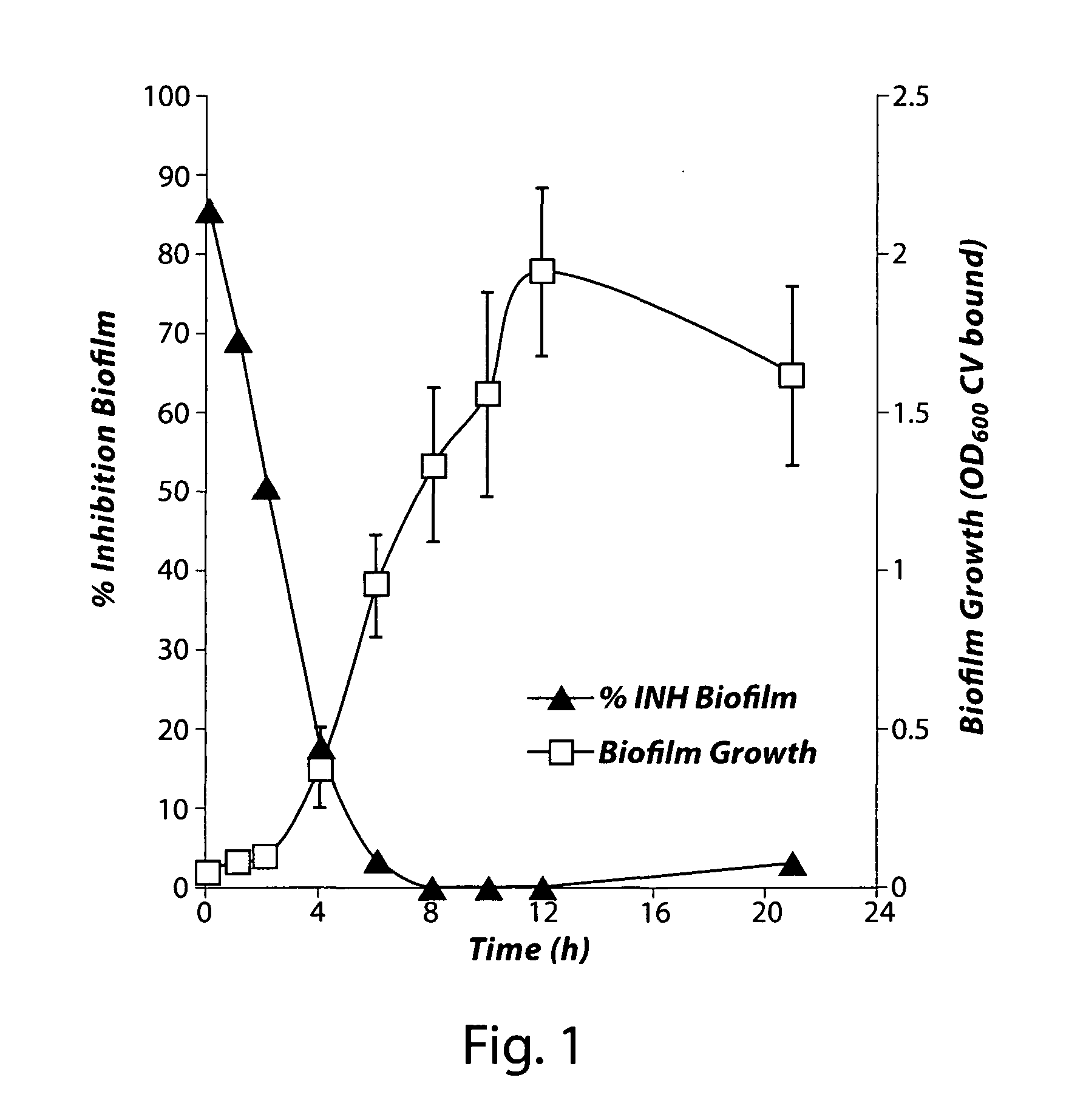
Figure 1 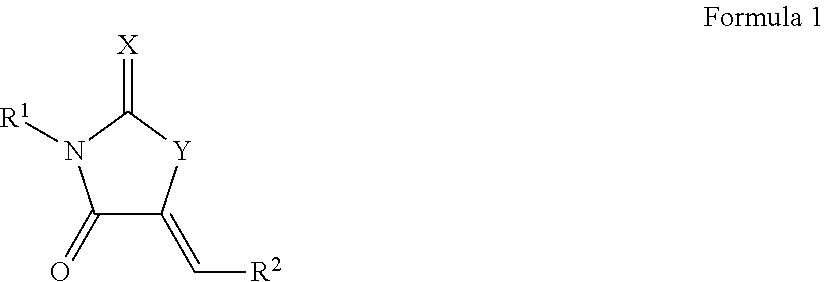
Figure 2 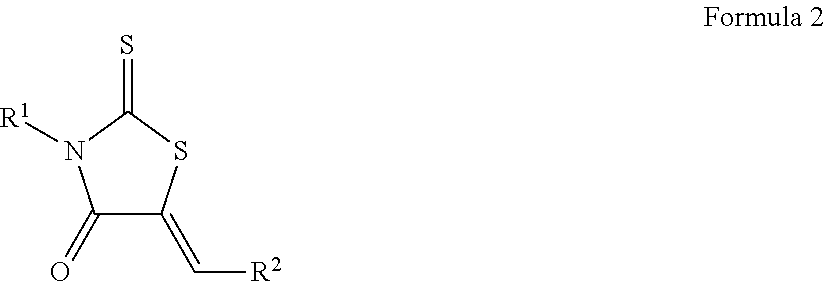
Figure 3
Abstract
Description
CROSS-REFERENCE TO RELATED APPLICATIONS
[0001] This application claims priority to U.S. provisional application No. 61 / 128,093, filed May 19, 2008.STATEMENT AS TO FEDERALLY SPONSORED RESEARCH
[0002] The invention described herein was supported by SBIR grant number 1 R43 AI074161-01 from the National Institutes of Health. The United States Government has certain rights in the invention.FIELD OF THE INVENTION
[0003] This invention is in the field of bacterial biofilms. In particular, the invention provides organic compounds that inhibit or prevent formation of bacterial biofilms.BACKGROUND OF THE INVENTION
[0004] Biofilms are bacterial communities encased in a hydrated extracellular matrix, which may consist of proteins, polysaccharides, nucleic acids, or combinations of these molecules (Branda et al., Trends Microbiol., 13: 20-26 (2005)). The development of biofilms on biological and inanimate surfaces presents significant medical problems. Bacteria in the biofilm mode of growth are highly r...
Examples
example 1
Screening for Inhibitors of Staphylococcal Biofilm Formation
[0105]In order to identify small molecule compounds that specifically inhibit staphylococcal biofilm formation, the following screening assay was developed. A higher throughput was achieved by formatting the assay for use in flat-bottomed 96-well assay plates (Costar 3590 assay plates, Corning Life Sciences, Lowell, Mass.). The biofilm cultures grew on the bottoms of each well in a surface attached mode. In each assay plate, columns 1 and 12 contained untreated cultures, which served as negative controls (0% biofilm inhibition). Each of the assay wells in columns 2-11 contained a unique small molecule from the Microbiotix Screening Library (MSL) at a final concentration of 100 μM. Assay plates were inoculated with 200 μl / well of a culture of Staphylococcus pidermidis 18972 in 0.5×Tryptic Soy Broth (TSB; Becton Dickinson, Franklin Lakes, N.J.) in which the concentration of glucose was adjusted to 0.25% (w / v). The bacterial i...
example 2
Characterization of Confirmed Biofilm Inhibitors from Primary Screen
[0110]Confirmed hits from the MSL screening described in Example 1 were evaluated in dose-response assays for anti-biofilm (inhibition of formation) activity, for antibacterial (inhibition of growth) activity, and for cytotoxicity against a human cell line as described below. The data obtained from these assays were used to prioritize compounds for further development and for analyzing structure-activity relationships (SARs).
Minimal Biofilm Inhibitory Concentration (MBIC) and Minimal Inhibitory Concentration (MIC) Secondary Assay.
[0111]A secondary assay provided a quantitative measure of both anti-biofilm activity and antibacterial activity in terms of the Minimal Biofilm Inhibitory Concentration (MBIC) and the Minimal Inhibitory Concentration (MIC), respectively. The MBIC and MIC are defined as the lowest compound concentrations that inhibit biofilm formation and bacterial growth, respectively, by at least 80% (i.e...
example 3
Synthesis of Additional Biofilm Inhibitors
[0117]The results of the library screenings described above led to the design, synthesis, and characterization of additional biofilm inhibitors.