
Degradation of lignocellulosic material
Patent Information
- Authority / Receiving Office
- US · United States
- Current Assignee / Owner
- Publication Date
- 2011-06-16
Smart Images
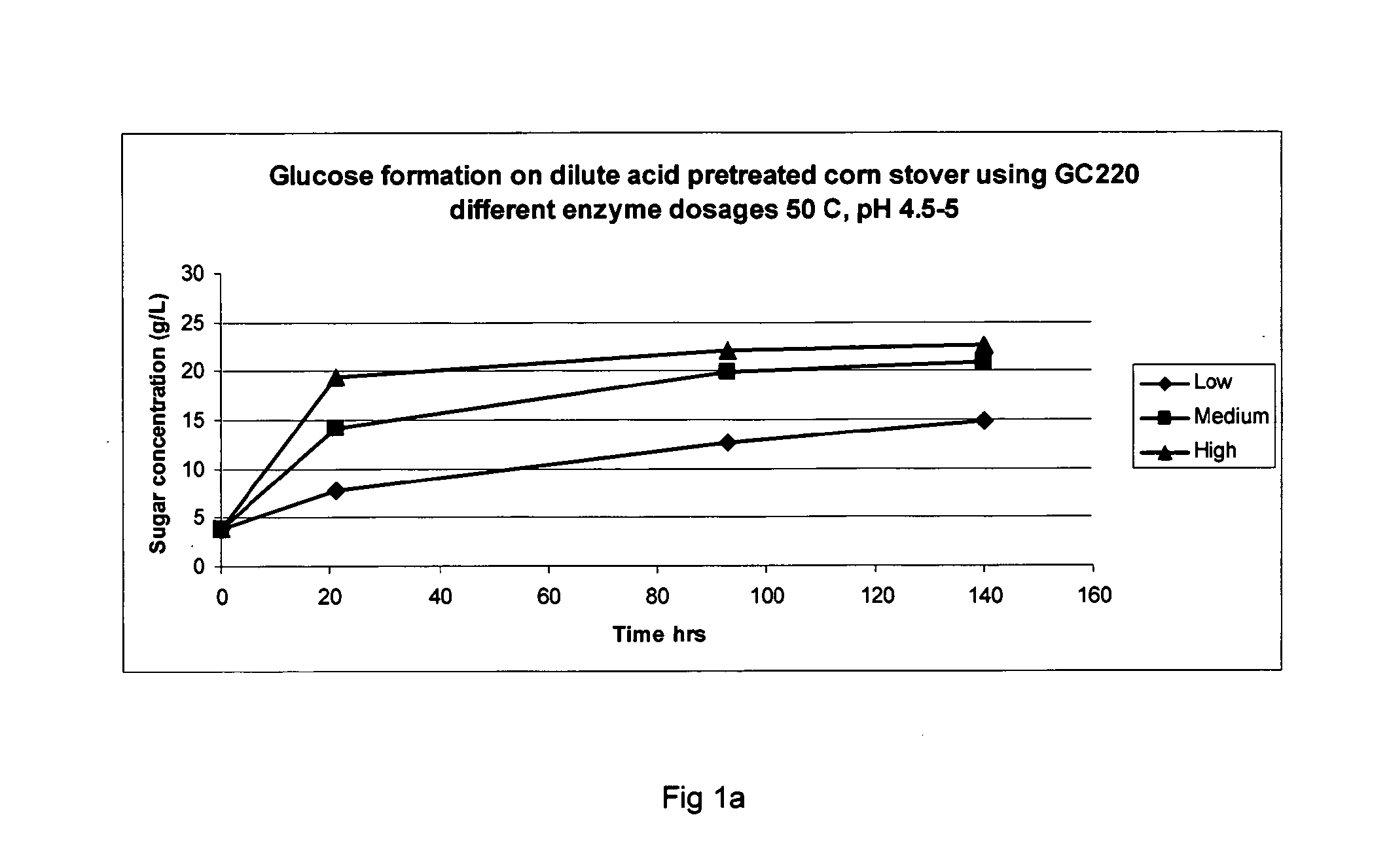
Figure 1 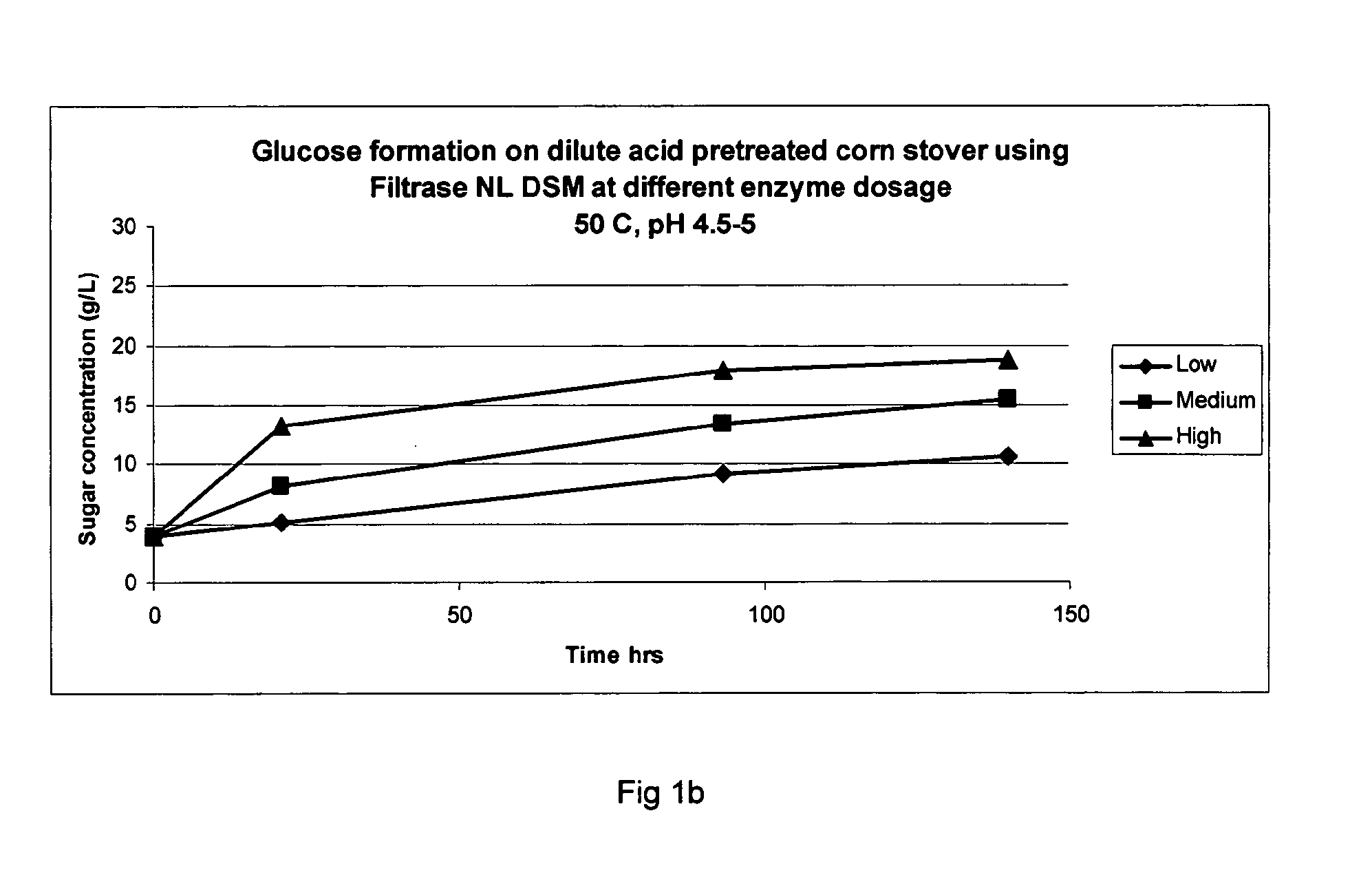
Figure 2 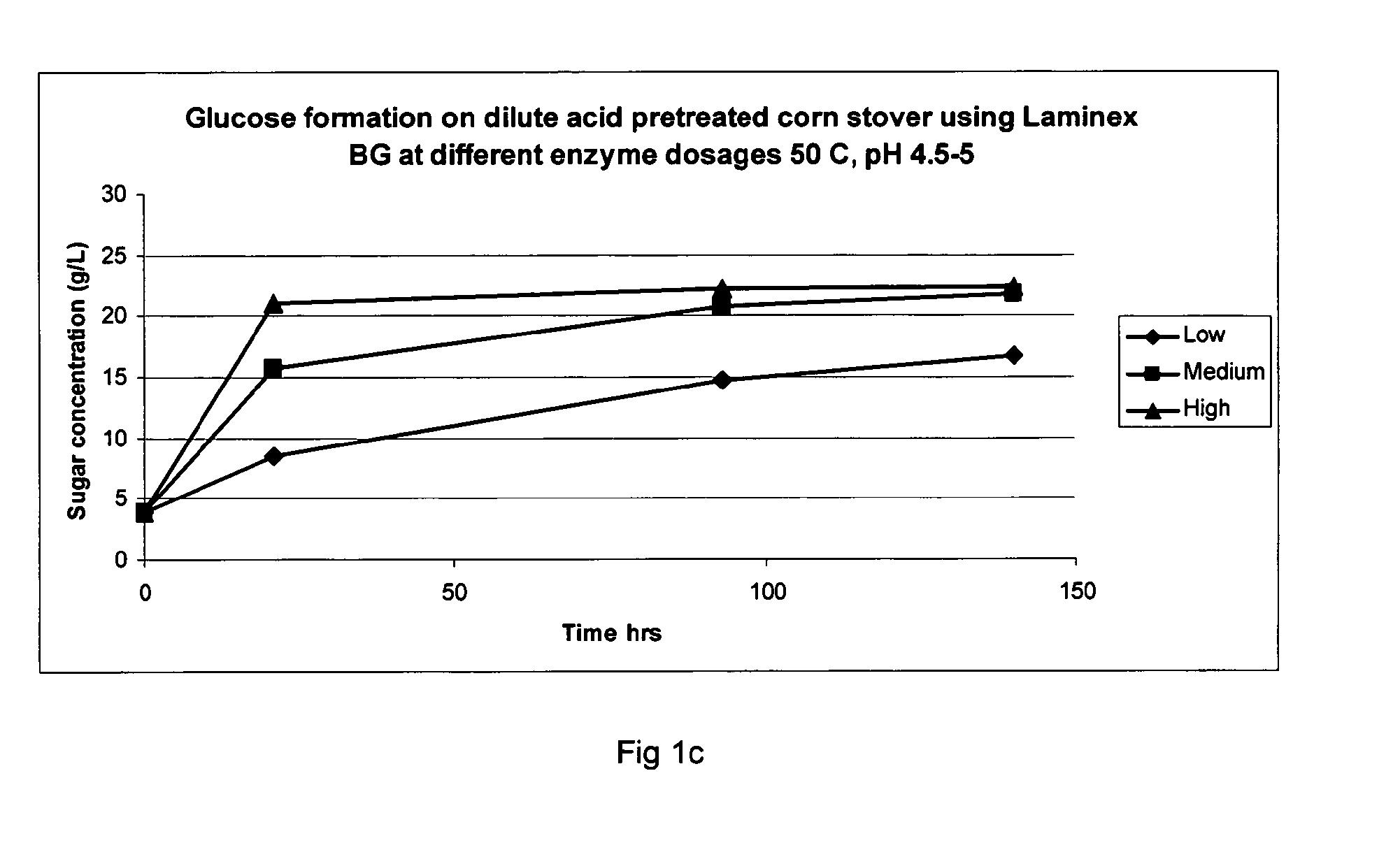
Figure 3
Abstract
Description
FIELD OF THE INVENTION
[0001] The invention relates to methods for degrading lignocellulosic material and to methods for producing a sugar or sugars from such material. The invention also relates to methods for producing a fermentation product.BACKGROUND OF THE INVENTION
[0002] Carbohydrates constitute the most abundant organic compounds on earth. However, much of this carbohydrate is sequestered in complex polymers including starch (the principle storage carbohydrate in seeds and grain), and a collection of carbohydrates and lignin known as lignocellulose. The main carbohydrate components of lignocellulose are cellulose, hemicellulose, and pectins. These complex polymers are often referred to collectively as lignocellulose.
[0003] Bioconversion of renewable lignocellulosic biomass to a fermentable sugar that is subsequently fermented to produce alcohol (e.g., ethanol) as an alternative to liquid fuels has attracted an intensive attention of researchers since 1970s, when the oil crisis b...
Examples
example 1
Saccharification of Corn Stover Hydrolysate Using Various Cellulases
Materials and Methods
[0153]The ability of three different cellulase preparations to saccharify a corn stover hydrolysate was evaluated. A Talaromyces emersonii enzyme product called Filtrase®NL (DSM Food Specialties, Delft, Netherlands) was compared with Laminex® BG and GC 220 (Genencor-Danisco, Rochester, USA). Laminex® BG and GC220 are considered to be the benchmark enzymes as presently available in the market.
[0154]Dilute acid pretreated corn stover prepared by NREL was used as the substrate for saccharification carried out with the cellulase preparations. The pretreated corn stover was stored at 4° C. The slurry was about 34% total solids with about 17% insoluble solids. The composition of the corn stover used for the pretreatment is set out in Table 1.
TABLE 1The composition of the raw stover is as follows:component% (w / w, dry basis)cellulose33.9 ± 0.7 xylan24.1 ± 1.1 lignin11.4 ± 0.8 extractives9.7 ± 0.3sucrose...
example 2
SSF Experiments with Filtrase®NL and Saccharomyces cerevisiae 237NG Using Pretreated Corn Stover
[0167]As follow up of the saccharification experiment described in Example 1, Simultaneous Saccharification and Fermentation and Distillation experiments for cellulose ethanol were carried out on 100 ml scale with dilute acid pretreated corn stover using Filtrase®NL and Yeast (Saccharomyces cerevisiae 237 NG). Using this technology, inhibitory glucose is removed and then higher hydrolysis yields are assumed to be obtained as compared to hydrolysis as such. A scheme for these experiments is set out in FIG. 4.
Materials and Methods
[0168]Ethanol yield per biomass dry weight input and hydrolysis yields were calculated as follows:[0169]1. Dry matter input: dry weight determination 48 hrs, 105 C[0170]2. Ethanol output: ml ethanol@100% measured on DMA[0171]3. Glucan content: NREL sample we used data provided by NREL[0172]4. Sugars in wash liquid were determined by NMR (sum of glucose, galactose, ...
example 3
Saccharification of Wheat Straw Using Filtrase®NL
[0181]Wheat straw was pretreated with steam at 195° C. for 12 minutes as described by Jan Larsen et al. Chem. Eng. Technol. 2008, 31, No.5, 1-9. The fiber was hydrolysed using Filtrase®NL at 8% dry matter without any addition of acid or base at pH 3.8 at 60° C. while shaking at 175 RPM in a shaker incubator.
[0182]At a 50% glucan content in the fiber, one would expect maximum 40 g / L of glucose to be produced in this experiment the hydrolysis yield is >85% and the total ethanol potential of this hydrolysate would be 19 g / L at 92% fermentation yield on total sugars of 40 g / L. FIG. 7 sets out the results of this experiment, demonstrating that this level of glucose was achieved. Thus, the acidic properties of the enzyme preparation thus enables ethanol production without any addition of acid or base as pH 3.8 is also optimal for the Yeast Saccharomyces cerevisiae.