
Roll of continuous web of optical film laminate and production method therefor
a technology of optical film and continuous web, which is applied in the direction of identification means, instruments, polarising elements, etc., can solve the problems of cracks, deformation, warping, and expansion of the adjacent member, and achieve the effect of reducing the number of rolls
Patent Information
- Authority / Receiving Office
- US · United States
- Current Assignee / Owner
- Publication Date
- 2012-03-08
- Estimated Expiration
- Not applicable · inactive patent
Smart Images
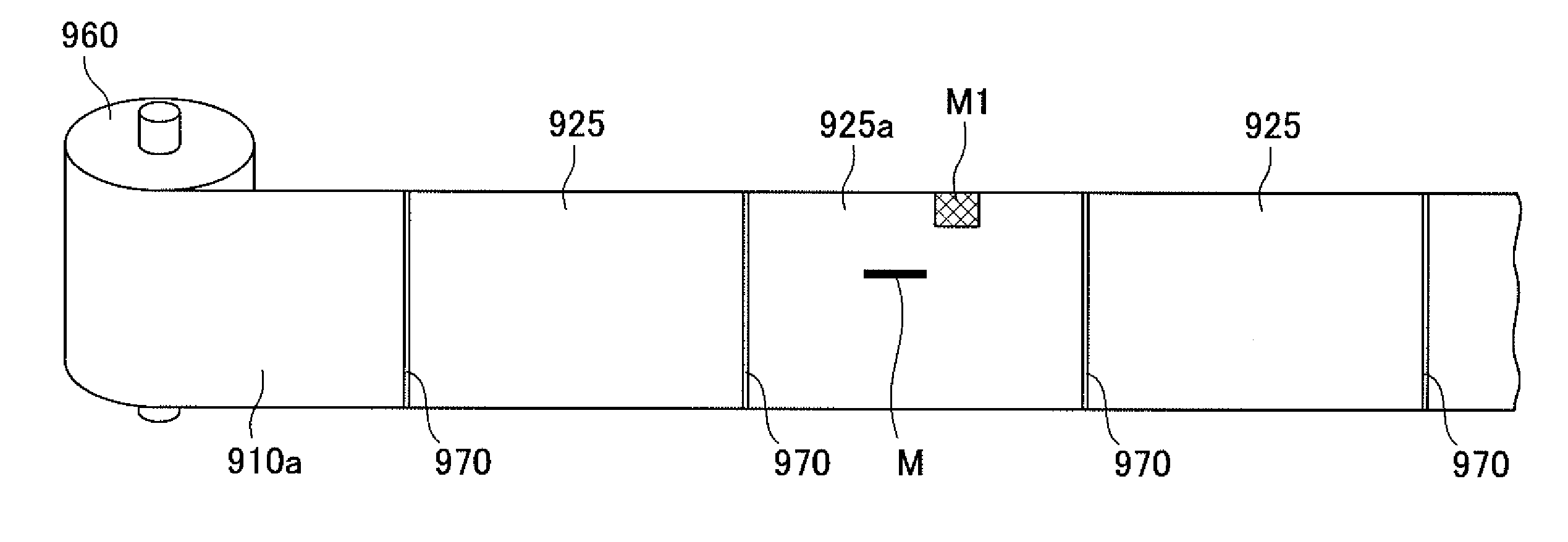
Figure 1 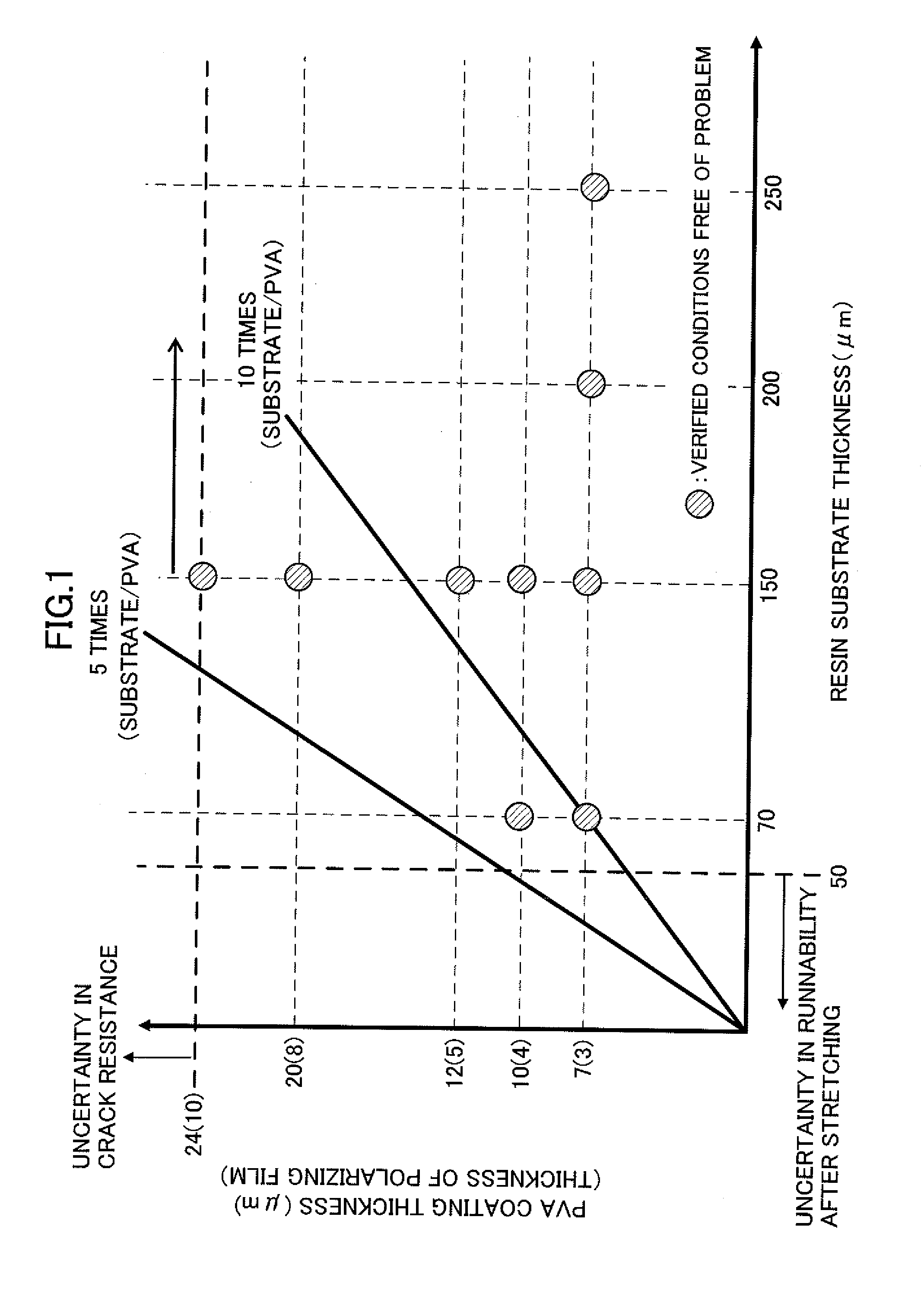
Figure 2 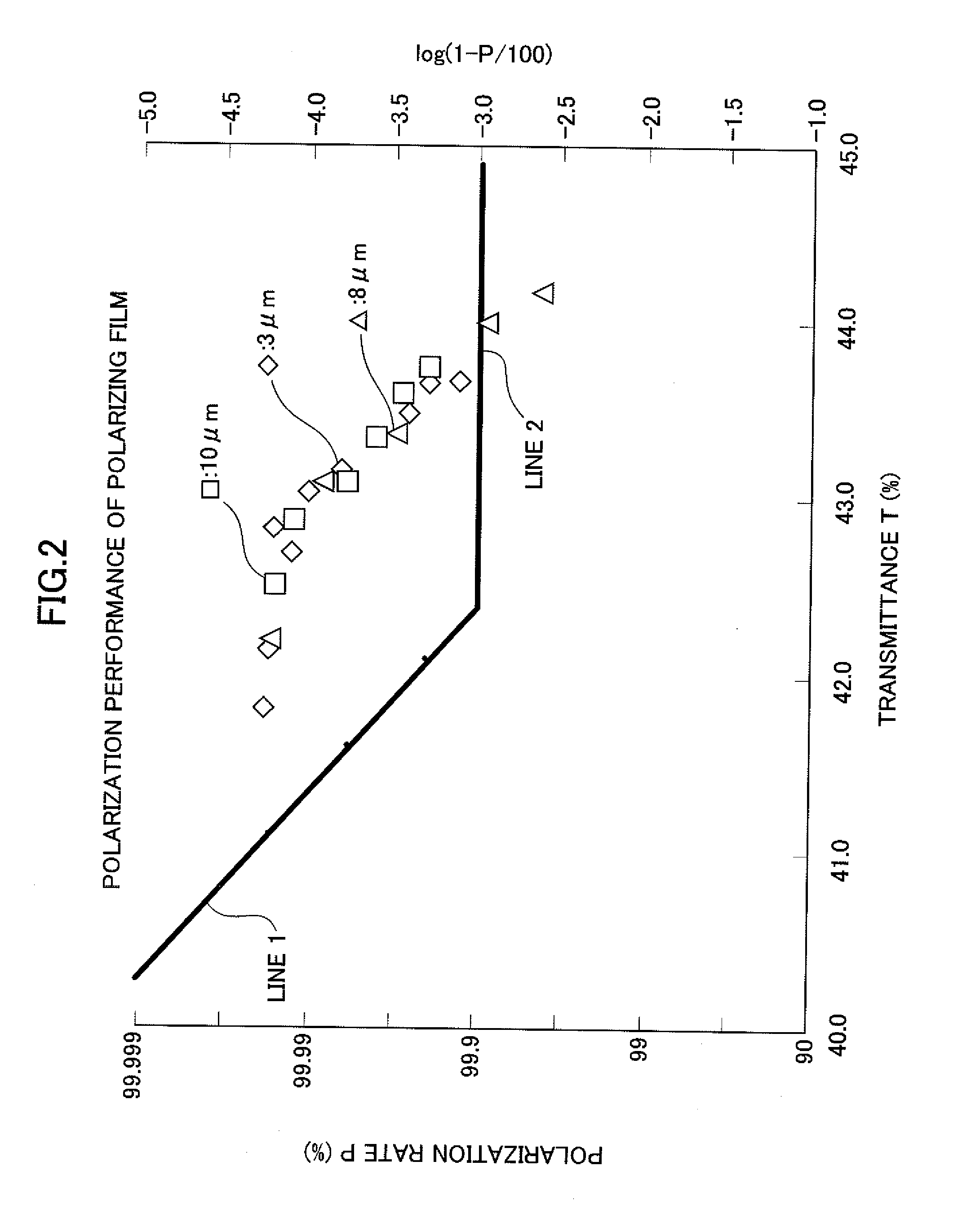
Figure 3
Abstract
Description
TECHNICAL FIELD
[0001] The present invention relates to a roll of a continuous web of an optical film laminate, for use in a process of sequentially laminating an optical film including a polarizing film, to each of a plurality of rectangular-shaped panels being continuously fed to a lamination position, and a production method for the roll. In particular, the present invention relates to a roll of an optical film laminate including an optical film having an extremely small thickness of 10 μm or less.BACKGROUND ART
[0002] There is a widely known method in which a single layer made of a polyvinyl alcohol type resin (hereinafter referred to as “PVA type resin”) formed in a film shape is subjected to dyeing and stretching to produce a polarizing film comprising a PVA type resin layer, wherein molecules of the PVA type resin are oriented in the direction of the stretching, and a dichroic material is absorbed (impregnated) in the PVA type resin in a molecularly oriented state. The thickness ...
Examples
example 1
[0132]A continuous web of a substrate was prepared as a non-crystallizable ester type thermoplastic resin substrate comprising isophthalic acid-copolymerized polyethylene terephthalate copolymerized with 6 mol % of isophthalic acid (hereinafter referred to as “non-crystallizable PET”). The non-crystallizable PET has a glass transition temperature of 75° C. A laminate comprising the continuous web of non-crystallizable PET substrate and a polyvinyl alcohol (hereinafter referred to as “PVA”) layer was prepared in the following manner. By the way, PVA has a glass transition temperature of 80° C.
[0133]A non-crystallizable PET substrate having a thickness of 200 μm was prepared, and a PVA aqueous solution having a PVA concentration of 4 to 5 wt % was also prepared by dissolving a PVA powder having a polymerization degree of 1000 or more and a saponification degree of 99% or more in water. Then, the PVA aqueous solution was applied to the 200 μm-thick non-crystallizable PET substrate, and...
example 2
[0142]In the Example 2, as with the Example 1, a 7 μm-thick PVA layer was formed on a non-crystallizable PET substrate to form a laminate, and then the laminate including the 7 μm-thick PVA layer was subjected to a preliminary in-air stretching and stretched at a stretching ratio of 1.8 to form a stretched laminate, whereafter the stretched laminate was immersed in a dyeing solution containing iodine and potassium iodide and having a temperature of 30° C. to form a dyed laminate including an iodine-absorbed PVA layer. Differently from the Example 1, a process in the Example 2 additionally comprises a cross-linking step. The cross-linking step is designed to immerse the dyed laminate in a cross-linking boric acid aqueous solution at a temperature of 40° C., for 60 seconds, so as to allow PVA molecules of the iodine-absorbed PVA layer to be subjected to cross-linking. The cross-linking boric acid aqueous solution in this step was set to contain 3 weight parts of boric acid with respec...
example 3
)
[0146]In the Example 3, as with the Example 1, a 7 μm-thick PVA layer was formed on a non-crystallizable PET substrate to form a laminate, and then the laminate including the 7 μm-thick PVA layer was subjected to a preliminary in-air stretching and stretched at a stretching ratio of 1.8 to form a stretched laminate. Differently from the Example 1, a process in the Example 3 additionally comprises an insolubilization step. The insolubilization step is designed to immerse the stretched laminate in a boric acid insolubilizing aqueous solution at a solution temperature of 30° C., for 30 seconds, so as to insolubilize a PVA layer included in the stretched laminate and having oriented PVA molecules. The boric acid insolubilizing aqueous solution in this step was set to contain 3 weight parts of boric acid with respect to 100 weight parts of water. A technical effect expected of the insolubilization step in the Example 3 is to prevent the PVA layer included in the stretched laminate from ...