
Method and apparatus for producing a thermoplastic resin film
a thermoplastic resin and film technology, applied in the field of thermoplastic resin film methods and apparatuses, can solve the problems of foreign matter defects, the film temperature of the anti-cooling drum-side surface cannot easily be dropped to the desired temperature, and the film is difficult to clean, so as to reduce the damage caused by foreign matter defects, reduce production yield, and reduce foreign matter damage
Patent Information
- Authority / Receiving Office
- US · United States
- Patent Type
- Applications(United States)
- Current Assignee / Owner
- Publication Date
- 2012-08-09
Smart Images
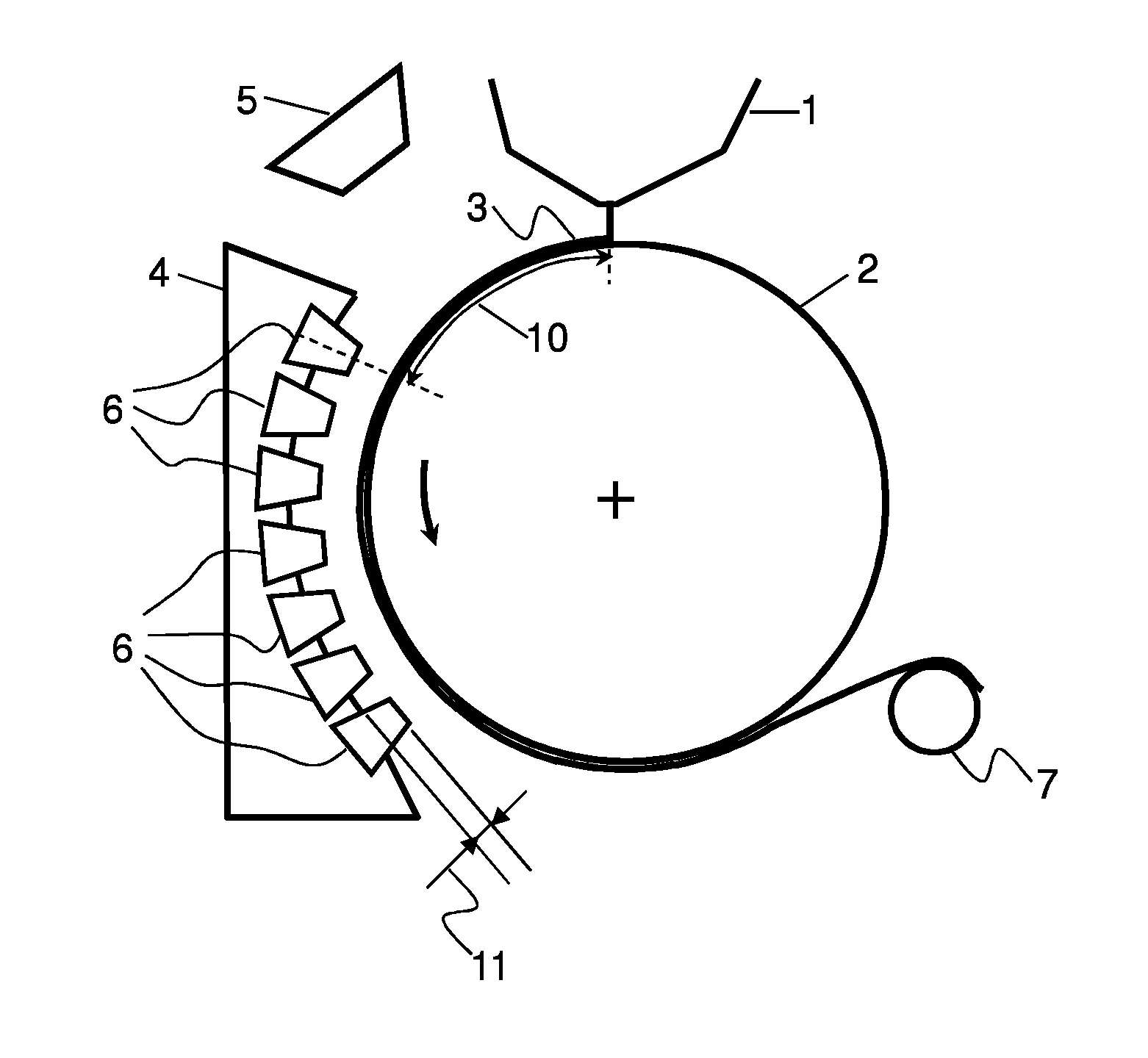
Figure 1 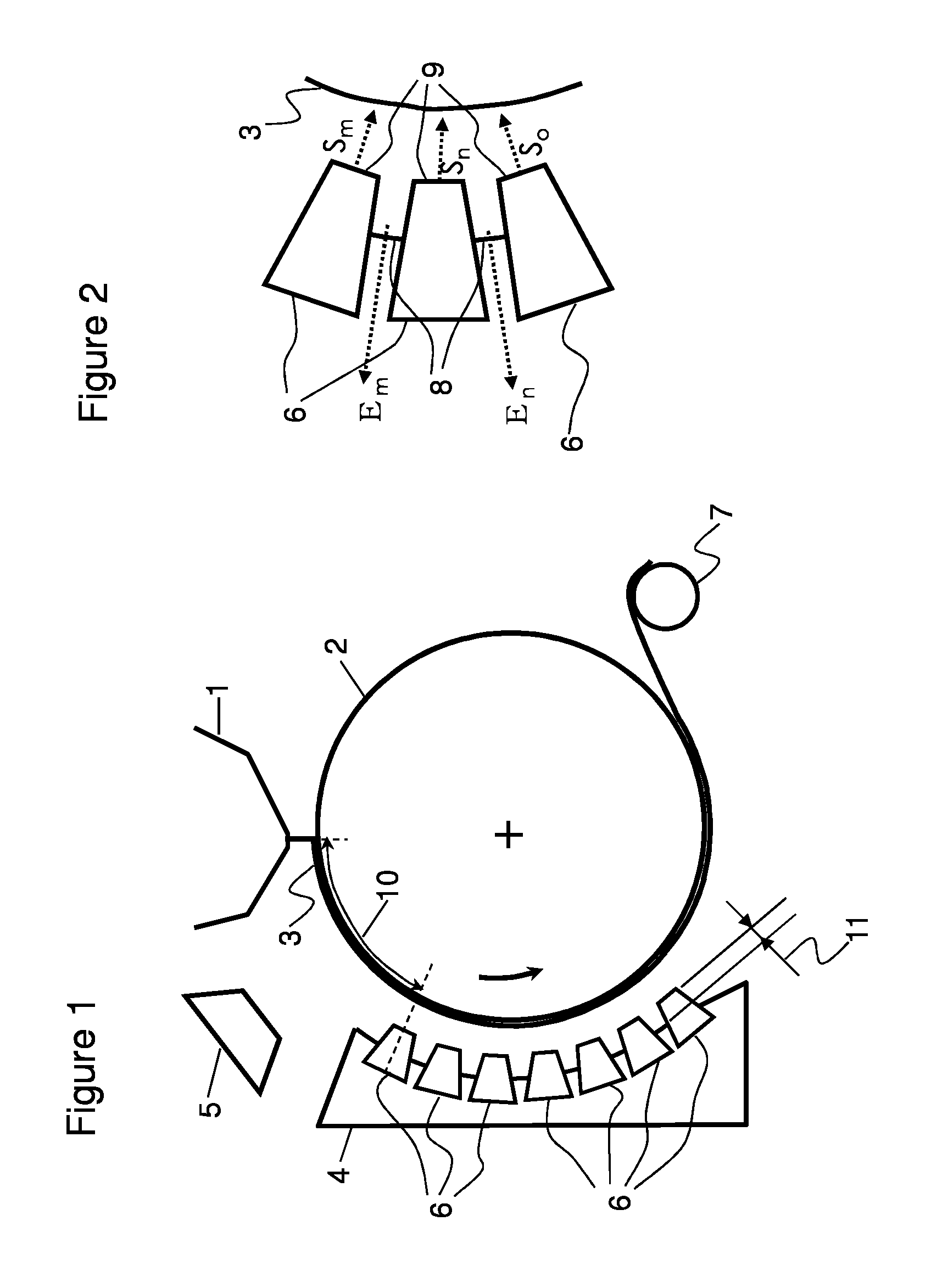
Figure 2 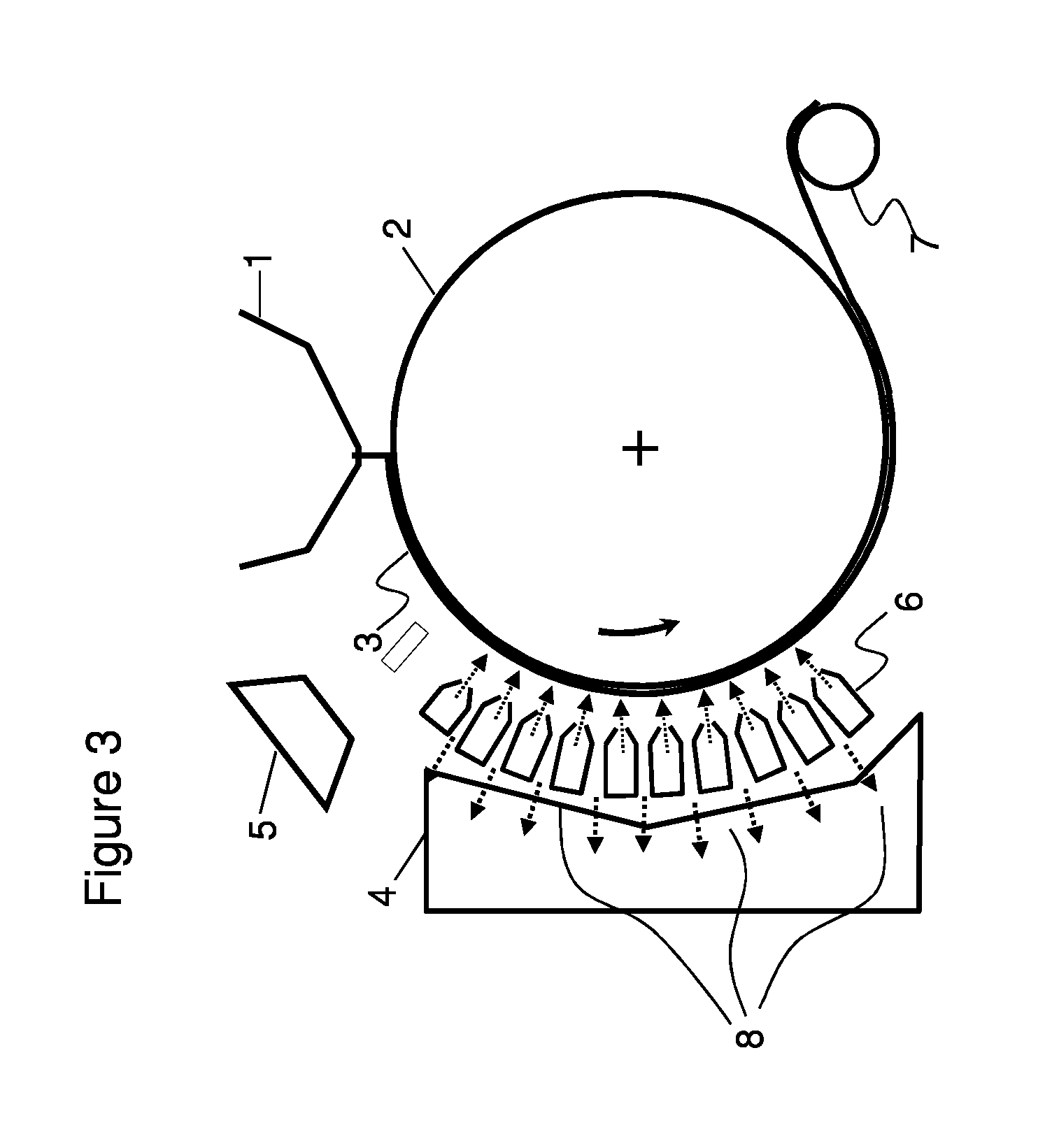
Figure 3
Abstract
Description
TECHNICAL FIELD
[0001] The present invention relates to a method and apparatus for producing particularly an optical film with few foreign matter defects on the surface thereof and very excellent optical property uniformity.BACKGROUND ART
[0002] In recent years, while various display members represented by liquid crystal displays (LCD) and plasma display panels (PDP) are being reduced in weight and cost, the market for optical films as important members of displays are being expanded. Optical films use various transparent films made of thermoplastic resins such as polyesters like polyethylene terephthalate (PET), acrylic polymers and polycarbonates (PC) as base materials, and in order to impart functionality to the base materials, for example, protective films (hard coating layers) for preventing defects, anti-reflection layers (AR layers), light-condensing / diffusing layers, polarizing sheets and the like are laminated on the base materials as various surface treatments, for obtaining t...
Examples
example 1
[0055]As the raw material of the polyester, pellets of polyethylene terephthalate resin (F20S produced by Toray Industries, Inc.) were dried under reduced pressure, supplied into an extruder, and melt-extruded at 280° C. It was brought into contact with a cooling drum (diameter 1,600 mm) kept at a surface temperature of 20° C. by an electrostatic application method, and simultaneously cooled and solidified using a cooling device, to obtain a thermoplastic resin film with a thickness of 2,100 μm.
[0056]The cooling device had a first spray nozzle disposed in the portion nearest to the extrusion die from which the thermoplastic resin was extruded, and the inter-nozzle exhaust mechanism was perfectly separated from the spray nozzles and installed apart from the rear faces of the spray nozzles by 50 mm. Therefore, the suction face of the inter-nozzle exhaust mechanism was perfectly apart from the tip faces of the spray nozzles, and there were through openings between the respective spray ...
example 2
[0062]Used was a cooling device having the suction faces of an inter-nozzle exhaust mechanism placed between the respective spray nozzles, in which the distance between the tip faces of the spray nozzles and the suction faces of the inter-nozzle exhaust mechanism was set at 100 mm. Therefore, the inter-nozzle exhaust mechanism was not separated from the spray nozzles, and there were no through openings between the respective spray nozzles. Except this configuration, polyester films rolls with a film thickness of 188 μm, a width of 1,000 mm and a length of 2,000 m were obtained as described in Example 1.
example 3
[0063]In the cooling step conditions, the total amount of sprayed air was 120 m3 / min and the total amount of sucked air was 70 m3 / min; hence total amount of sucked air / total amount of sprayed air=0.58. Further, the inter-nozzle exhaust mechanism was separated from the spray nozzles and installed behind the rear faces of the spray nozzles, and through openings were formed between the respective spray nozzles. Thus, polyester film rolls with a film thickness of 188 μm, a width of 1,000 mm and a length of 2,000 were obtained.