
Canine microbe preparations for increasing oxytocin
a technology of oxytocin and canine microorganisms, which is applied in the field of canine microorganism preparations for increasing oxytocin, can solve the problems of inability to show a specific link, the relative inefficiency of existing weight loss strategies, etc., and achieves less age-associated weight gain, higher plasma levels of oxytocin, and strong human-animal bonding
Patent Information
- Authority / Receiving Office
- US · United States
- Patent Type
- Applications(United States)
- Current Assignee / Owner
- Publication Date
- 2017-12-28
Smart Images
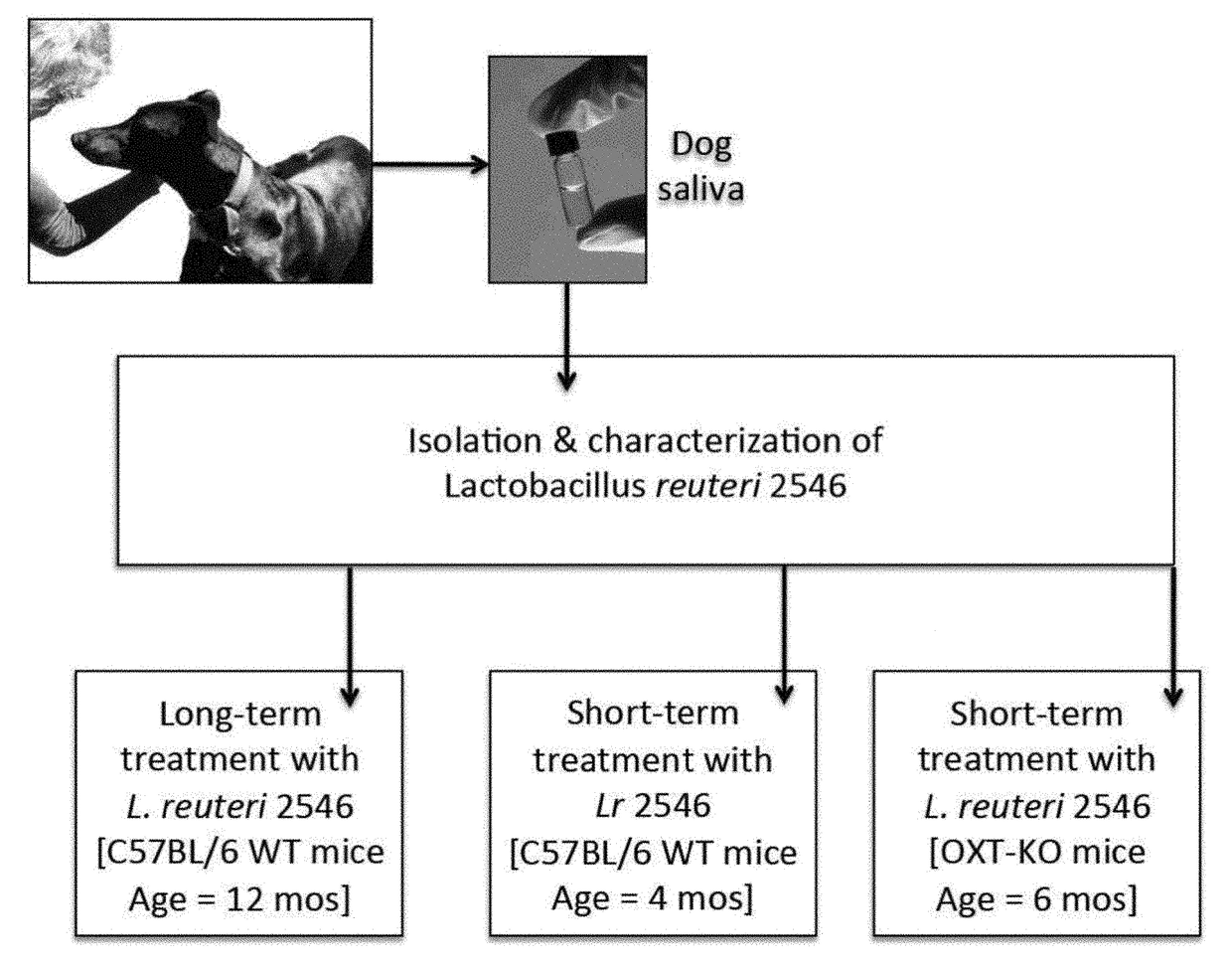
Figure 1 
Figure 2 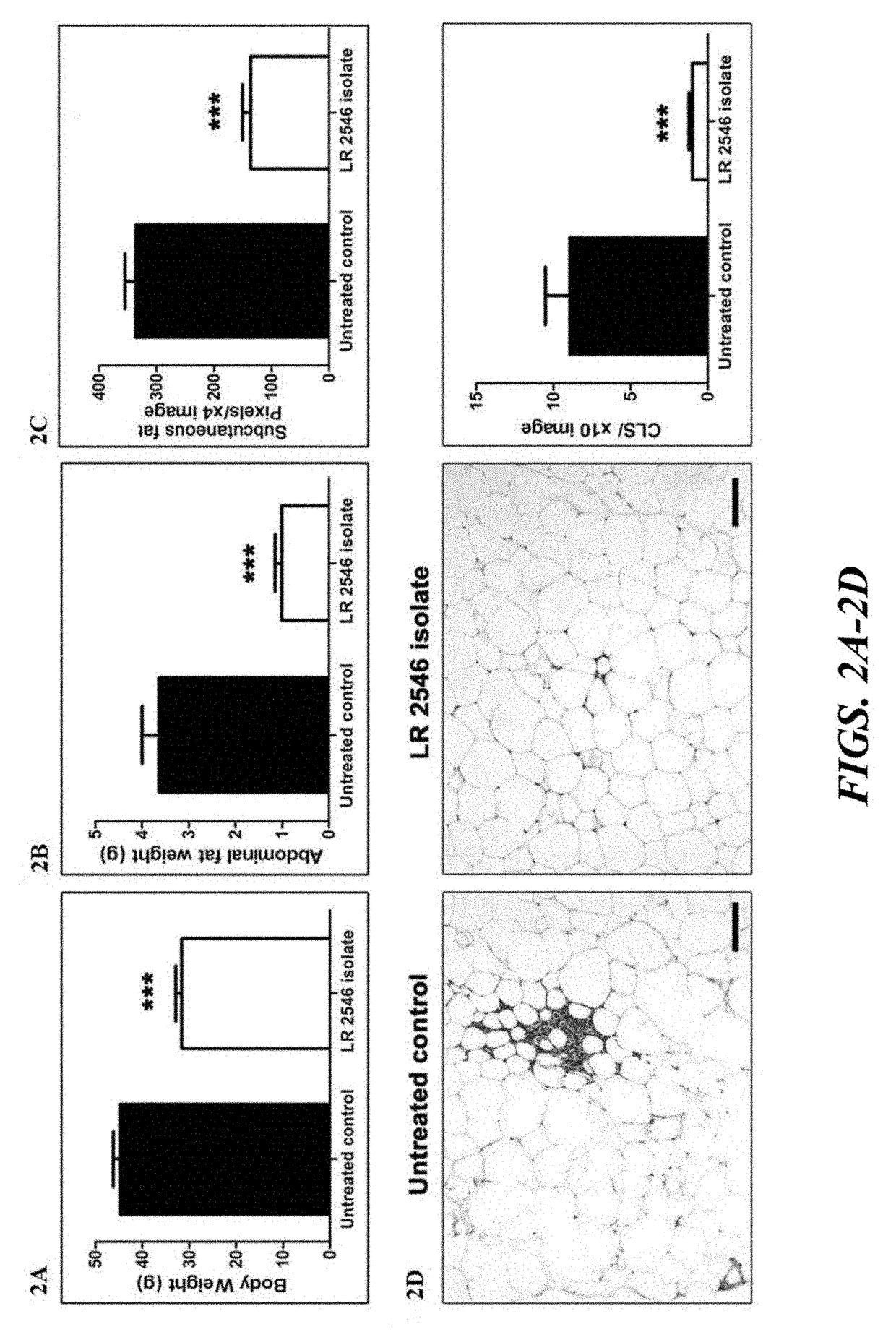
Figure 3
Abstract
Description
RELATED APPLICATIONS
[0001] This application claims the benefit of U.S. Provisional Application No. 62 / 353,954, filed Jun. 23, 2016. The entire teachings of the above application are incorporated herein by reference.GOVERNMENT SUPPORT
[0002] This invention was made with government support under grants P30-ES002109, R01-CA108854 and U01-CA164337 awarded by the National Institutes of Health. The government has certain rights in the invention.BACKGROUND OF THE INVENTION
[0003] Pets are often considered to be part of the family. Cohabitating with dogs, in particular, has many benefits to humans associated with physical, psychological and social wellbeing [1]. One benefit of human co-habitation with dogs is a more slender physique [2]. This observation is important in the context of the growing obesity epidemic, which has impacted over 78 million adults and 12.5 million children and adolescents in the U.S. in 2009-2010 [3]. In the face of this growing obesity epidemic [3], there is relative in...
Examples
example 1
Example 1A
[0047]To probe the roles of dog bacteria in weight gain of cohabitating animals, 12 eight-week-old C57BL / 6 wt mice were randomly subdivided into groups of six mice per treatment. Mice treated with the canine isolate L. reuteri 2546 received it in their drinking water continuously until twelve-months-of-age. Body weight, whole blood cell counts, and body fat histology were evaluated. Terminal blood collections for mice were performed mid-day for all subjects in order to minimize variability due to Circadian rhythms. Animals were housed under 12:12 light cycle conditions and lights turned on at 7 AM.
example 1b
[0048]To test whether oral therapy with killed [sterile]L. reuteri 2546 lysate was sufficient for physiological effects, the present inventor examined 18 eight-week-old C57BL / 6 wild-type (wt) mice. Experimental mice were divided into groups of six (N=6 / treatment group) and then received in their drinking water L. reuteri 2546 or lysate of L. reuteri 2546 starting at eight-weeks-of-age until fourteen-weeks-of-age. Body weight, whole blood cell counts, plasma oxytocin levels, and body fat histology were evaluated.
example 1c
[0049]To test whether oxytocin is required for fat-inhibiting benefits of oral therapy with canine source L. reuteri 2546, the present inventor examined 16 oxytocin-wt (oxt-wt) and 16 knockout (oxt-ko) B6; 129S-Oxttm1Wsy / J mice. Experimental mice were randomly subdivided into groups of eight mice and then received in their drinking water L. reuteri 2546 starting at eight weeks of age for a duration of sixteen weeks.
Results
Canine Oral Bacterial Flora Includes Lactobacillus Species
[0050]To test the hypothesis that pet dogs may harbor bacteria beneficial for human body weight control, the present inventor began by sampling canine saliva. Saliva was chosen because one fundamental aspect of the human-canine bond is the gesture of licking that spreads oral cavity microbes on the recipient's skin surface. Recognizing that L. reuteri ATCC 6475 bacteria collected from human milk was found to up-regulate oxytocin when fed to mouse models [30], and that oxytocin is pivotal in canine-human bond...