
Scylla paramamosain antimicrobial peptide sparamosin and application thereof
a technology of antimicrobial peptide and sparamosin, which is applied in the field of marine biotechnology, can solve the problems of easy drug resistance, large economic losses, harm to animals and even humans, and achieves the effects of strong antimicrobial activity, improved antimicrobial activity, and significant antimicrobial activity
Patent Information
- Authority / Receiving Office
- US · United States
- Patent Type
- Applications(United States)
- Current Assignee / Owner
- Publication Date
- 2021-03-04
Smart Images
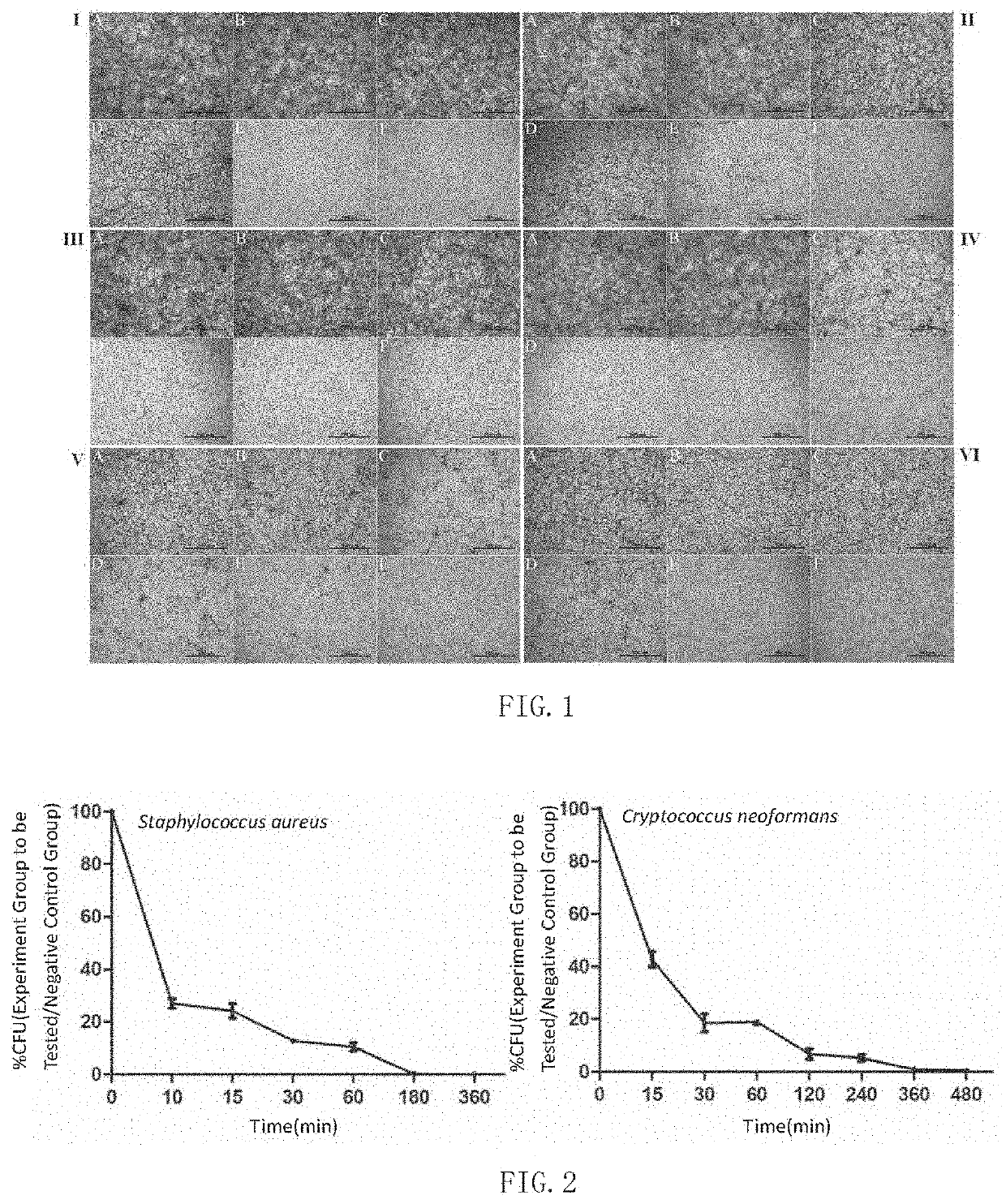
Figure 1 
Figure 2
Abstract
Description
RELATED APPLICATIONS
[0001] This application is a continuation of and claims priority to PCT / CN2018 / 092043, filed on Jun. 20, 2018, which is incorporated herein by reference.FIELD OF THE DISCLOSURE
[0002] The present disclosure relates to the field of marine marine biotechnology, in particular to an antimicrobial peptide Sparamosin from Scylla paramamosain and applications thereof.BACKGROUND OF THE DISCLOSURE
[0003] Antimicrobial peptides (AMPs), as a kind of small molecules, have been widely found in natural organisms and exhibit broad-spectrum antimicrobial activity. They are considered to be indispensable components of host innate immunity, and play a crucial role in the infection of exogenous pathogens. In addition to their antimicrobial functions, some AMPs have immunomodulatory activity in the body. In 1981, Boman et al. first discovered the AMP cecropin from Hyalophora cecropia. Since then, more than 3,000 AMPs have been discovered in plants, insects, marine organisms, amphibians, ...
Examples
embodiment 1
Preparation of Sparamosin and Sparamosin26-54
[0024]The ORF sequence of Sparamosin is as follows:
ATGGCGCGCCACGTGCTCCCGCTGGTGTTGCTACTTGTGGCTCTTGTGGTGCGACTCATTTTGTCTGCACCTGTCCCTGATCCAGACTCTGAACAGAGCAATATATCTGAAGTGCTAAAGGTGCAACATTCCATCTTCAGCGGCCTGGGCCCCAACCCGTGCCGCAAGAAATGCTACAAAAGGGATTTCTTGGGTCGATGTCGCCTGAATTTCACATGTATGTTTGGATGA
[0025]The full length cDNA sequence of Sparamosin was obtained using 5′ RACE and 3′ RACE PCR and sequence splicing. The ORF of Sparamosin is 231 bp (containing the termination codon TGA), with the gene accession number in GenBank as MH423837.
[0026]Gene-specific primers were designed according to the cDNA sequence of Sparamosin in the sequencing results of transcriptome (Table 1).
TABLE 1The sequence amplification primers of SparamosinPrimer NameSequence 5′-3′Sparamosin 5′ 1CCCAGGCCGCTGAAGATGGAATGTTSparamosin 5′ 2TGAGTCGCACCACAAGAGCCACASparamosin 3′ 1TGTGGCTCTTGTGGTGCGACTCASparamosin 3′ 2TGTCTGCACCTGTCCCTGATCCALong PrimerCTAATACGACTCACTATAGGGCAAGCAGTGGTATCAACGCAG...
embodiment 2
The Determination of the MIC and Minimum Bactericidal Concentration (MBC) of Sparamosin and Sparamosin26-54
[0049]The strains involved in this embodiment include: S. aureus, Corynebacterium glutamicum, Bacillus cereus, Pseudomonas fluorescens, Pseudomonas aeruginosa, Escherichia coli, C. neoformans, C. albicans, Pichia pastoris GS115, A. niger, Aspergillus flavus, F. graminearum, F. oxysporum, A. ochraceus, A. fumigatus, and N. crasa. P. pastoris GS115 was purchased from the company Invitrogen, and all other strains were purchased from China General Microbiological Culture Collection Center (CGMCC), which were stored in this lab.
[0050]{circle around (1)} S. aureus, C. glutamicum, B. cereus, P. fluorescens, P. aeruginosa, E. coli were inoculated on nutrient broth (NB) agar and cultured for 1-2 days. C. neoformans, C. albicans, P. pastoris GS115 were inoculated on yeast extract peptone dextrose (YPD) agar and cultured at 28° C. for 1-3 days. The spores of A. niger, A. flavus, F. grami...
embodiment 3
Anti-Mold Properties of Sparamosin26-54
[0060]{circle around (1)} The spores of A. niger, N. crasa, F. graminearum, F. oxysporum, A. ochraceus, and A. fumigatus were inoculated on PDA plates and cultured at 28° C. for 1-7 days.
[0061]{circle around (2)} Molds were then inoculated on the PDA plates and cultured at 28° C. for 1-7 days. The mold spores were washed away from solid culture medium with 10 mM sodium phosphate buffer and diluted in a mixed solution of potato dextrose broth and sodium phosphate buffer. The concentration of spores was determined using a hemocytometer under an optical microscope and adjusted to 5×10⁴ spores / mL.
[0062]{circle around (3)} Sparamosin and Sparamosin26-54 were diluted to 3, 6, 12, 24, 48 and 96 μM with sterilized Milli-Q water. The peptide solutions should be filter-sterilized using a 0.22-μm pore size filter.
[0063]{circle around (4)} Each test was set up with a negative control group and an experimental group in sterile 96-well microtiter plates. Al...