
Rapid immunoselection cloning method
a cloning method and immunoselection technology, applied in the field of recombinant genetics, can solve the problems of difficult to detect clones containing cdna complementary to mrna species present in the initial library population, difficult to build large plasmid libraries, and the library size rarely approaches the level of phage cloning techniques, and achieves high efficiency and expression. high
Patent Information
- Authority / Receiving Office
- US · United States
- Patent Type
- Patents(United States)
- Current Assignee / Owner
- Publication Date
- 2006-10-10
- Estimated Expiration
- Not applicable · inactive patent
Smart Images
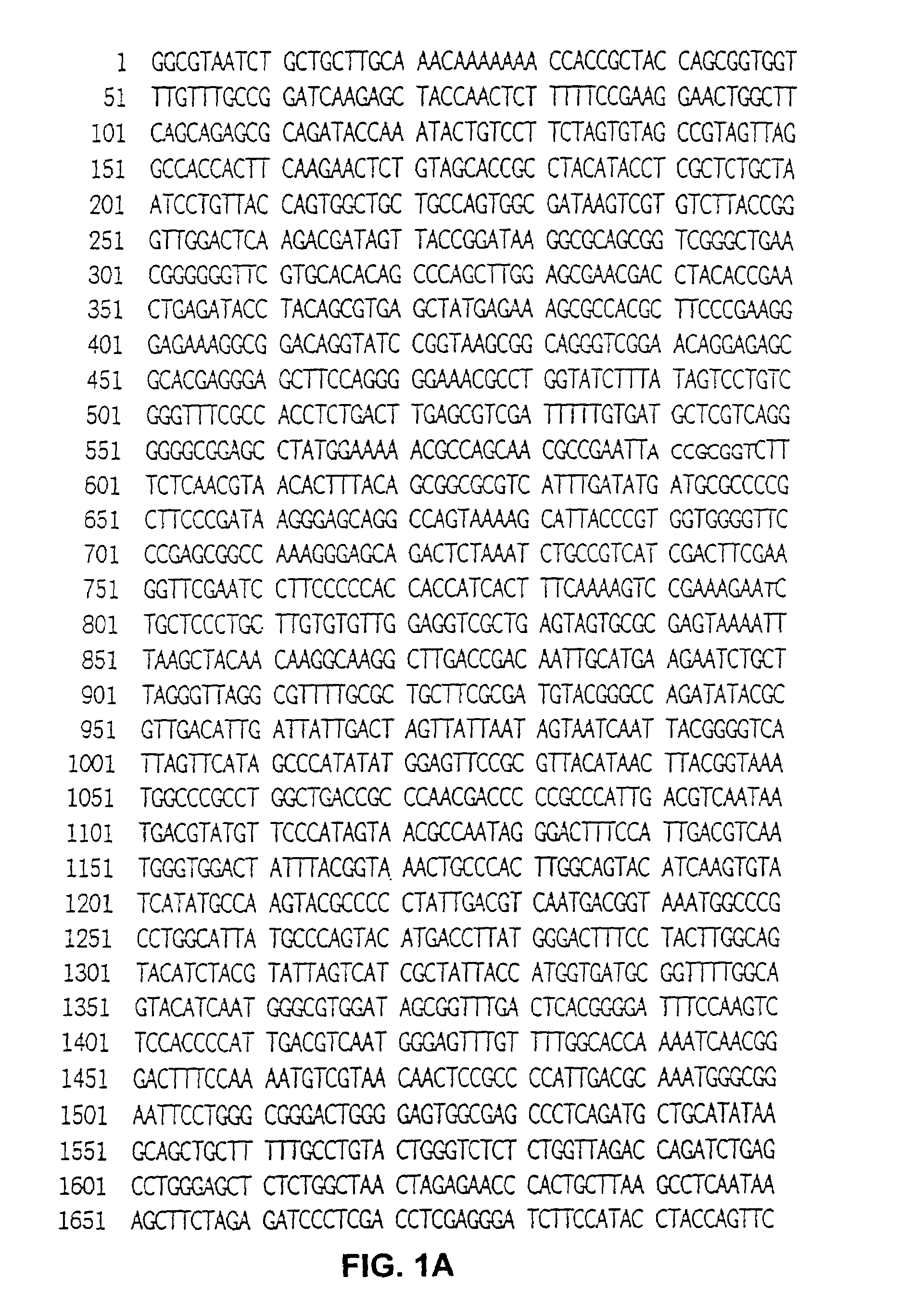
Figure 1 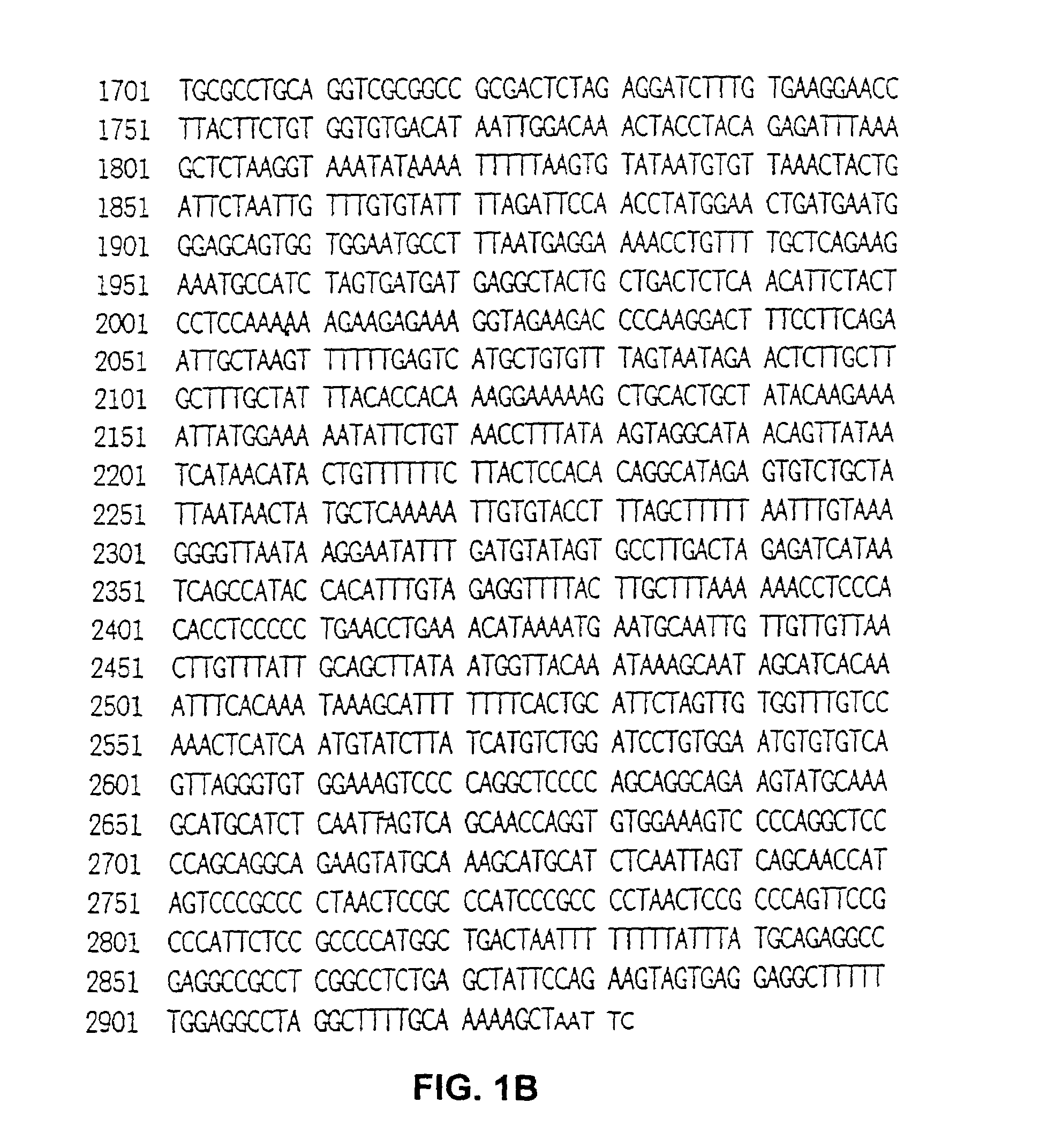
Figure 2 
Figure 3
Abstract
Description
[0001] This application is a divisional of U.S. patent application Ser. No. 07 / 983,647, filed Dec. 1, 1992; now U.S. Pat. No. 6,218,525 which is a continuation-in-part of U.S. patent application Ser. No. 07 / 553,759, filed Jul. 13, 1990 now abandoned; which is a continuation-in-in-part of U.S. patent application Ser. No. 07 / 498,809 filed Mar. 23, 1990 (abandoned); which is a continuation-in-part of U.S. patent application Ser. No. 07 / 379,076, filed Jul. 13, 1989 (abandoned); which is a continuation-in-part of U.S. patent application Ser. No. 07 / 160,416, filed Feb. 25, 1988 (abandoned). Each of these predecessor applications and all references cited herein are incorporated by reference in their entirety.BACKGROUND
[0002] A basic tool in the field of recombinant genetics is the conversion of poly(A)+ mRNA to double-stranded (ds) cDNA, which then can be inserted into a cloning vector and expressed in an appropriate host cell. Molecular cloning methods for ds cDNA have been reviewed, for ex...
Examples
example i
Isolation, Molecular Cloning, and Structure of the Human CD2 Antigen
[0124]A COS cell expression vector was constructed from piSV (Little et al., Mol. Biol. Med. 1:473–488 (1983)) by inserting a synthetic transcription unit between the suppressor tRNA gene and the SV40 origin. The transcription unit consisted of a chimeric promoter composed of human cytomegalovirus AD169 immediately early enhancer sequences fused to the HIV LTR −67 to +80 sequences. Immediately downstream from the LTR +80 sequence was inserted a polylinker containing two BstXI sites separated by a 350 bp stuffer; the BstXI sites were flanked by Xbal sites, which could also be used to excise the insert. Downstream from the polylinker were placed the SV40 small t antigen splice and early region polyadenylation signals derived from pSV2. The nucleotide sequence of the vector is shown in FIGS. 1A–1B.
cDNA Library Construction
[0125]RNA was prepared from HPB-ALL cells by the guanidinium thiocyanate / CsCl method, as described...
example ii
Isolation and Molecular Cloning of Human LFA-3 Antigen
[0153]The previous example shows that cDNAs encoding surface antigens, such as the CD2 antigen, can be isolated by the transient expression system of the present invention, in which COS cells transfected with cDNA libraries are allowed to attach to (“panned” on) antibody-coated plates. Plasmid DNA is recovered from cells adhering to the plates, transformed into E. coli, and the process is repeated, usually twice, to isolate the desired clone. Although powerful, this approach cannot be used when the monoclonal antibodies used for panning recognize determinants on the untransfected cells. This appears to be the case for anti-LFA3 monoclonal TS2 / 9. However, a similar transient expression system based on polyoma virus replication-competent cells should allow almost all monoclonals to be used, since the probability of cross reaction between murine antibodies and murine cell surface determinants should usually be small.
[0154]A new expr...
example iii
Isolation and Molecular Cloning of the Human CD28 cDNA Antigen
[0161]The previous examples illustrate the monoclonal antibody-based technique of the present invention for enrichment of cDNAs encoding surface antigens. In the present example, a method of constructing plasmid expression libraries is described which allows the enrichment technique to be fully exploited. The method of the present invention for making plasmid expression libraries is of general use for expression cloning.
[0162]The antibody selection technique of the present invention has also been applied to isolate a cDNA clone encoding the CD28 antigen. The antigen shares substantial homology with members of the immunoglobulin superfamily and forms a dimer structure on the surface of transfected COS cells similar to the dimer structure found on T lymphocytes.
Preparation of cDNA Libraries
[0163]Poly(A)+ RNA was prepared from the human T-cell tumor line HPB-ALL by oligo(dT) cellulose chromatography of total RNA isolated by ...