
Communications link time transfer to improve navigation system accuracy
a technology of communication link and navigation system, applied in the field of navigation system and global navigation satellite system, can solve the problems of limited performance improvement possibilities, poor vertical accuracy of gps, clustering of available satellites, etc., and achieve the effect of improving satellite navigation capability, significant accuracy improvement, and extending
Patent Information
- Authority / Receiving Office
- US · United States
- Patent Type
- Patents(United States)
- Current Assignee / Owner
- Publication Date
- 2010-03-16
Smart Images
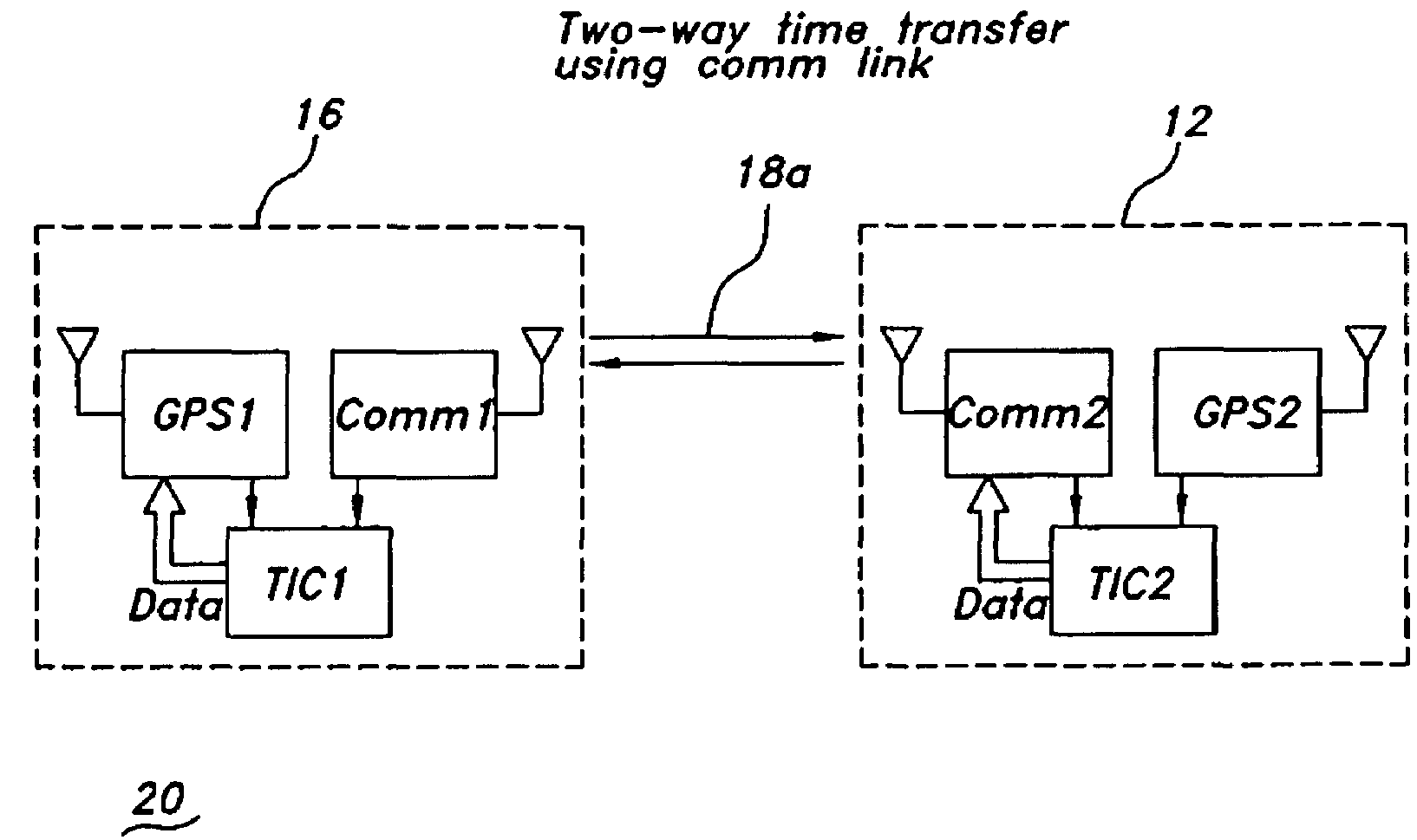
Figure 1 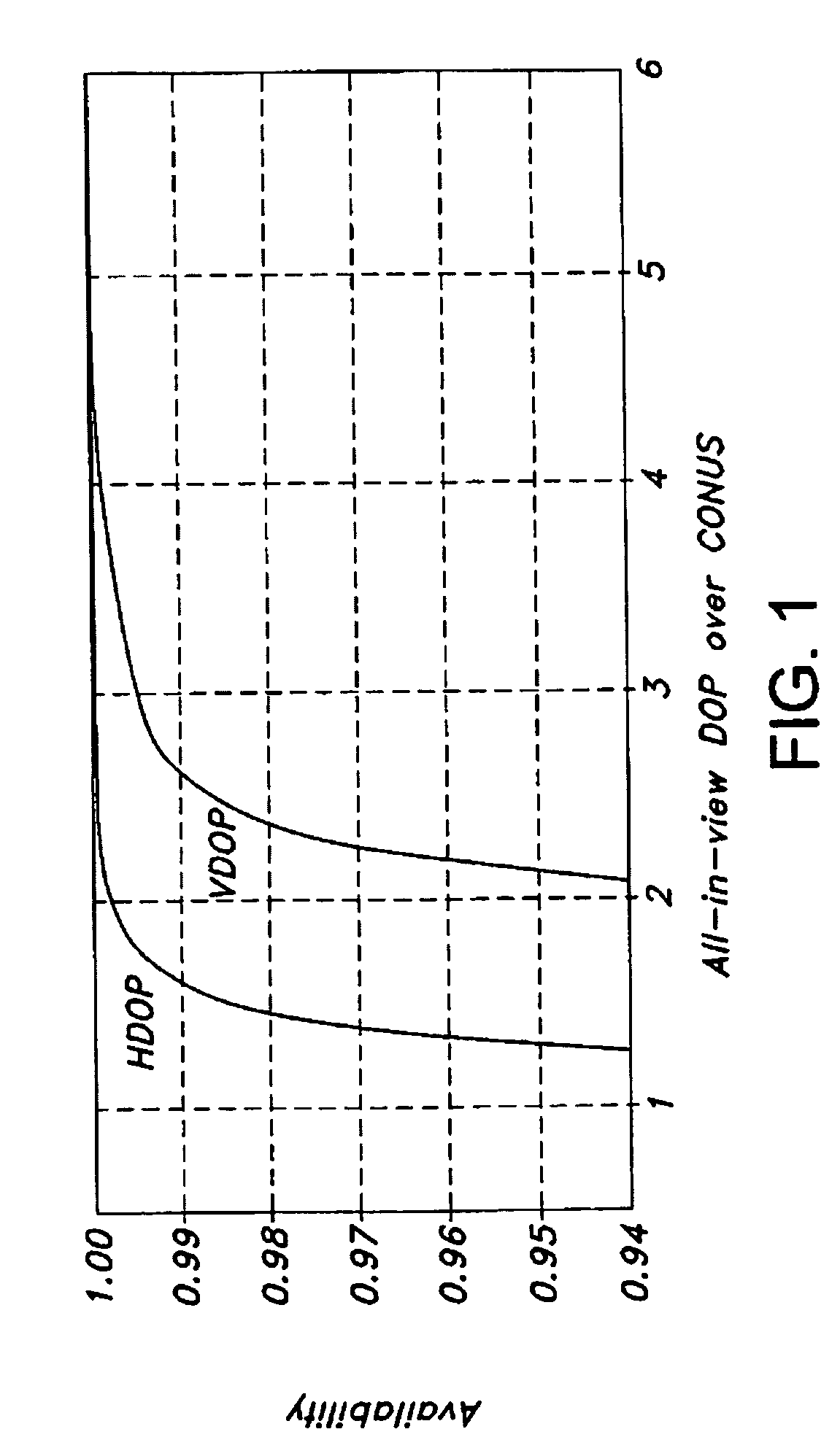
Figure 2 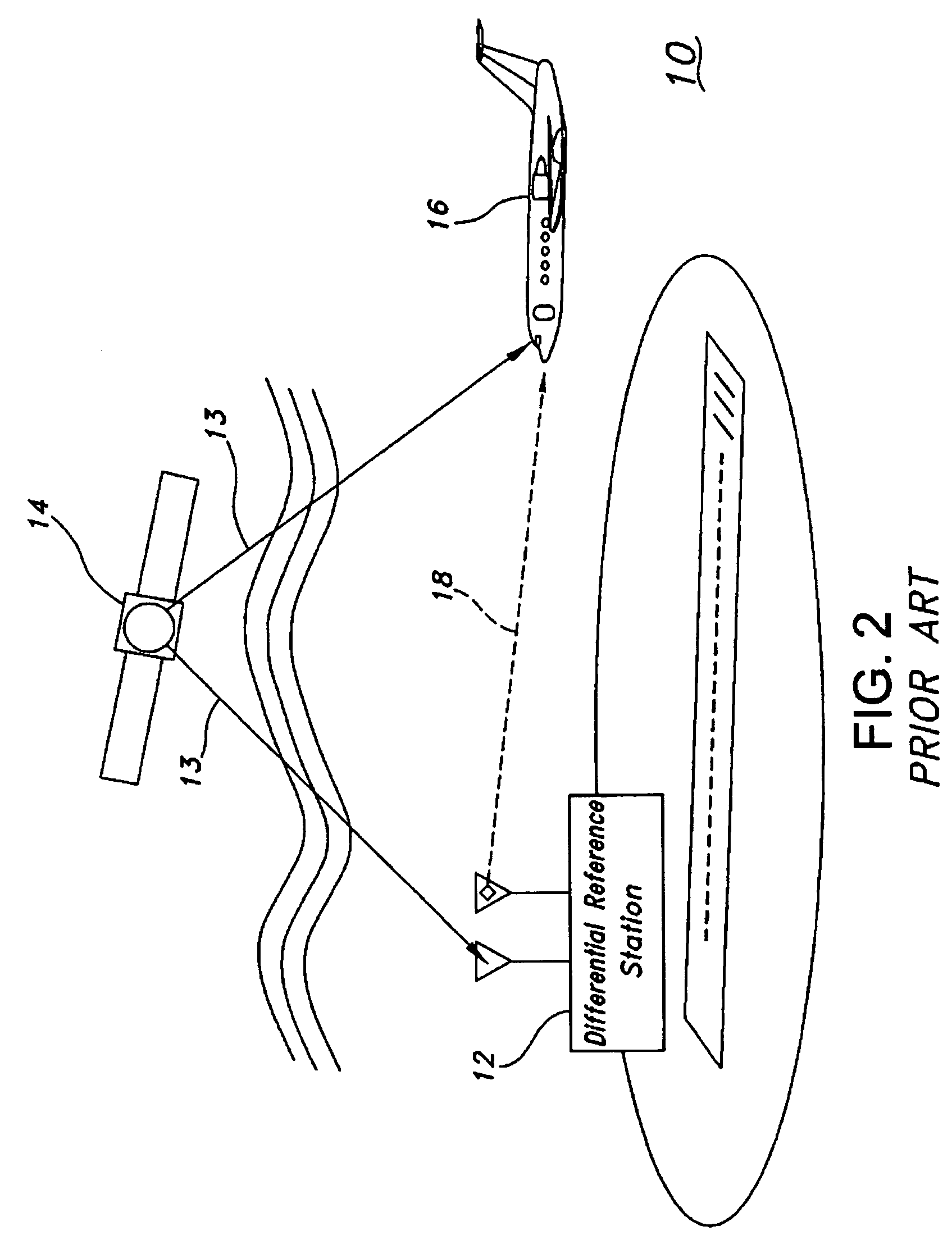
Figure 3
Abstract
Description
BACKGROUND OF THE INVENTION
[0001] This invention relates to navigation systems, Global Navigation Satellite Systems (GNSS), the Global Positioning System (GPS), and specifically to a method of using a two-way communications link to improve differential navigation system accuracy.
[0002] With few exceptions, GPS vertical accuracy is generally poorer than its horizontal accuracy. This is particularly acute at raised masked angles that constrict the visible sky and lead to clustering of the available satellites. A similar effect on horizontal accuracy is also found to be caused by clustering of satellites in a directional sense. For airborne applications that require vertical accuracy for guidance and control, but are saddled with operational environments of restricted satellite visibility, previous efforts have been focused primarily on lowering the range error or raising the number of ranging sources, both of which give only limited possibilities for performance improvement. Alternative...
Examples
Embodiment Construction
[0023]The present invention is for a method and apparatus for communications link time transfer to improve positioning accuracy in a differential navigation system. A high-precision time transfer method uses an independent two-way communication link for time transfer from a reference station to achieve nanosecond-level relative timing accuracy. Improved relative clock error in an aircraft or other remote station with respect to the reference station reduces dilution of precision (DOP) and improves positioning accuracy.
[0024]The present invention is applicable to but not limited to GNSS, GPS, and other passive ranging navigation systems such as Loran. The present invention is applicable to future navigation systems that use non-navigation signals of opportunity. The present invention is described herein in terms of a GPS system and specifically a differential GPS (DGPS) system. The invention is described below for improving the vertical dilution of precision (VDOP) but may be used to...