
Lubricating oil composition and additive therefor having improved wear properties
a technology of additives and lubricating oil, which is applied in the direction of additives, lubricant compositions, petroleum industry, etc., can solve the problems of restricting the maximum phosphorus levels of lubricants, and achieve the effect of increasing the phosphorus concentration and sufficient or improving wear performan
Patent Information
- Authority / Receiving Office
- US · United States
- Patent Type
- Patents(United States)
- Current Assignee / Owner
- Publication Date
- 2017-02-21
Smart Images
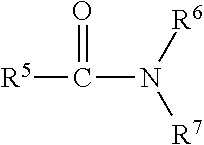
Figure 1 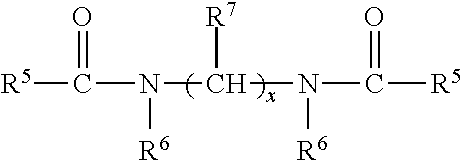
Figure 2 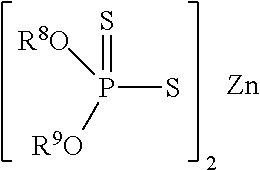
Figure 3
Abstract
Description
RELATED APPLICATION
[0001] This application claims priority to provisional application Ser. No. 62 / 05,135, filed May 30, 2014.TECHNICAL FIELD
[0002] The disclosure relates to lubricating oil compositions. More specifically, the present invention is directed to crankcase lubricants for compression-ignited (diesel) engines, especially heavy duty diesel engines. These lubricating compositions provide improved for improving the wear properties of the lubricant composition.BACKGROUND AND SUMMARY
[0003] A lubricating oil composition for compressed-ignited engines for land-based vehicles often has to meet certain performance requirements as stipulated in specifications established by the industry and / or original equipment manufacturers (OEMs). In general, heavy duty engine oils have to provide adequate levels of oxidation and wear protection, sludge and deposit formation control, fuel economy benefits, compatibility with sealing materials, and other desirable physical and rheological characteris...
Examples
example 1
Functionalized Dispersant
[0152]The functionalized dispersant used in the following experiments is described more fully in U.S. Patent Publication No. 2013 / 0040866, which is incorporated herein by reference. The set-up requires a 1 L 4-neck flask with agitator, addition funnel, temperature probe, temperature controller, heating mantle, Dean-Stark trap, and a condenser. The flask was charged with 2100 Mn polyisobutylene succinic anhydride (PIBSA) (195.0 g; 0.135 mole) and heated to 160° C. under a nitrogen blanket. Polyethylene amine mixture (21.17 g; 0.112 mole) was added drop-wise over 30 min. The reaction mixture was allowed to stir for 4 hours and then was vacuum stripped for 1 hour at 711 mm Hg. Process oil (172.0 g) was added and the mixture was stirred for 15 minutes. 1,8-Naphthalic anhydride (13.39 g; 0.068 mole) was added in one portion at 160° C. The reaction mixture was heated to 165° C. and allowed to stir for 4 hours. Vacuum was applied (711 mm Hg) for 1 hour to remove an...
example 2
[0154]In the following examples, the lubricating compositions contained the additives described in the table with the balance being Group II base oil. The wear scars of lubricant compositions were determined using a High Frequency Reciprocating Rig (HFRR). In the HFRR wear test, a steel ball immersed in the oil was oscillated across a steel disk at a speed of 20 Hz over a 1 mm path. A 7 Newton (about 1.0 GPa) load was applied between the ball and the disk and the tests were performed while holding the oil at 120° C. for one hour. After testing, a two-dimensional profile of the wear scar on the disk was determined. The cross-sectional area of the wear scar was reported and listed in the following table wherein the lower the value of the cross-sectional area, the better the anti-wear performance of the oil.
[0155]In Table 3, FM1 was oleamide and FM2 was glycerol monooleate (GMO). The ZDDP 1 was zinc dihydrocarbyl dithiophosphate derived from a primary alcohol, 2-ethylhexanol. The Dispe...