
Low-voltage microwave radiation carbon nanotube hydroxyl modification method
A carbon nanotube and microwave radiation technology, applied in the field of carbon nanotube hydroxyl modification, can solve the problems of complex carbon nanotube process, long reaction time, large energy consumption, etc., to enhance adsorption and ion exchange capacity, uniform reaction, The effect of improving production efficiency
Inactive Publication Date: 2010-11-10
HARBIN INST OF TECH
View PDF1 Cites 0 Cited by
- Summary
- Abstract
- Description
- Claims
- Application Information
AI Technical Summary
Problems solved by technology
The purpose of the present invention is to solve the problems of complex process, long reaction time, large energy consumption and high cost in the modification of carbon nanotubes in the prior art, and to provide a method for modifying the hydroxyl group of carbon nanotubes by low-pressure microwave radiation
Method used
the structure of the environmentally friendly knitted fabric provided by the present invention; figure 2 Flow chart of the yarn wrapping machine for environmentally friendly knitted fabrics and storage devices; image 3 Is the parameter map of the yarn covering machine
View moreImage
Smart Image Click on the blue labels to locate them in the text.
Smart ImageViewing Examples

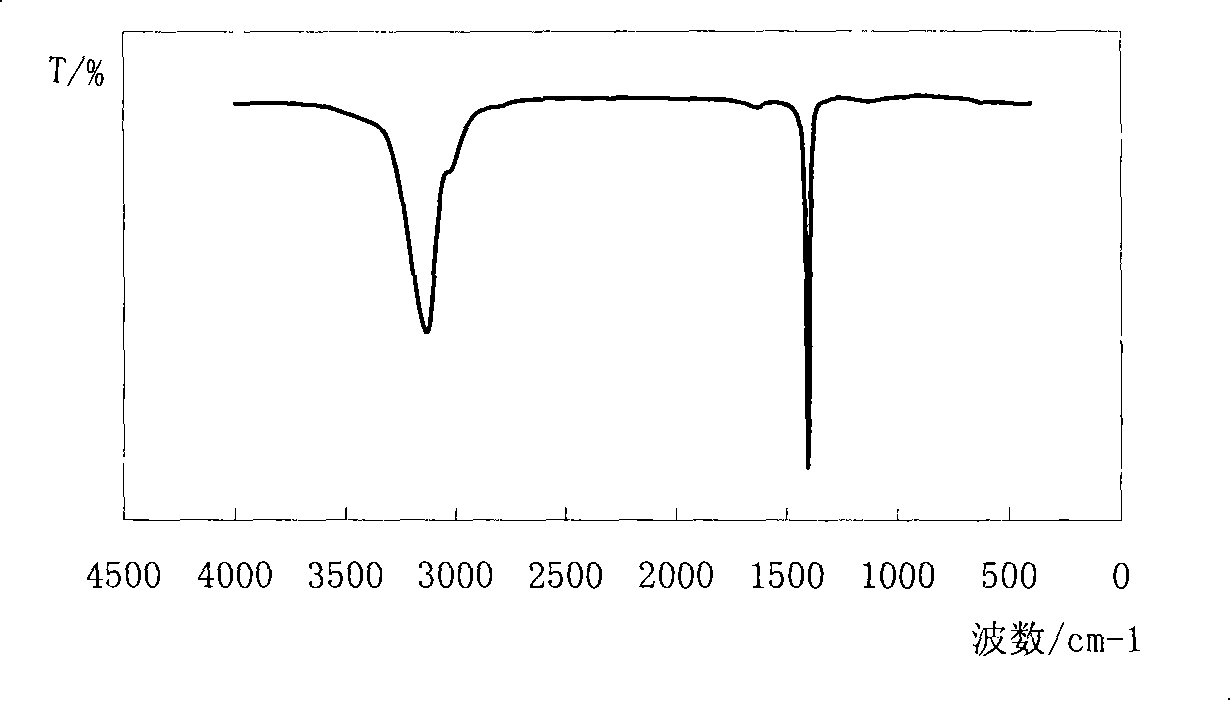
Examples
Experimental program
Comparison scheme
Effect test
specific Embodiment approach 1
specific Embodiment approach 2
specific Embodiment approach 3
the structure of the environmentally friendly knitted fabric provided by the present invention; figure 2 Flow chart of the yarn wrapping machine for environmentally friendly knitted fabrics and storage devices; image 3 Is the parameter map of the yarn covering machine
Login to View More PUM
| Property | Measurement | Unit |
|---|---|---|
| pore size | aaaaa | aaaaa |
Login to View More
Abstract
The invention provides a hydroxy modification method for a low-pressure microwave radiation carbon nanometer tube, it relates to the hydroxy modification method of the carbon nanometer tube and solves the problems of the existing modification technology on nanometer tube that the technical process is complex, the reaction time is long, and the energy consumption and the cost are high. The modification method includes the steps of: 1. soaking carbon nanometer tube into alkali solution, then heat by microwave under low pressure, and remove the upper layer of alkali solution after the cooling and precipitation to obtain the precipitate; 2. cleaning and dry the precipitate to obtain the hydroxy-modified carbon nanometer tube. The invention greatly shortens the reaction time and has the advantages of simple technique, low energy consumption and low cost.
Description
A method for hydroxyl modification of carbon nanotubes by low-pressure microwave irradiation technical field The invention relates to a method for modifying a carbon nanotube hydroxyl group. Background technique Japanese electron microscopy expert Iijima first discovered carbon nanotubes in 1991. Due to their strong mechanical properties, high tensile strength, and good flexibility, carbon nanotubes are widely used in many composite materials such as electronics, metals, plastics, fibers, and ceramics. ; Carbon nanotubes have become the best hydrogen storage materials so far, and can also be used as an excellent carrier for many types of reaction catalysts. However, due to the poor hydrophilicity of carbon nanotubes, modification of carbon nanotubes is an essential part if the performance of carbon nanotubes is to be maximized. Although there are many methods for modifying carbon nanotubes at present, the more successful one is "A Preparation Method for Hydroxyl Modificat...
Claims
the structure of the environmentally friendly knitted fabric provided by the present invention; figure 2 Flow chart of the yarn wrapping machine for environmentally friendly knitted fabrics and storage devices; image 3 Is the parameter map of the yarn covering machine
Login to View More Application Information
Patent Timeline
 Login to View More
 Patent Type & AuthorityPatents(China)
IPC IPC(8): C01B31/02
Inventor王鹏史书杰曹海雷
OwnerHARBIN INST OF TECH