Check patentability & draft patents in minutes with Patsnap Eureka AI!

Aluminum alloy sheet for lithographic printing plate and method of producing the same

A lithographic printing plate, aluminum alloy plate technology, applied in printing, metal rolling, printing technology, etc., can solve the problems of reduced production efficiency, increased manufacturing cost, etc., to achieve improved production efficiency, uniform occurrence of pits, heavy The effect of uniform crystallinity

Active Publication Date: 2012-05-30
FUJIFILM CORP +1
View PDF0 Cites 0 Cited by
  • Summary
  • Abstract
  • Description
  • Claims
  • Application Information

AI Technical Summary

Problems solved by technology

[0004] Conventionally, these aluminum alloy materials for lithographic printing plates have been subjected to homogenization treatment of ingots, hot rolling, cold rolling, and intermediate annealing in the middle of cold rolling to form a recrystallized structure on the surface of the rolled sheet. Secondary cold rolling, thereby making the generation of pits uniform during electrochemical etching treatment, and preventing the occurrence of streaks when processing as a printing plate, but performing intermediate annealing inevitably brings about a reduction in production efficiency and a decrease in manufacturing costs. increase, hope to improve

Method used

the structure of the environmentally friendly knitted fabric provided by the present invention; figure 2 Flow chart of the yarn wrapping machine for environmentally friendly knitted fabrics and storage devices; image 3 Is the parameter map of the yarn covering machine
View more

Image

Smart Image Click on the blue labels to locate them in the text.
Viewing Examples
Smart Image
  • Aluminum alloy sheet for lithographic printing plate and method of producing the same
  • Aluminum alloy sheet for lithographic printing plate and method of producing the same
  • Aluminum alloy sheet for lithographic printing plate and method of producing the same

Examples

Experimental program
Comparison scheme
Effect test

Embodiment 1

[0032] Embodiment 1, comparative example 1

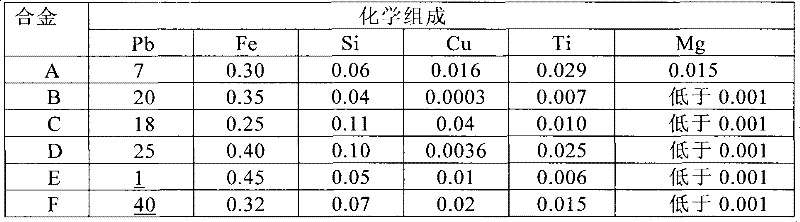
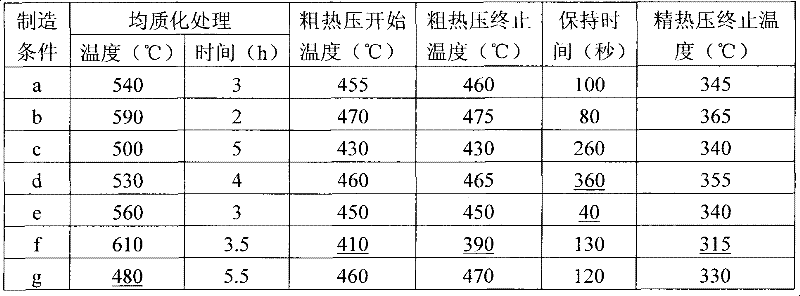
[0033] The aluminum alloy having the composition shown in Table 1 was melted and cast, and each rolled surface of the obtained ingot was cut by 5 mm / one side so that the thickness became 500 mm, and each ingot was homogenized under the conditions shown in Table 2. Texturization treatment, hot rolling, and finish hot rolling to make the thickness of the plate reach 3mm, and coil it into a coil. After the hot rolling, cold rolling was performed without intermediate annealing to obtain a cold-rolled sheet having a thickness of 0.3 mm. In addition, in Tables 1-2, those which deviate from the conditions of this invention are underlined.

[0034] Table 1

[0035]

[0036] "Remarks" only Pb unit adopts ppm, others adopt mass%

[0037] Table 2

[0038]

[0039] "Remarks" Holding time: the holding time after the end of rough hot rolling and before the start of finish hot rolling

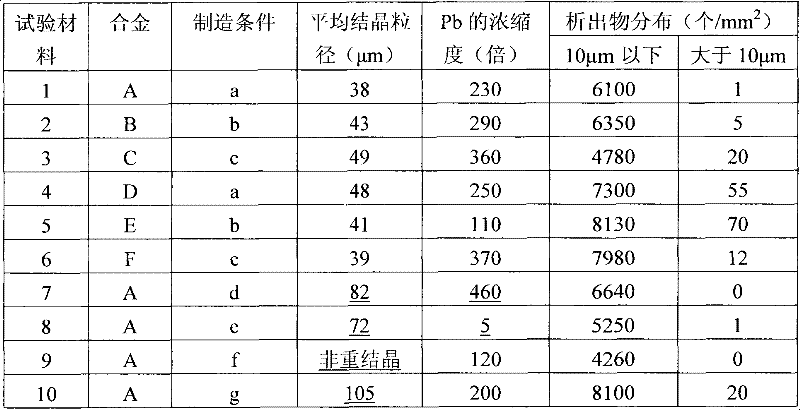
[0040] Using the cold-rolled material as the test ...

the structure of the environmentally friendly knitted fabric provided by the present invention; figure 2 Flow chart of the yarn wrapping machine for environmentally friendly knitted fabrics and storage devices; image 3 Is the parameter map of the yarn covering machine
Login to View More

PUM

No PUM Login to View More

Abstract

The invention claims an aluminum alloy sheet for a lithographic printing plate, which is manufactured by refined hot rolling without intermediate annealing and then by cold rolling to obtain ultimate thickness, in which a Pb is concentrated to a surface layer portion and generation of a recess is uniform while electrolysis treatment and which generates no stripes when processing as a printing plate, the invention is characterized by containing 0.03 to 0.15% of Si, 0.2 to 0.6% of Fe, 0.005 to 0.05% of Ti, and 2 to 30 ppm of Pb, with the balance being aluminum and unavoidable impurities, and byhaving an average recrystallized grain diameter of 50 mum or less in the surface layer portion n a direction perpendicular to a rolling direction, and having a Pb concentration 100 to 400 times an average Pb concentration in the surface layer portion up to a depth of 0.2 mum from the surface.

Description

technical field [0001] The present invention relates to an aluminum alloy plate for lithographic printing plates, in particular to an aluminum alloy plate for lithographic printing plates which is suitable for surface roughening by electrochemical etching and has excellent production efficiency during manufacture and a manufacturing method thereof. Background technique [0002] As a support for lithographic printing plates (including offset printing plates), an aluminum alloy plate is generally used. From the viewpoint of improving the adhesion of the photosensitive film and improving the water retention of the non-image area, the surface of the support is roughened, but in recent years In the past, due to the excellent plate-making adaptability or printing performance, and the possibility of continuous processing in the coil, etc., the method of roughening the surface of the aluminum alloy plate for the support by electrochemical etching has been rapidly developed. [0003]...

Claims

the structure of the environmentally friendly knitted fabric provided by the present invention; figure 2 Flow chart of the yarn wrapping machine for environmentally friendly knitted fabrics and storage devices; image 3 Is the parameter map of the yarn covering machine
Login to View More

Application Information

Patent Timeline
no application Login to View More
Patent Type & Authority Patents(China)
IPC IPC(8): B21B1/22C22C21/00
CPCC22F1/04B41N1/083C22C21/00
Inventor 上杉彰男松浦睦扇博史日比野淳
Owner FUJIFILM CORP
Features
  • R&D
  • Intellectual Property
  • Life Sciences
  • Materials
  • Tech Scout
Why Patsnap Eureka
  • Unparalleled Data Quality
  • Higher Quality Content
  • 60% Fewer Hallucinations
Social media
Patsnap Eureka Blog
Learn More