2CPFSK (continuous-phase frequency-shift keying) digital-modulation super-Nyquist application device

A digital modulation and circuit technology, applied in the direction of frequency modulation carrier system, etc., can solve problems such as limiting the application range, seriously restricting the miniaturization design of the device, and increasing the number of up-conversion frequency of the transmitting device, and achieving the effect of overcoming the low intermediate frequency

CN102638428AInactive Publication Date: 2012-08-15NORTHWESTERN POLYTECHNICAL UNIV
2 Cites 2 Cited by

Patent Information

Authority / Receiving Office
CN · China
Patent Type
Applications(China)
Current Assignee / Owner
Publication Date
2012-08-15
Estimated Expiration
Not applicable · inactive patent

Smart Images

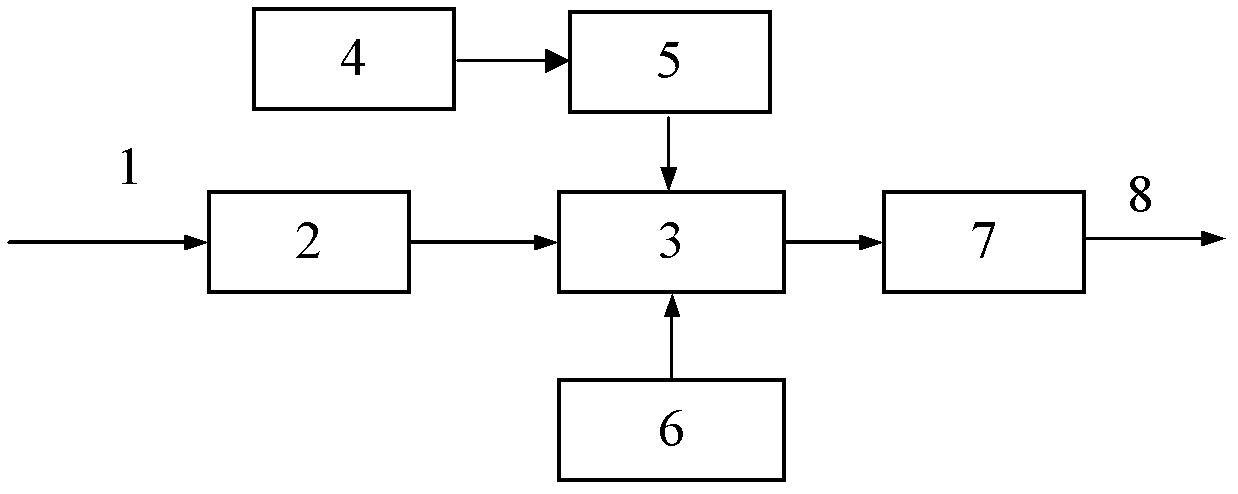
  • Figure 1
    Figure 1
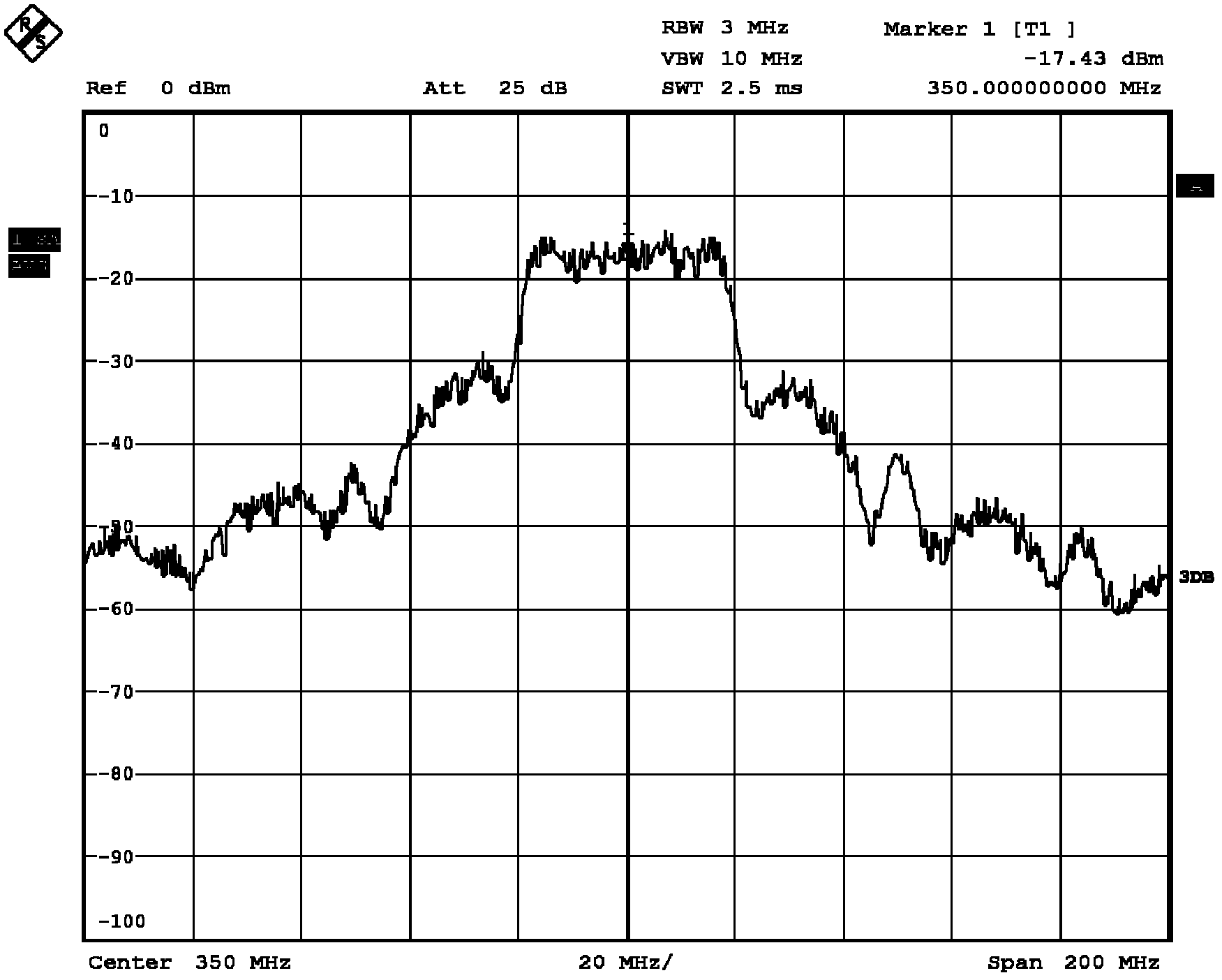
  • Figure 2
    Figure 2
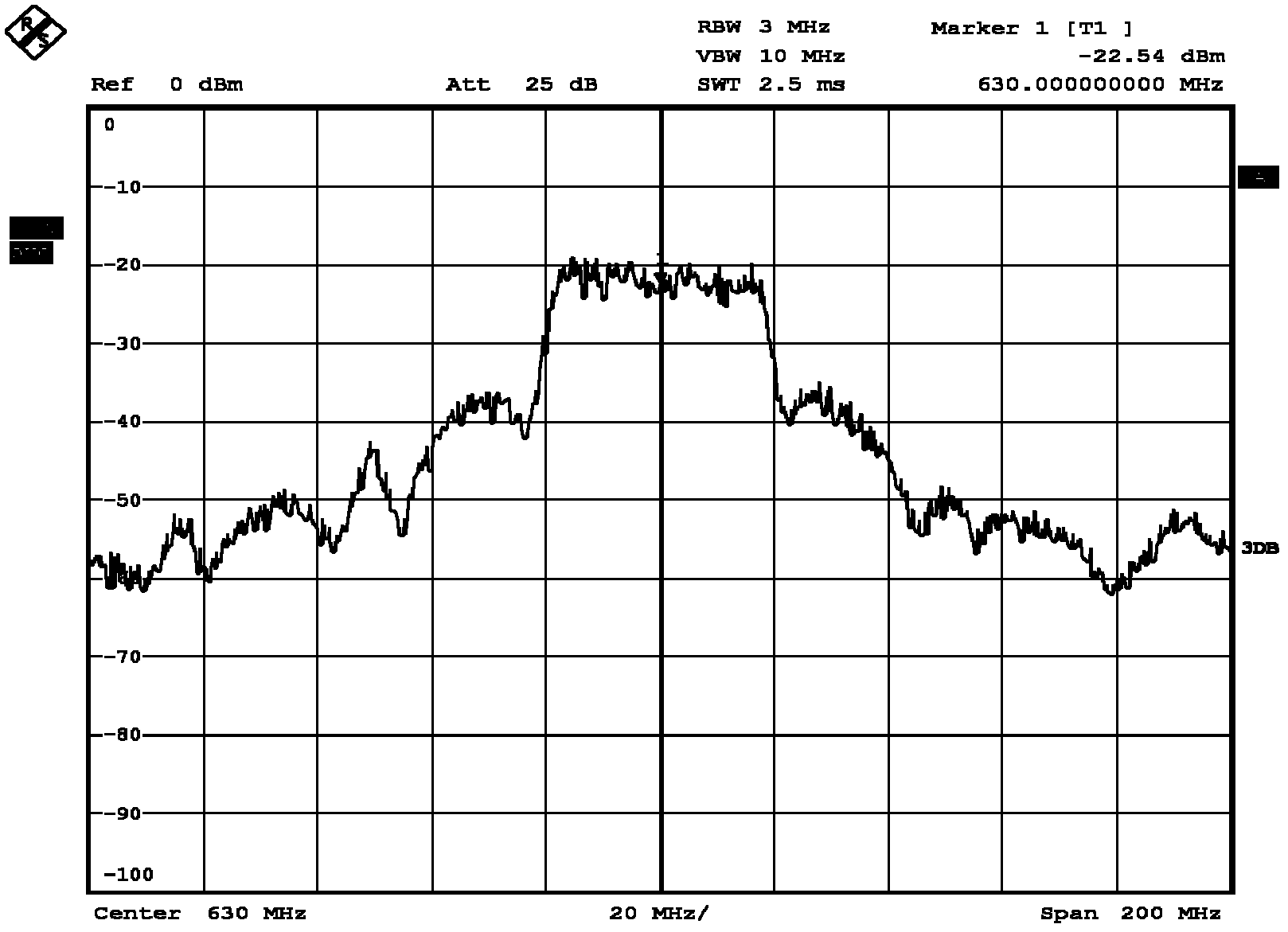
  • Figure 3
    Figure 3
Patent Text Reader

Abstract

The invention discloses a 2CPFSK (continuous-phase frequency-shift keying) digital-modulation super-Nyquist application device. A baseband signal is output to a DDS (direct digital synthesizer) circuit through a baseband signal receiving circuit, a differential LVPECL (low voltage positive emitter coupling logic) emitter receives a clock signal of a frequency reference source to provide a reference frequency for the DDS circuit, a singlechip is configured with a DDS inner register, the frequency content of a Profile0 register is selected as the output of the DDS circuit when a receiving signal is of low level, and the frequency content of a profile1 register is selected as the output of the DDS circuit when the receiving signal is of high level; and the output of the DDS circuit is subjected to outer frequency element filtering through a band pass filter to obtain a 2CPFSK modulation signal with the required frequency. According to the 2CPFSK digital-modulation super-Nyquist application disclosed by the invention, direct output frequency can reach L wave band or can be higher, bandwidth and transmission velocity are improved, frequency conversion times of a known 2CPFSK signal emitter is reduced, and the size of the emitter is reduced.
Need to check novelty before this filing date? Find Prior Art

Description

technical field

[0001] The invention relates to digital signal processing technology, in particular to a device for realizing high-speed 2CPFSK digital modulation based on DDS technology in the super-Nyquist interval. Background technique

[0002] At present, in the known UAV data link system, the output of the 2CPFSK digital modulation device is an intermediate frequency of 70MHz, and the lower intermediate frequency limits the bandwidth and transmission rate of the 2CPFSK digital modulation device. The output frequency of the 2CPFSK modulator given in "Application" is 70MHz, and the code rate of the baseband signal is 2.048Mbps. Secondly, due to the low intermediate frequency, the number of up-conversion times of the 2CPFSK signal transmitting device increases, and the volume of the transmitting device increases, which seriously restricts the miniaturization design of the device and limits its application range, especially in the UAV airborne environment with small space. ...

Examples

Embodiment Construction

[0014] The technical scheme adopted by the present invention to solve the technical problem is: comprising a baseband signal receiving circuit, a DDS circuit, a frequency reference source, a differential LVPECL transmitter, a single-chip microcomputer and a band-pass filter. The baseband signal receiving circuit is a high-speed signal receiver such as RS-422, RS-485, or a high-speed interface conversion circuit, which requires that the output port of the baseband signal receiving circuit is compatible with the level of the port connected to the DDS circuit. The baseband signal enters the baseband signal receiving circuit, and the output of the baseband signal receiving circuit is connected to the DDS circuit.

[0015] The output of the frequency reference source is connected to a differential LVPECL transmitter, and the differential LVPECL transmitter receives the clock signal of the frequency reference source and converts it into a differential LVPECL level output. The differ...