
A Method for Building an Optimal Model of Forest Stand Spatial Structure Based on Particle Swarm Optimization
A technology of particle swarm algorithm and establishment method, which is applied in the field of establishment of forest stand spatial structure optimization model based on particle swarm algorithm, can solve problems such as complex solution process, lack of optimal forest management examples, difficulty in finding near-natural model forests, etc.
- Summary
- Abstract
- Description
- Claims
- Application Information
AI Technical Summary
Problems solved by technology
Method used
Image


Examples
Embodiment 1
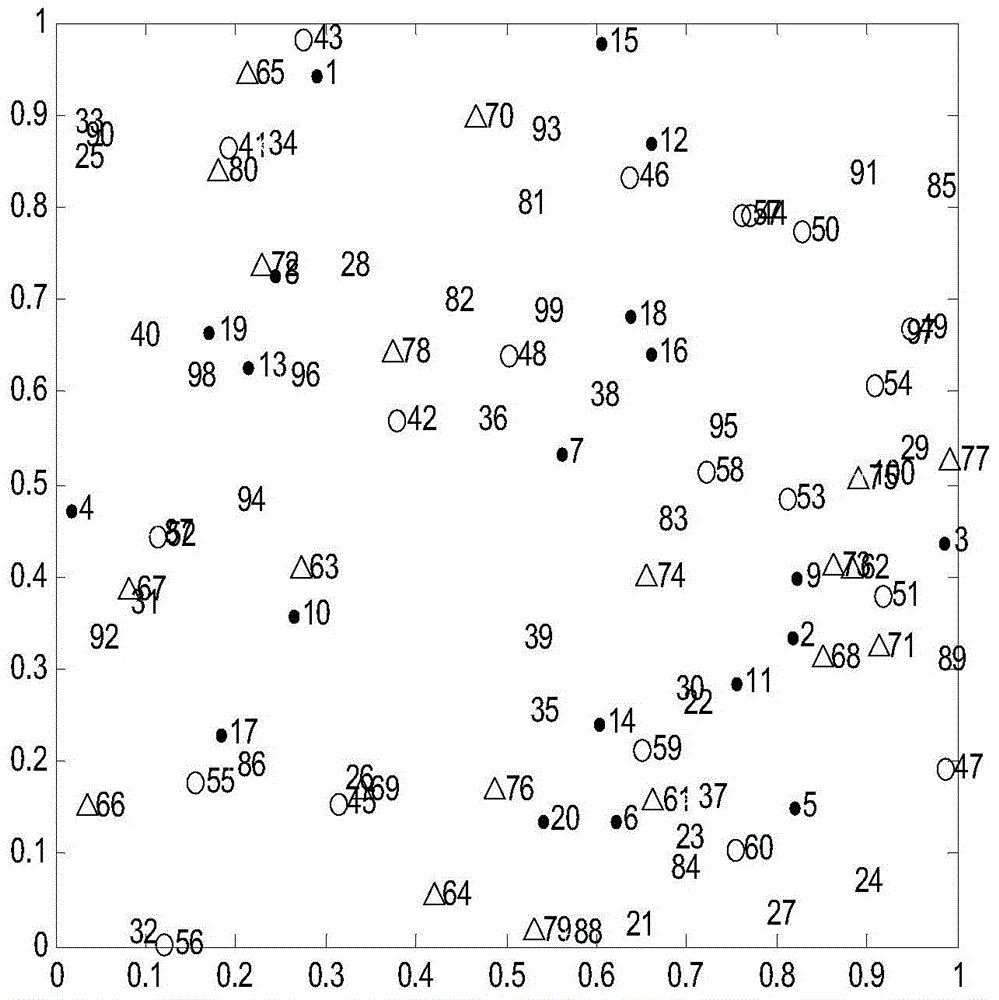
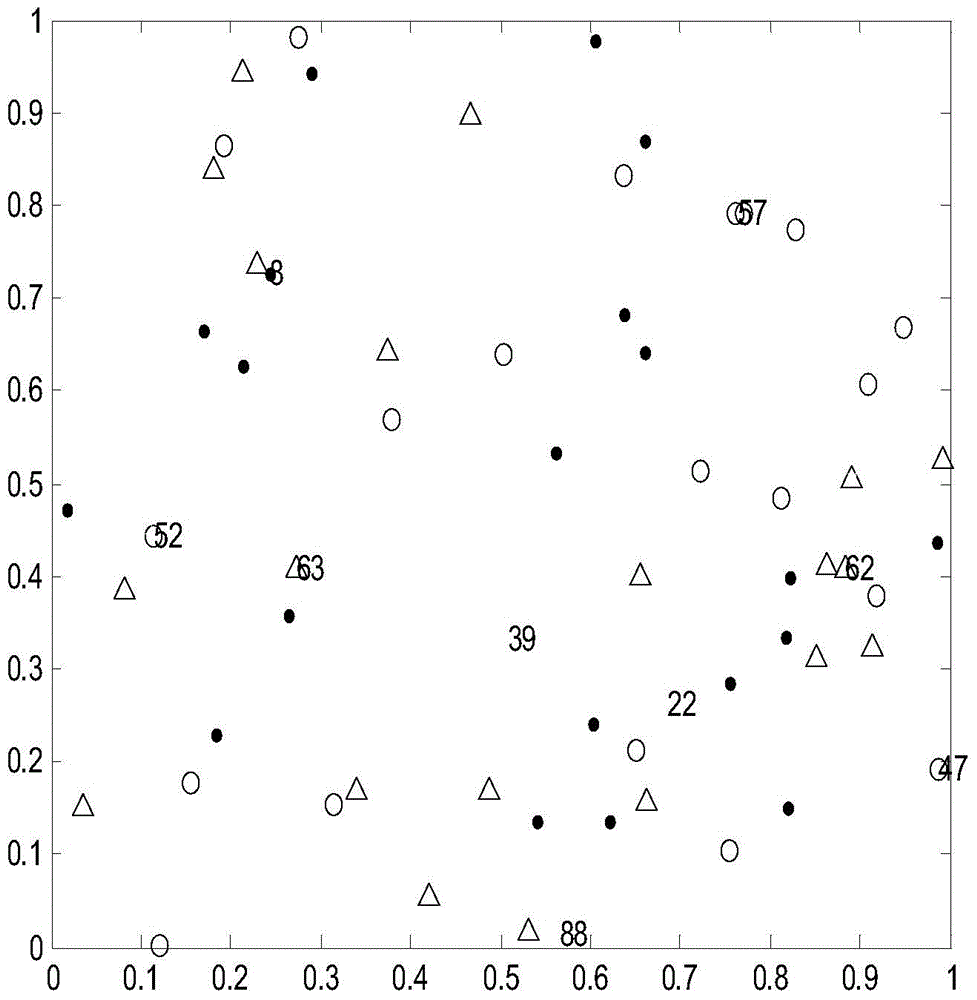
[0048] A forest stand was selected from Hefu National Forest Park in Changde, Hunan Province, with an area of 20m×20m, and the total station and other measuring equipment were used to measure the tree species belonging to the climax group and the transitional community tree species with a DBH greater than 5cm in the forest stand There are 101 trees in total, which belong to 6 tree species. The normalized spatial coordinate map of each tree is as follows figure 1 As shown, each tree is numbered, and the measured parameters are as follows:
[0049]
[0050] Randomly select 10% of the total number of trees whose DBH is greater than 5 centimeters in the tree species belonging to the climax group and the distance from the sideline greater than 5 meters in the transitional community tree species. In this example, 10 trees are used as the initial particle group. Take each tree as a particle, and the spatial coordinates of the tree in the forest stand as the position of the parti...
PUM
 Login to View More
 Abstract
Description
Claims
Application Information
 Login to View More