
WLAN (Wireless Local Area Network) equipment self-adaptive energy-saving method
An adaptive, device-based technology, applied in the direction of reducing energy consumption, advanced technology, power management, etc., can solve problems such as energy waste
- Summary
- Abstract
- Description
- Claims
- Application Information
AI Technical Summary
Problems solved by technology
Method used
Image

Examples
Embodiment Construction
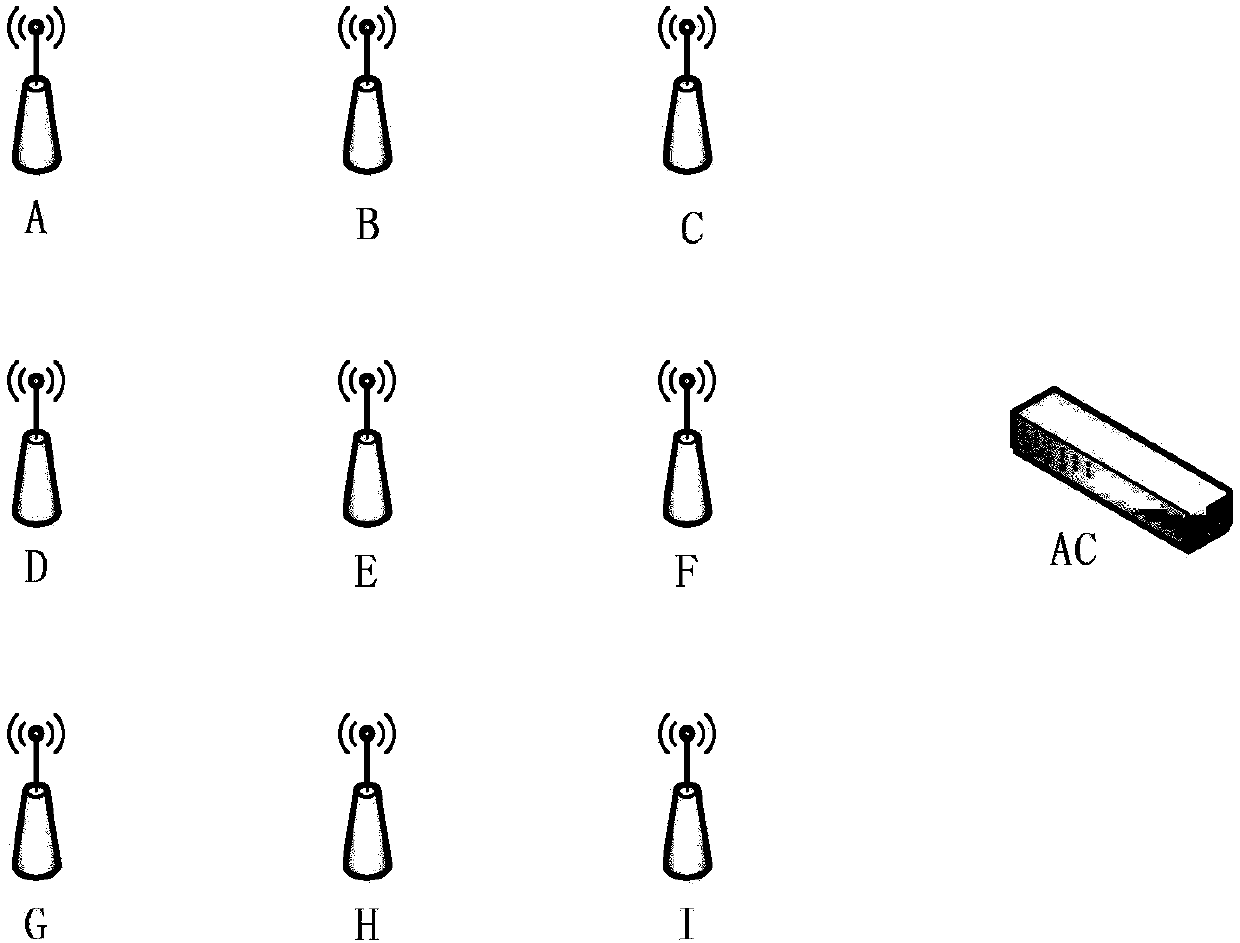
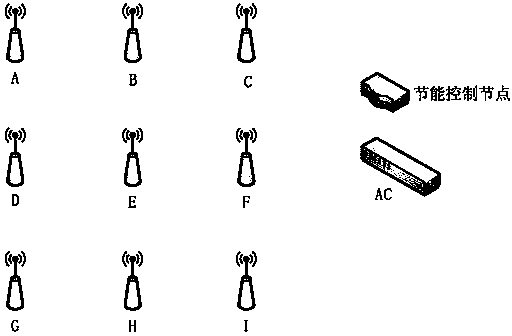
[0023] The present invention provides a set of technical proposals to self-adaptively shut down the AP power supply or the radio frequency function. Such as figure 2 As shown, in the case of high load (daytime), all APs work to provide the maximum access bandwidth, and in the case of low load (night, rest day), if the energy-saving control node detects that there is no user access to AP node B, and When the reverse neighbors A, E, and C of B are online, the AP node B can be shut down, and at the same time, the power of the AP nodes A, E, and C can be adaptively increased to cover the area covered by the original AP node B. If the energy saving control node detects that the load of AP node E is greater than a given threshold, and detects that B in the reverse neighbor of AP node E is turned off by energy saving, it will turn on AP node B and adjust the power of the neighbors of node B to reduce the RF interference due to the addition of Node Bs.
[0024] The specific technic...
PUM
 Login to View More
 Abstract
Description
Claims
Application Information
 Login to View More