Partial support method of concave ultra-deep foundation pit surrounded by heritage buildings on three sides

A concave-shaped, deep foundation pit technology, applied in construction, excavation, infrastructure engineering and other directions, can solve problems such as concave-shaped foundation pit deformation, and achieve the effect of reducing foundation pit deformation, reducing secondary handling, and ensuring stability

CN104264683BActive Publication Date: 2015-11-18泛华建设集团有限公司
5 Cites 0 Cited by

Patent Information

Authority / Receiving Office
CN · China
Patent Type
Patents(China)
Current Assignee / Owner
Publication Date
2015-11-18

Smart Images

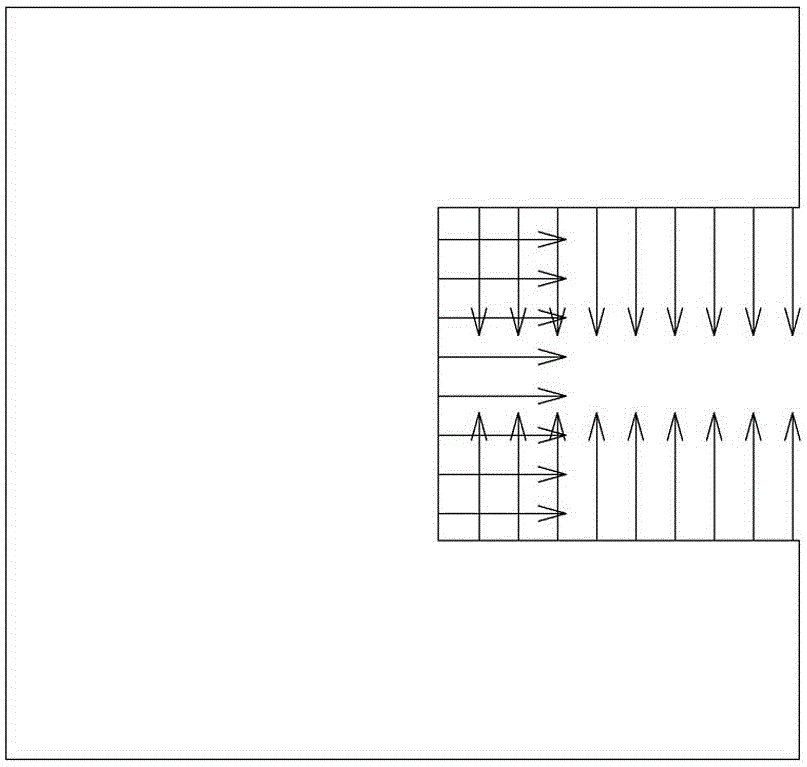
  • Figure 1
    Figure 1
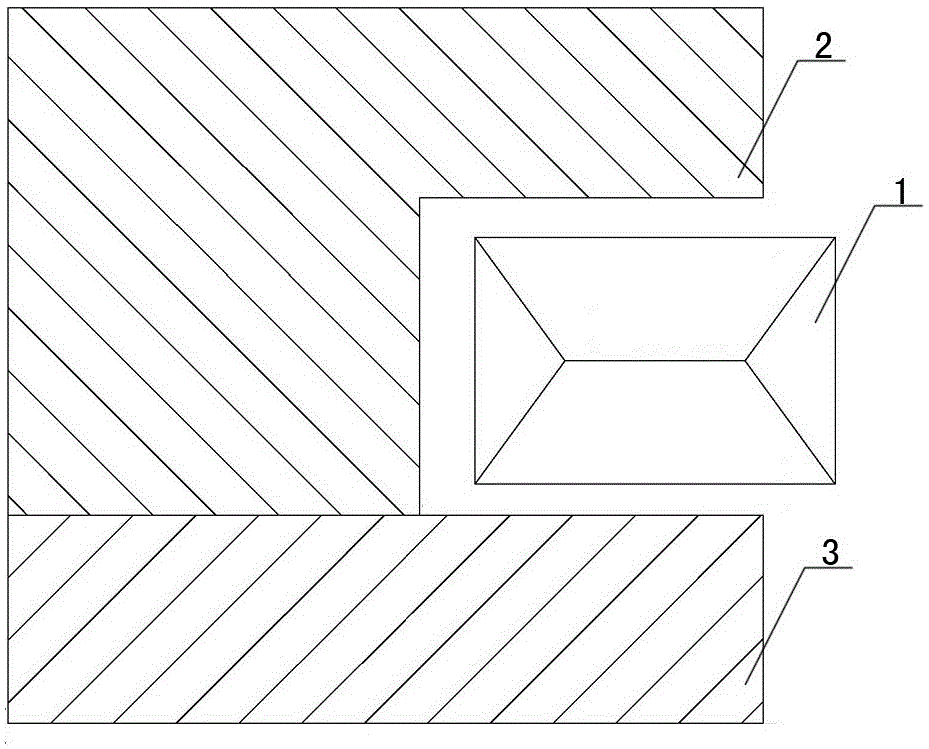
  • Figure 2
    Figure 2
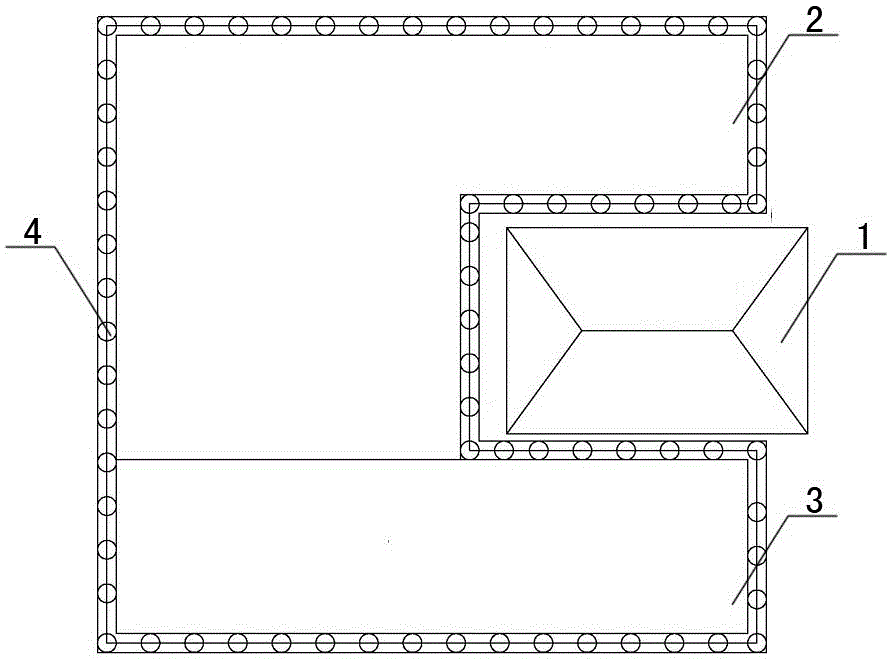
  • Figure 3
    Figure 3
Patent Text Reader

Abstract

The invention provides a concave ultra-deep foundation pit zoned supporting method for a three-side surrounded cultural protection building. The concave ultra-deep foundation pit zoned supporting method is a supporting construction method adopting concave or multi-external-corner shaped foundation pit design. A foundation pit is broken up into conventional geometrical shapes, such that a concave foundation pit is broken up into a rectangle and an L shape and is reasonably divided into two construction zones, and foundation construction is performed on the L-shaped zone after a newly-built building underground foundation structure soil body in the rectangular zone is stabilized. By means of a zoned construction mode and a supporting mode that slope protection piles are combined with steel supports and anchoring rod supports, the stress concentration phenomenon caused by crossing of anchor rods at concave positions is avoided, the foundation pit deformation is decreased to the greatest extent, and stability of a supporting system and surrounding cultural protection buildings is ensured. Compared with a traditional construction process, the concave ultra-deep foundation pit zoned supporting method has the advantages of being advanced technically, economical, reasonable, safe, reliable and environment-friendly and is suitable for foundation pit supporting construction with large foundation pit excavating area, foundation pits with concave planes, multi-external-corner foundation pits, large excavating depth, complicated surrounding environment and strict deformation requirement.
Need to check novelty before this filing date? Find Prior Art

Description

technical field

[0001] The invention relates to a foundation pit supporting method in building construction. Background technique

[0002] In the field of construction, with the overall development planning of urban construction, buildings in the old urban areas, especially in cultural relics protection areas, pay more and more attention to the development and utilization of underground space, and the excavation depth of foundation pits is also increasing. , due to the impact of the surrounding cultural heritage buildings, roads, and municipal pipelines, the foundation pits in the old urban areas are mostly irregular polygons, and the foundation pit engineering has a strong spatial effect. The stability and deformation have a great influence. According to past experience, the external corners of the foundation pit are subject to complex forces and are prone to stress concentration and large deformation, which is the weak link in the foundation pit support. The three sides ...

Examples

Embodiment Construction

[0058] This three-sided concave-shaped super-deep foundation pit partition support method surrounding cultural heritage buildings is to carry out foundation pit support construction for the concave-shaped semi-enclosed area on the opposite side and rear of cultural heritage building 1. The specific steps are as follows:

[0059] Step 1: Investigate the surrounding environment of the to-be-excavated concave-shaped foundation pit: Before the support design of the to-be-excavated concave-shaped foundation pit, the ground within 2 to 3 times the depth of the to-be-excavated concave-shaped foundation pit should be Conduct detailed investigations on underground structures and pipelines: including the number of aboveground and underground floors, loads, structural forms, foundation forms, buried depth, and deformation requirements of surrounding heritage buildings; surrounding road conditions and bearing capacity; surrounding underground pipeline distribution and buried depth , deform...