
PH-stimulation response type intelligent nanometer container and preparation method thereof
A nano-container and stimulus-response technology, applied in the field of material science, can solve the problems of complex response process, long response time, narrow application range, etc., and achieve the effect of simple response process, simple and convenient operation, and wide application range
- Summary
- Abstract
- Description
- Claims
- Application Information
AI Technical Summary
Problems solved by technology
Method used
Image

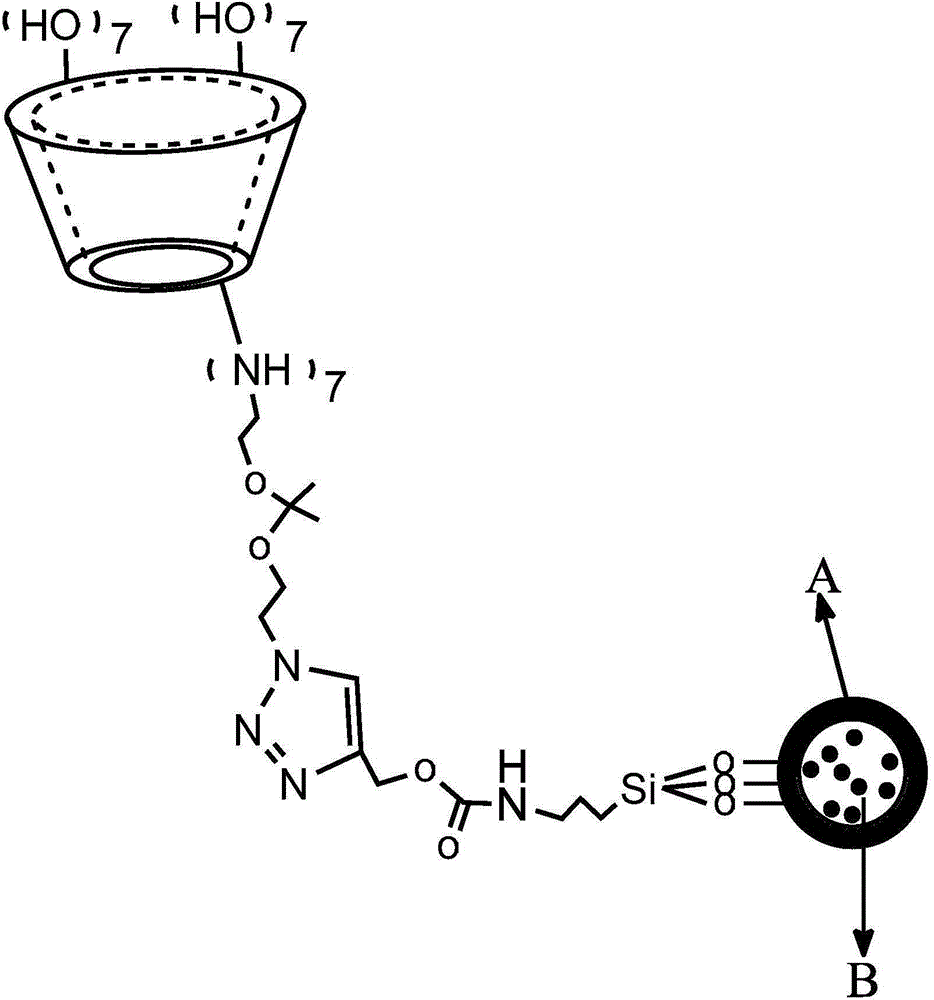
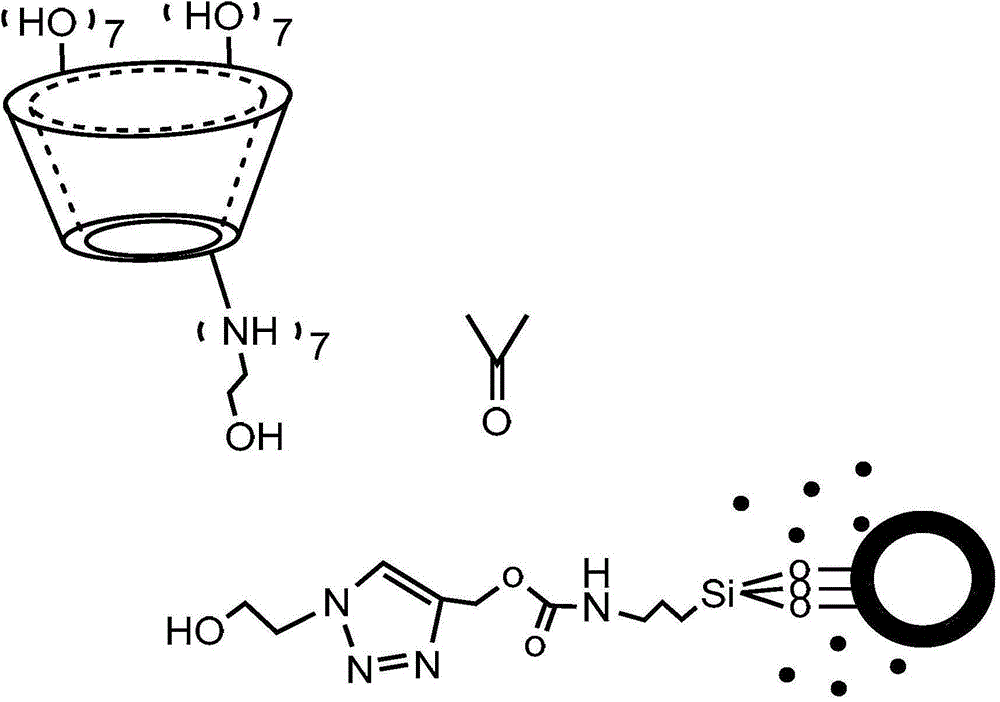
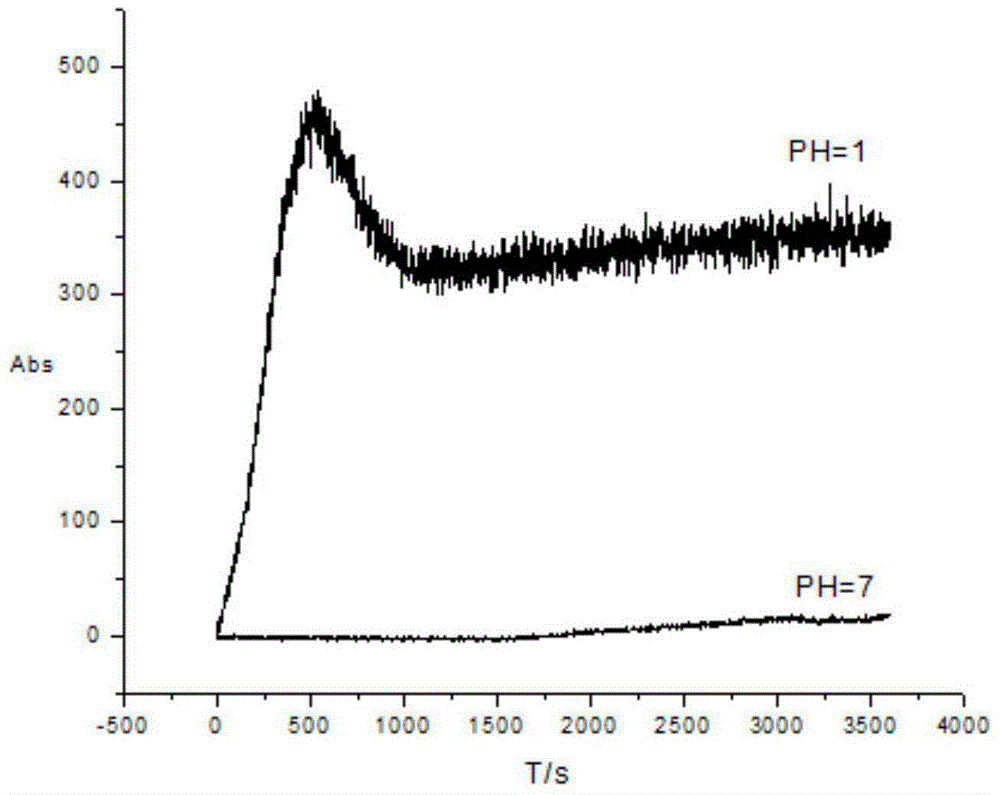
Examples
Embodiment 1
[0040] The preparation method of the PH-stimulus-responsive intelligent nano container of the present invention, the steps are as follows:
[0041] Step 1, preparing mesoporous silica microspheres MCM-41, and vacuum-drying the obtained mesoporous silica microspheres; the preparation process of mesoporous silica microspheres MCM-41 is as follows:
[0042] Dissolve 1.0g of acryloyloxyethyltrimethylammonium chloride (AETAC) in 390ml of deionized water, add 40g of styrene, stir mechanically at room temperature for 30min, then raise the temperature to 90°C, N 2After degassing for 30min, add 2,2'-azobisisobutylamidine dihydrochloride (V-50, 10wt%, 10ml), under N 2 Protected and reacted at 90°C for 24h to obtain PS spheres.
[0043] With 0.8g cetyltrimethylammonium bromide (CTAB), 29g H 2 O, 12 g of ethanol, and 1 ml of ammonia water were mixed to form a homogeneous solution, and 10 g of PS (~9%) was added dropwise under vigorous stirring at room temperature. After the dropwise ad...
Embodiment 2
[0052] The preparation method of the PH-stimulus-responsive intelligent nano container of the present invention, the steps are as follows:
[0053] Step 1, prepare mesoporous silica microspheres MCM-41, and vacuum-dry the obtained mesoporous silica microspheres; the preparation process of mesoporous silica microspheres MCM-41 is Step 1 in the above-mentioned Example 1.
[0054] Step 2, 200 mg of dried mesoporous silica microspheres and 80 ul of alkynyl-containing silane coupling agent APTS are dealcoholized in 10 ml of dried toluene; the alkynyl-containing silane coupling agent is prop- tert-butyl 2-yn-1-yl(3-(triethoxysilyl)propyl)carbamate. The dealcoholization reaction is carried out under nitrogen protection, wherein the mass ratio of mesoporous silica nanoparticles to the alkynyl-containing silane coupling agent is 2.5:1, and the concentration of the alkynyl-containing silane coupling agent in toluene is 8 μg / mL.
[0055] Step 3, preparation of 2-bromo-ethoxy-2-azido-et...
Embodiment 3
[0060] The preparation method of the PH-stimulus-responsive intelligent nano container of the present invention, the steps are as follows:
[0061] Step 1, prepare mesoporous silica microspheres MCM-41, and vacuum-dry the obtained mesoporous silica microspheres; the preparation process of mesoporous silica microspheres MCM-41 is Step 1 in the above-mentioned Example 1.
[0062] Step 2, 200mg of dried mesoporous silica microspheres and 90ul alkynyl-containing silane coupling agent APTS are dealcoholized in 15ml of dried toluene; the alkynyl-containing silane coupling agent is prop- tert-butyl 2-yn-1-yl(3-(triethoxysilyl)propyl)carbamate. The dealcoholization reaction is carried out under nitrogen protection, wherein the mass ratio of mesoporous silica nanoparticles to the alkynyl-containing silane coupling agent is 2.2:1, and the concentration of the alkynyl-containing silane coupling agent in toluene is 6 μg / mL.
[0063] Step 3, preparation of 2-bromo-ethoxy-2-azido-ethoxypr...
PUM
 Login to View More
 Abstract
Description
Claims
Application Information
 Login to View More