
Printing screen and method for imaging a printing screen
A printing screen and imaging technology, which is applied in printing, printing machines, printing processes, etc., can solve the problems of low stability and expensive manufacturing of fine mesh screen materials
- Summary
- Abstract
- Description
- Claims
- Application Information
AI Technical Summary
Problems solved by technology
Method used
Image

Examples
Embodiment Construction
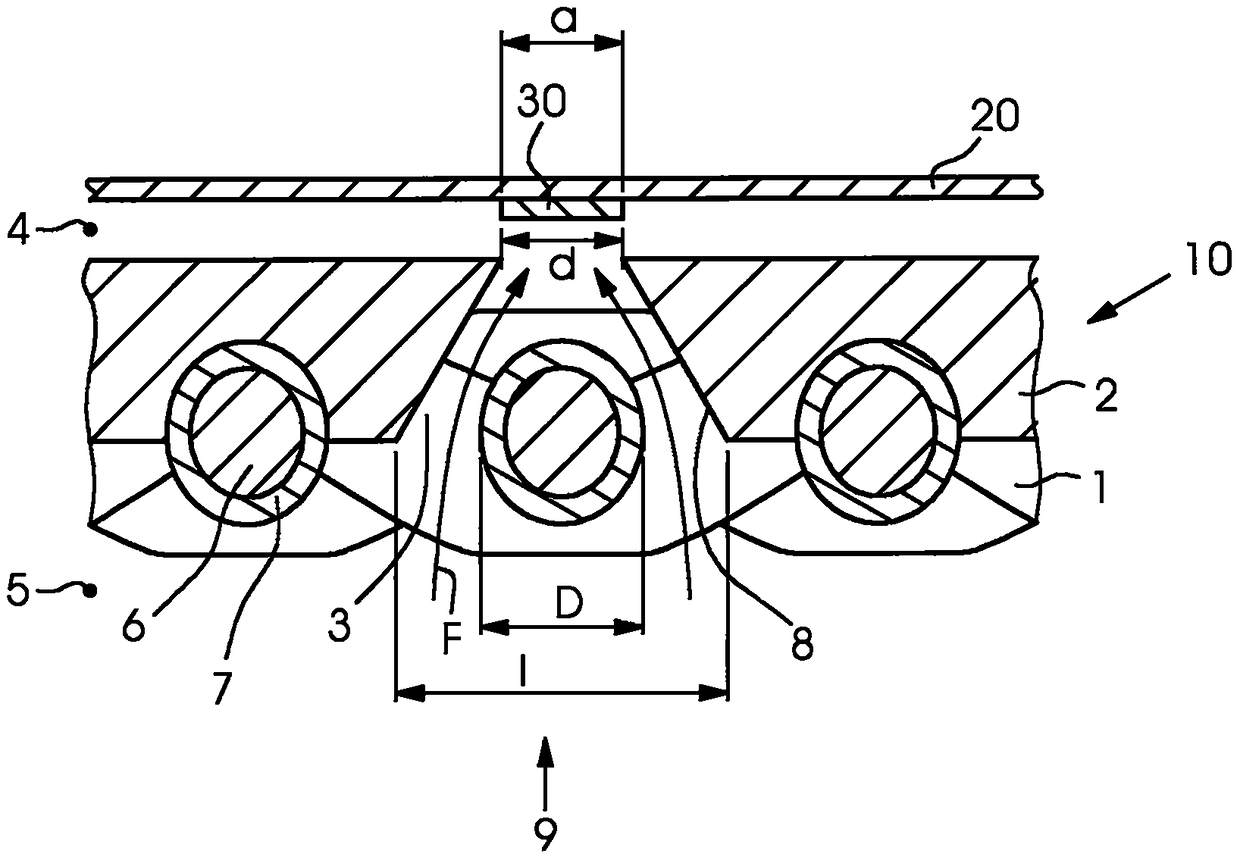
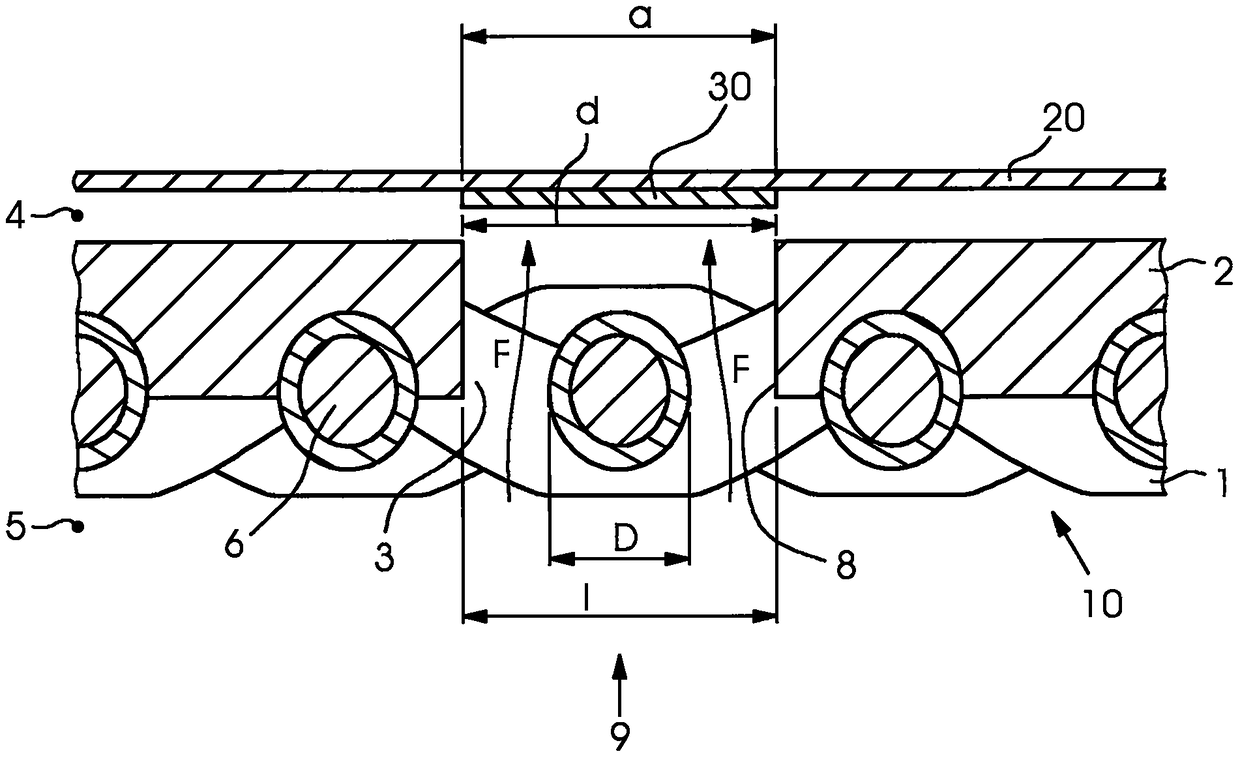
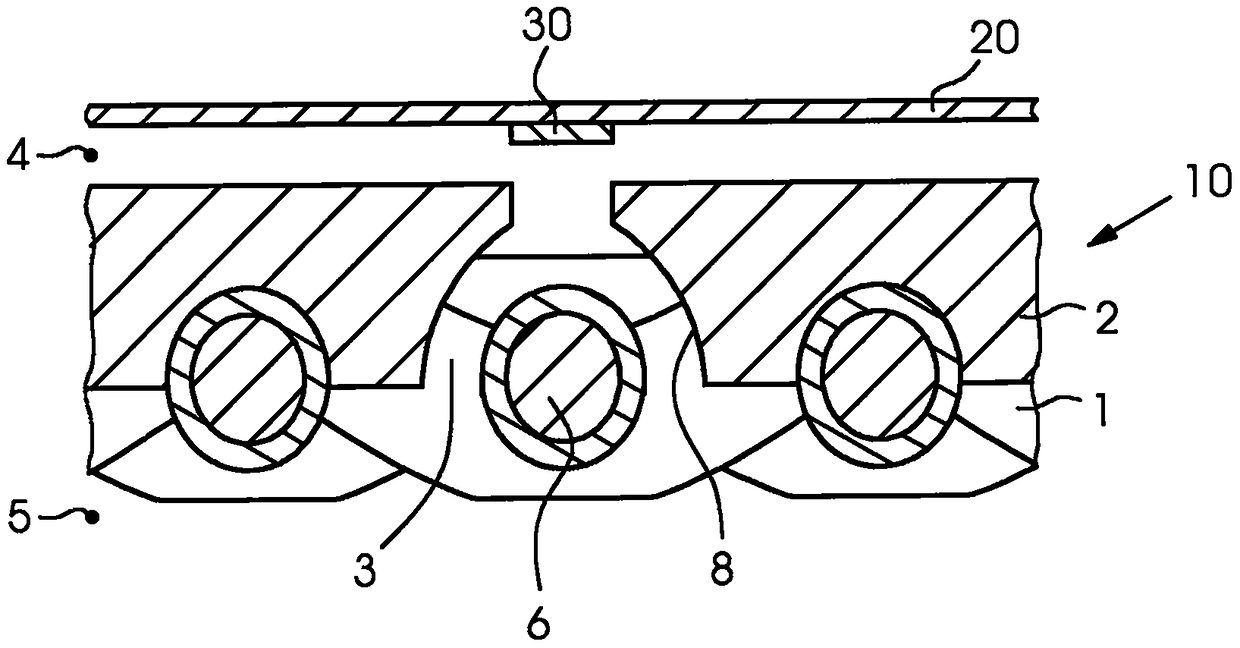
[0040] Figure 6 A flat screen material 10 with a fabric layer 1 according to the prior art is shown. On one side, the screen material 10 has a photopolymer coating 2 (direct stencil). In an alternative embodiment not shown, an imaged film may be applied to the screen structure 10 (indirect stencil). The nickel-plated flat screen material 10 consists of a fabric 1 . Different forms of fabric, also called fabric types, are possible.
[0041] This type of screen material 10 and the printing screen 10 of the present invention are used in rotary screen printing: Figure 7 A screen 100 is shown comprising a flat screen material 10 formed to create a cylindrical sleeve for rotary screen printing. The mesh material 10 retains its cylindrical shape by end pieces not shown in any detail. A squeegee of an invisible screen printing unit is provided inside the screen 100 to squeeze ink through the screen material 10 . The scrapers may be oriented parallel to the axis of rotation of ...
PUM
 Login to View More
 Abstract
Description
Claims
Application Information
 Login to View More