Pseudonym-based anonymous authentication and key negotiation optimization method and optimized authentication analysis method for Internet of Things

A technology of key agreement and anonymous authentication, applied in the field of computer security authentication, which can solve the problems of high computational overhead and energy consumption, failure to achieve anonymity and untraceability at the same time, etc.

CN106657124AActive Publication Date: 2017-05-10YICHUN UNIVERSITY
1 Cites 41 Cited by

Patent Information

Authority / Receiving Office
CN · China
Patent Type
Applications(China)
Current Assignee / Owner
Publication Date
2017-05-10

Smart Images

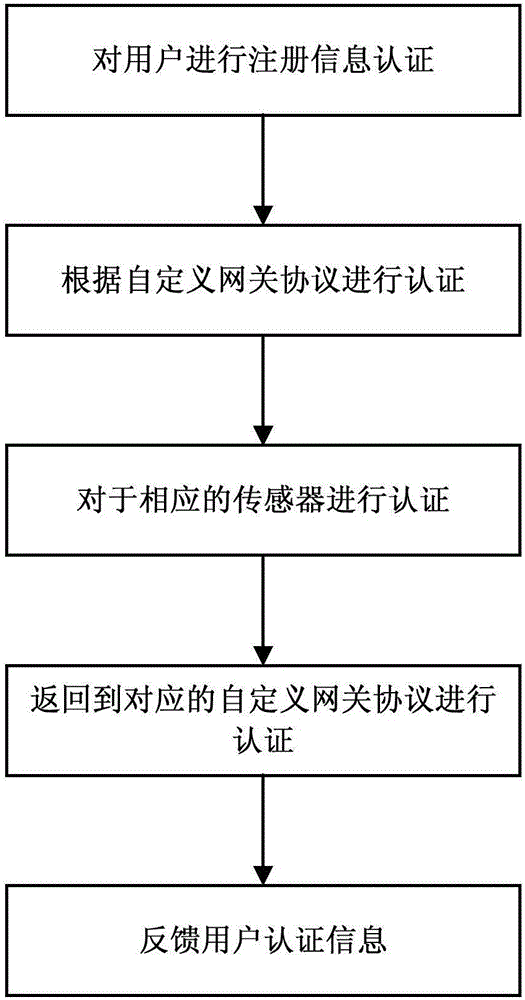
  • Figure 1
    Figure 1
  • Figure 2
    Figure 2
  • Figure 3
    Figure 3
Patent Text Reader

Abstract

The invention provides a pseudonym-based anonymous authentication and key negotiation optimization method and optimized authentication analysis method for the Internet of Things. The method comprises the following steps: S1, a user and a sensor node separately register a gateway node, and for the difference of the user and the sensor node, a user registration protocol and a sensor node registration protocol different from each other are adopted; and S2, after the registration, the user logs in the system through a user login protocol and an authentication and key negotiation protocol, and under the assistance of the gateway node, the sensor node requiring access realizes mutual authentication and a negotiation shared session key. By adoption of the method provided by the invention, better anonymity, non-traceability and security are realized.
Need to check novelty before this filing date? Find Prior Art

Description

technical field

[0001] The invention relates to the field of computer security authentication, in particular to an pseudonym-based anonymous authentication and key agreement optimization authentication method and an optimization authentication analysis method for the Internet of Things. Background technique

[0002] The existing MAAKA scheme uses pseudo-random identity to achieve user anonymity, but fails to achieve anonymity and untraceability at the same time. In the MAAKA scheme, the public key algorithm is used to avoid offline dictionary attacks on sensor nodes, but for sensor nodes, the public The calculation overhead and energy consumption of the key algorithm are too large, so it is urgently needed for those skilled in the art to solve the corresponding technical problems. Contents of the invention

[0003] The present invention aims to at least solve the technical problems existing in the prior art, and particularly innovatively proposes an anonymous authenticatio...

Examples

Embodiment Construction

[0040] Embodiments of the present invention are described in detail below, examples of which are shown in the drawings, wherein the same or similar reference numerals designate the same or similar elements or elements having the same or similar functions throughout. The embodiments described below by referring to the figures are exemplary only for explaining the present invention and should not be construed as limiting the present invention.

[0041] In describing the present invention, it should be understood that the terms "longitudinal", "transverse", "upper", "lower", "front", "rear", "left", "right", "vertical", The orientation or positional relationship indicated by "horizontal", "top", "bottom", "inner", "outer", etc. are based on the orientation or positional relationship shown in the drawings, and are only for the convenience of describing the present invention and simplifying the description, rather than Nothing indicating or implying that a referenced device or elem...