
Mutated PCV2 (Porcine circovirus Type 2) virus free from being degraded by ubiquitination proteasome, and preparation method and application thereof
A proteasome and ubiquitination technology, applied in biochemical equipment and methods, botanical equipment and methods, applications, etc., can solve problems such as unresearched
- Summary
- Abstract
- Description
- Claims
- Application Information
AI Technical Summary
Problems solved by technology
Method used
Image

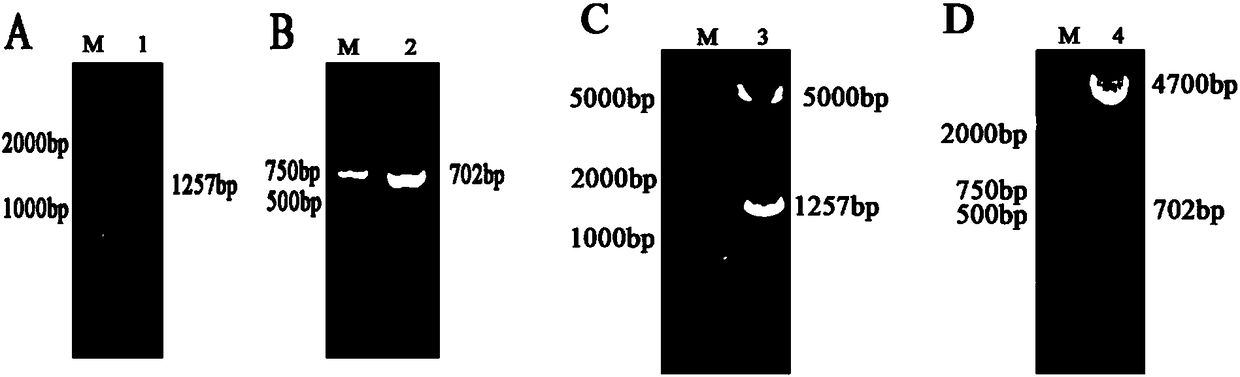
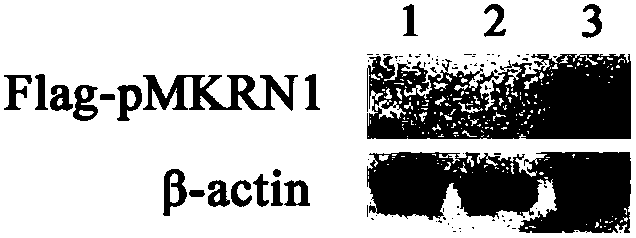
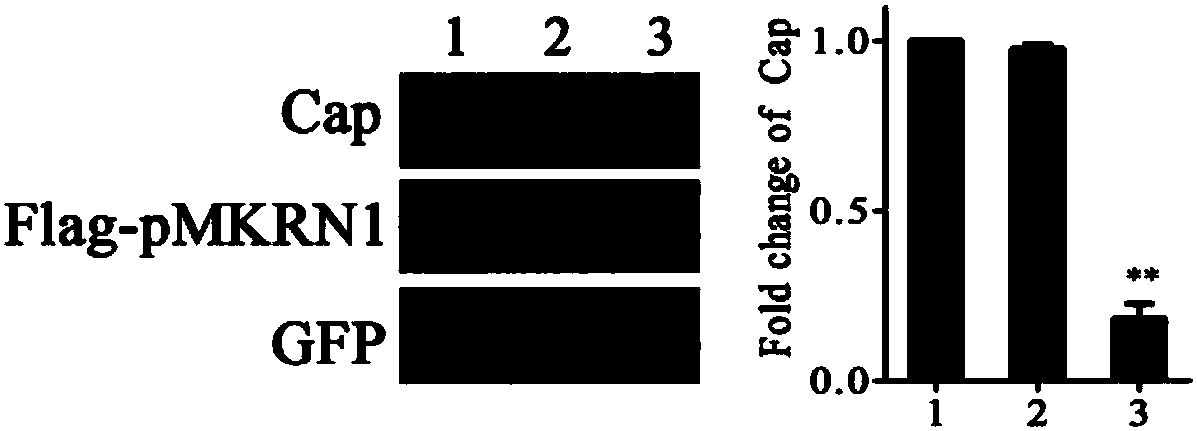
Examples
Embodiment Construction
[0040] The present invention will be further described in detail below in conjunction with the accompanying drawings and embodiments. What has been described is by way of explanation, not limitation, of the invention.
[0041] The present invention detects the effect of pMKRN1 on Cap degradation by co-expressing porcine MKRN1 (pMKRN1) and PCV2Cap to determine the effect of pMKRN1 on PCV2Cap degradation, then constructs a truncated mutant of PCV2Cap protein, and confirms the interaction region between pMKRN1 and PCV2Cap by co-immunoprecipitation assay , and further determined the interaction site between pMKRN1 and PCV2Cap by ubiquitination and degradation analysis. The PCV2 mutant constructed according to the site of action cannot be ubiquitinated, so that the replication ability of PCV2 in cells and in vivo is significantly improved. This discovery facilitates the study of the pathogenic mechanism of PCV2 and provides potential control measures for PCV2 outbreaks.
[0042] ...
PUM
 Login to View More
 Abstract
Description
Claims
Application Information
 Login to View More