
Motor rotor and permanent magnet motor
A technology for motor rotors and permanent magnets, applied in magnetic circuits, electrical components, electromechanical devices, etc., can solve problems such as motor performance degradation, motor inoperability, and permanent magnet loss of magnetism
- Summary
- Abstract
- Description
- Claims
- Application Information
AI Technical Summary
Problems solved by technology
Method used
Image

Examples
Embodiment Construction
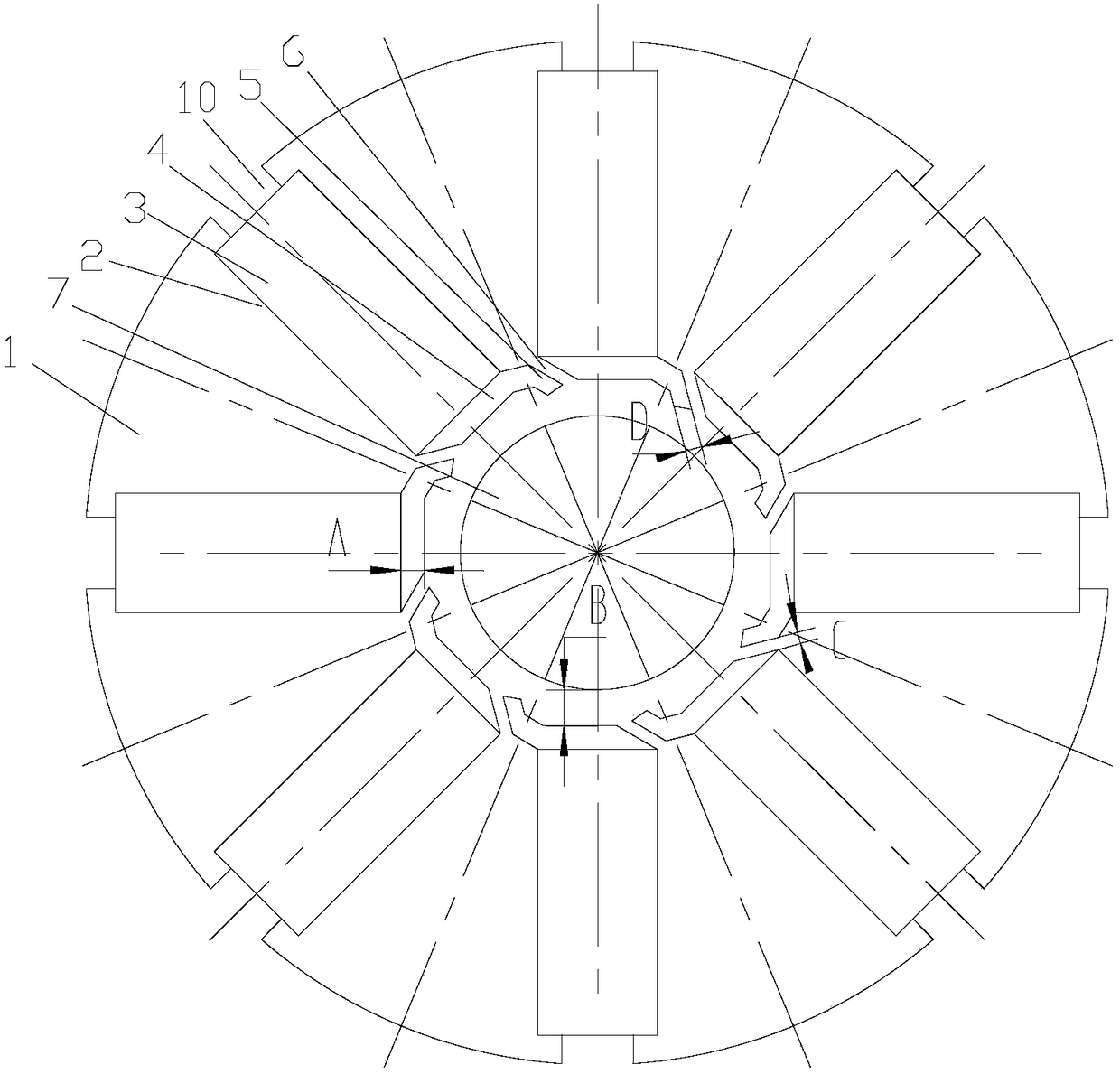
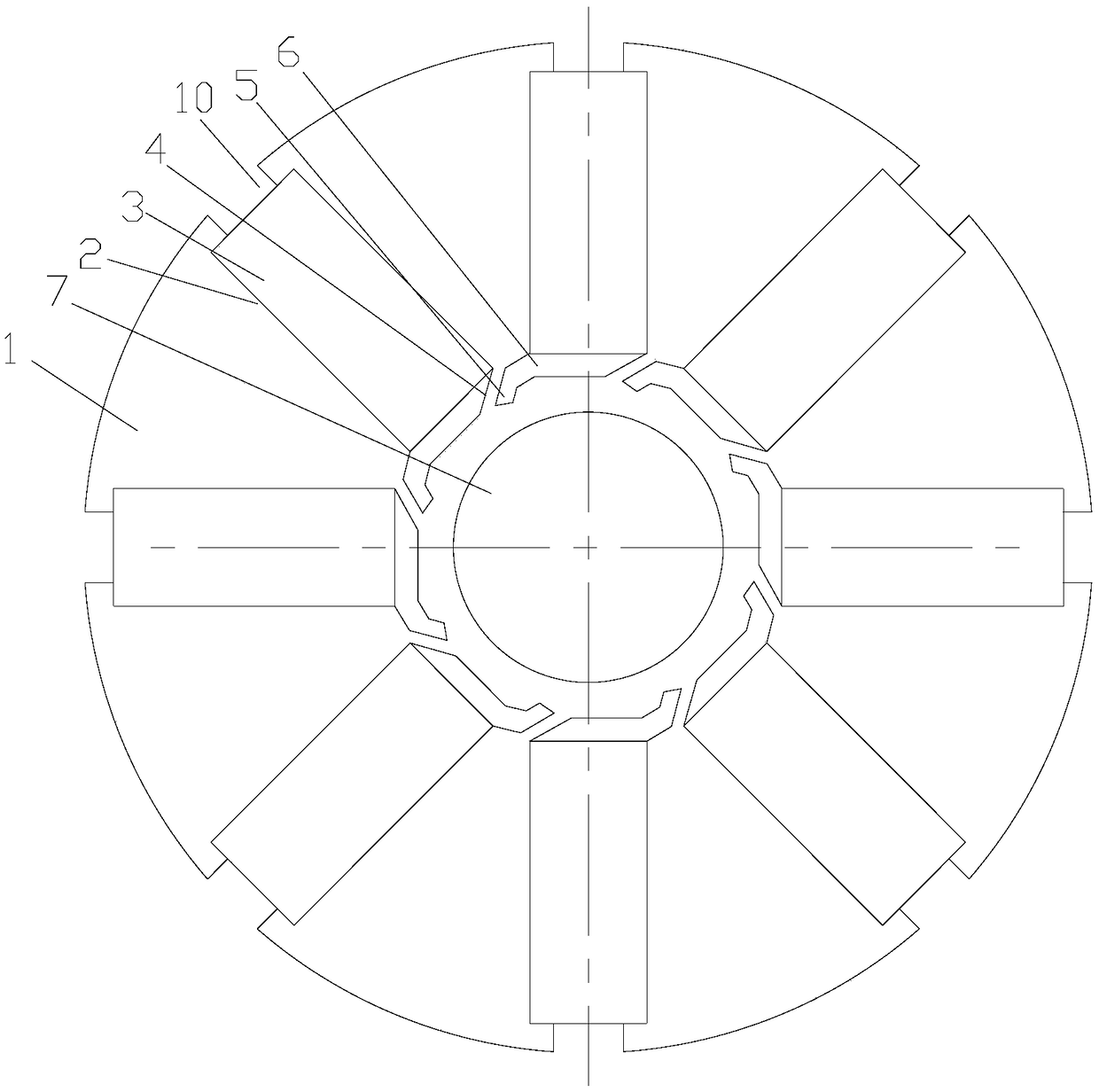
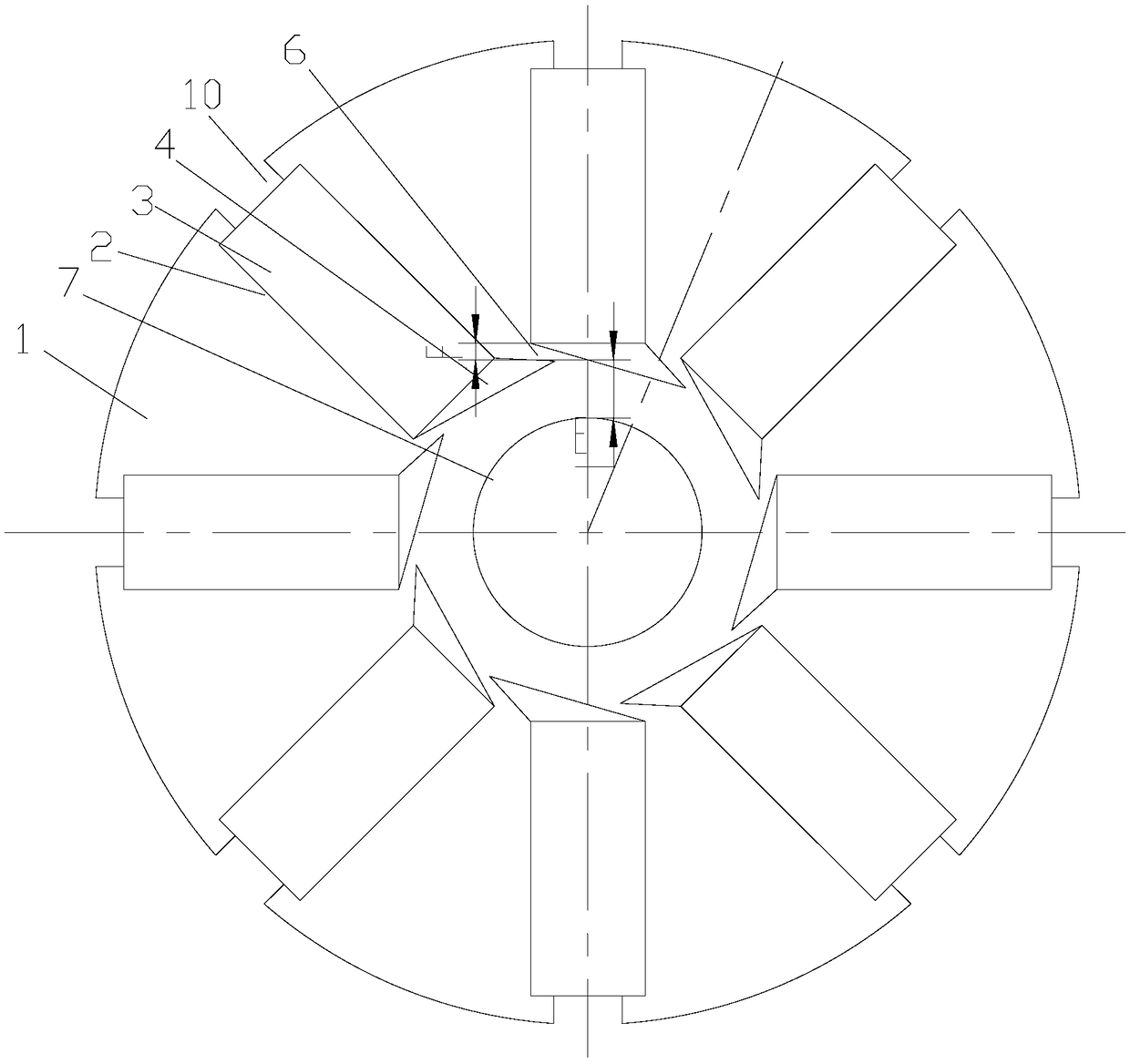
[0049] see in conjunction Figures 1 to 11 As shown, according to an embodiment of the present invention, the motor rotor includes a rotor iron core 1, and the rotor iron core 1 is provided with a plurality of permanent magnet slots 2 along the circumferential direction, and permanent magnets 3 are arranged in the permanent magnet slots 2, and the permanent magnet slots 2 The inner side is provided with a magnetic isolation slot 4, and the magnetic isolation slot 4 extends clockwise toward the adjacent magnetic isolation slot 4, and forms an isolation gap with the adjacent magnetic isolation slot 4 at a preset angle with the center line of the magnetic pole. The magnetic bridge 6; or, the magnetic isolation slot 4 extends in the counterclockwise direction toward the adjacent magnetic isolation slot 4, and forms a magnetic isolation bridge with a preset angle with the magnetic pole centerline between the adjacent magnetic isolation slot 4 6. Preferably, each permanent magnet s...
PUM
 Login to View More
 Abstract
Description
Claims
Application Information
 Login to View More