
Soil-loosening device for agricultural planting
An agricultural and integrated technology, applied in agriculture, agricultural machinery and implements, applications, etc., can solve the problems of not being able to adjust the plowing depth of rake teeth, unable to adjust the depth of loose soil, unfavorable crop growth, etc., to achieve the effect of favorable growth
- Summary
- Abstract
- Description
- Claims
- Application Information
AI Technical Summary
Problems solved by technology
Method used
Image

Examples
Embodiment
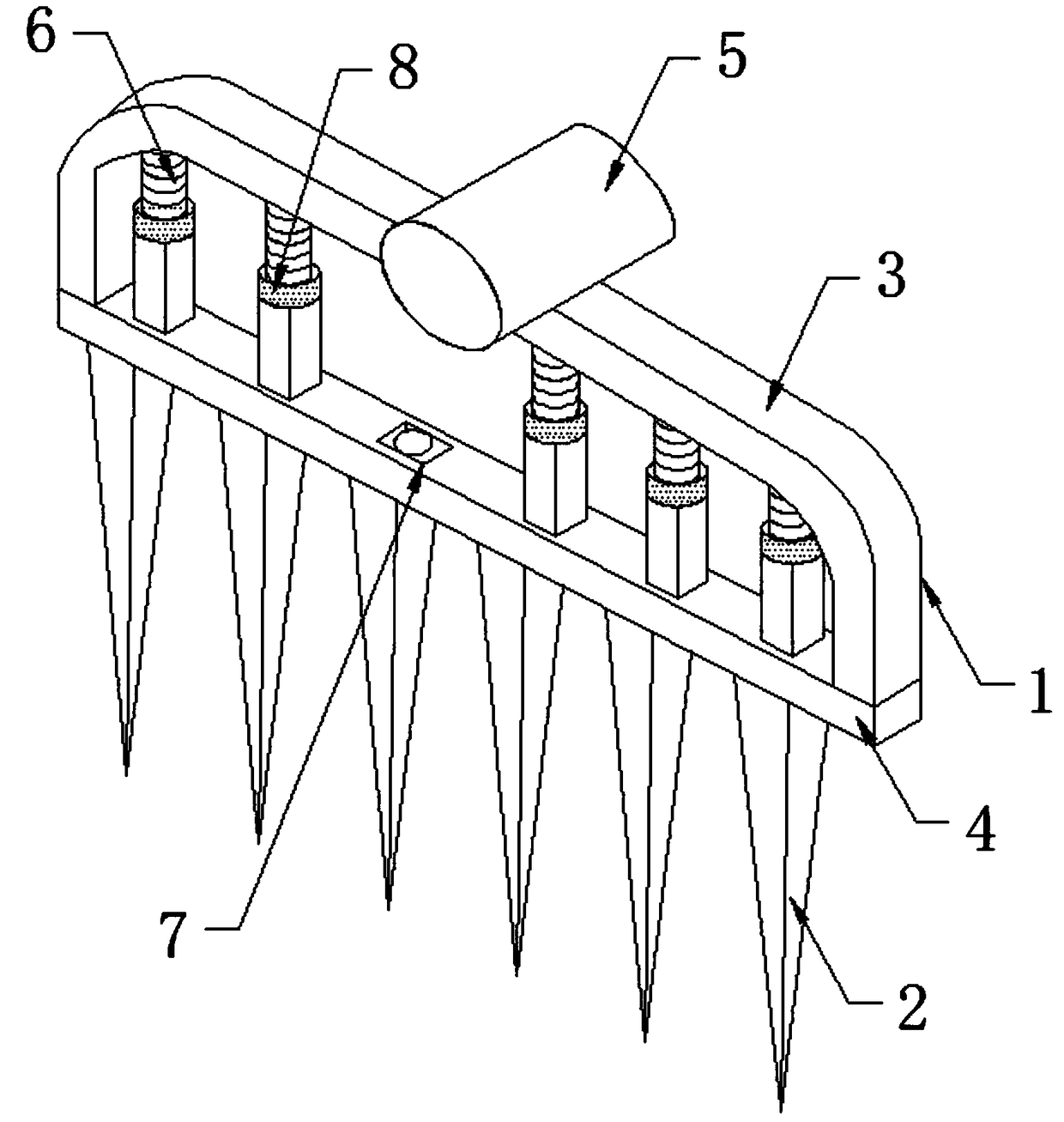
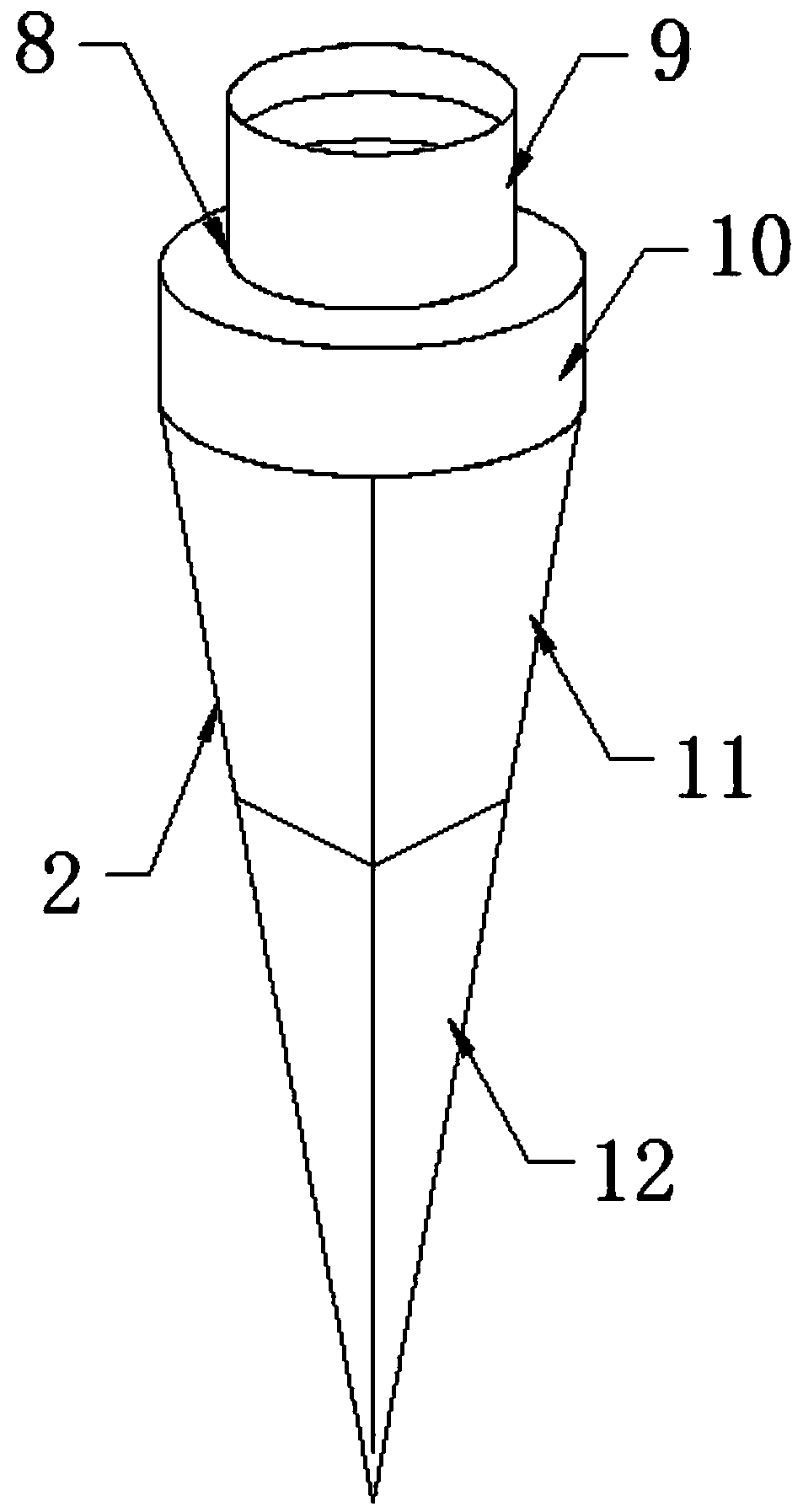
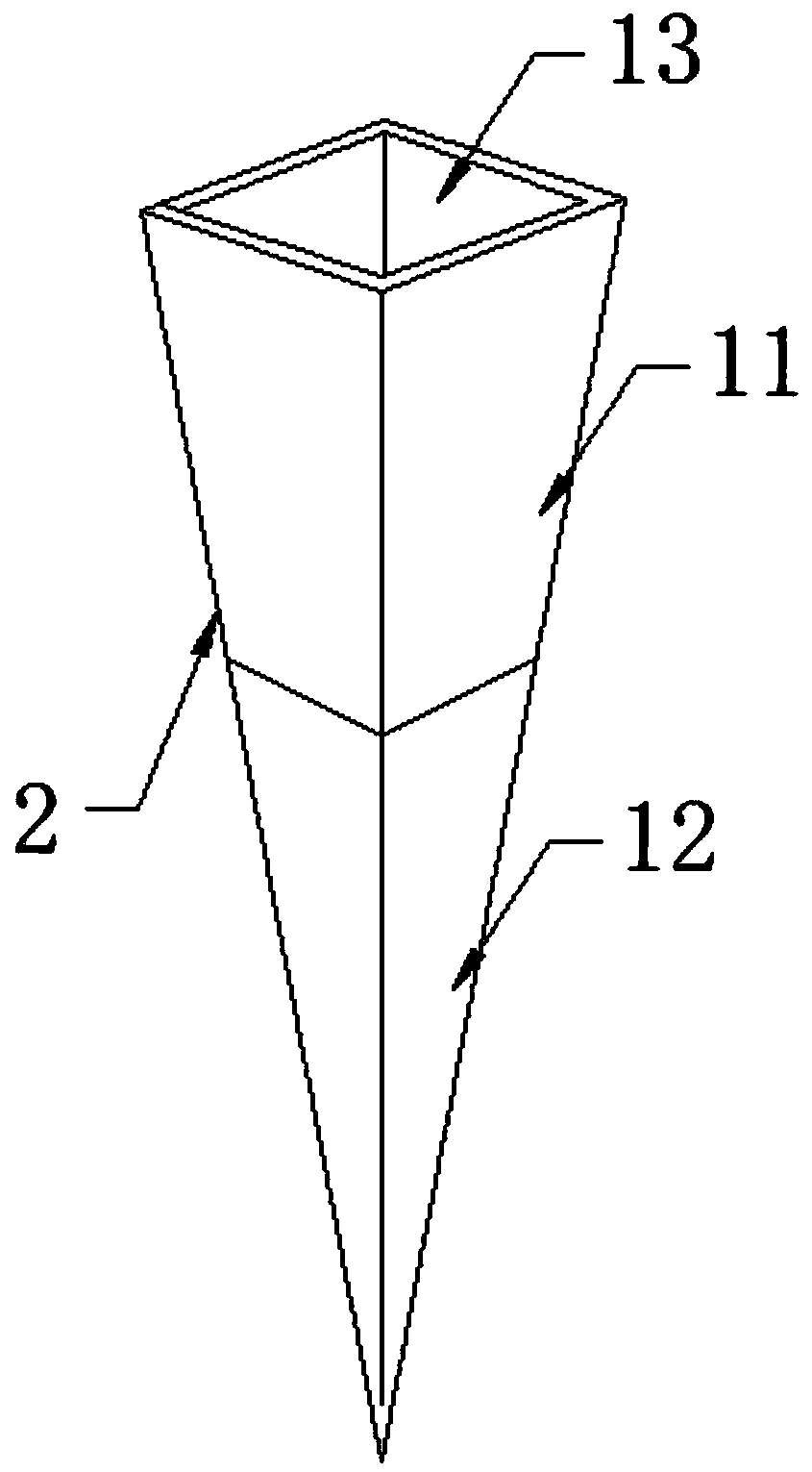
[0021] Example: such as Figure 1-3 As shown, an agricultural planting and loosening device includes a positioning part 1 and several rake teeth 2. The positioning part 1 includes a fixing part 3, a limiting part 4 and a connecting part 5. The connecting part 5 is installed at the top center of the fixing part 3. The two ends of the fixing part 3 are fixedly connected with the limit part 4, and a number of adjusting bolts 6 are installed on the limit part 4, and through holes 7 are arranged on the outside of the several adjusting bolts 6, and the adjusting part 8 installed on the rake tooth 2 passes through the through hole. The hole 7 is threadedly connected with the adjusting bolt 6. The adjusting member 8 is composed of an adjusting nut 9 and a connecting bearing 10. The diameter of the connecting bearing 10 is larger than that of the adjusting nut 9, and the bottom of the connecting bearing 10 is integrally formed with the rake teeth 2. The rake teeth 2 are divided into an...
PUM
 Login to View More
 Abstract
Description
Claims
Application Information
 Login to View More