
Inhibition of platelet aggregation using Anti-human gpvi antibodies
A technology of antibody molecules and uses, which is applied in the field of cardiovascular disease treatment and can solve problems such as being uncontrollable
- Summary
- Abstract
- Description
- Claims
- Application Information
AI Technical Summary
Problems solved by technology
Method used
Image

Examples
Embodiment 1
[0431] Example 1: Biological data of non-human primates
[0432] Materials and methods
[0433] animal
[0434] Twenty-eight cynomolgus monkeys without any prior treatment were used in this study.
[0435] deal with
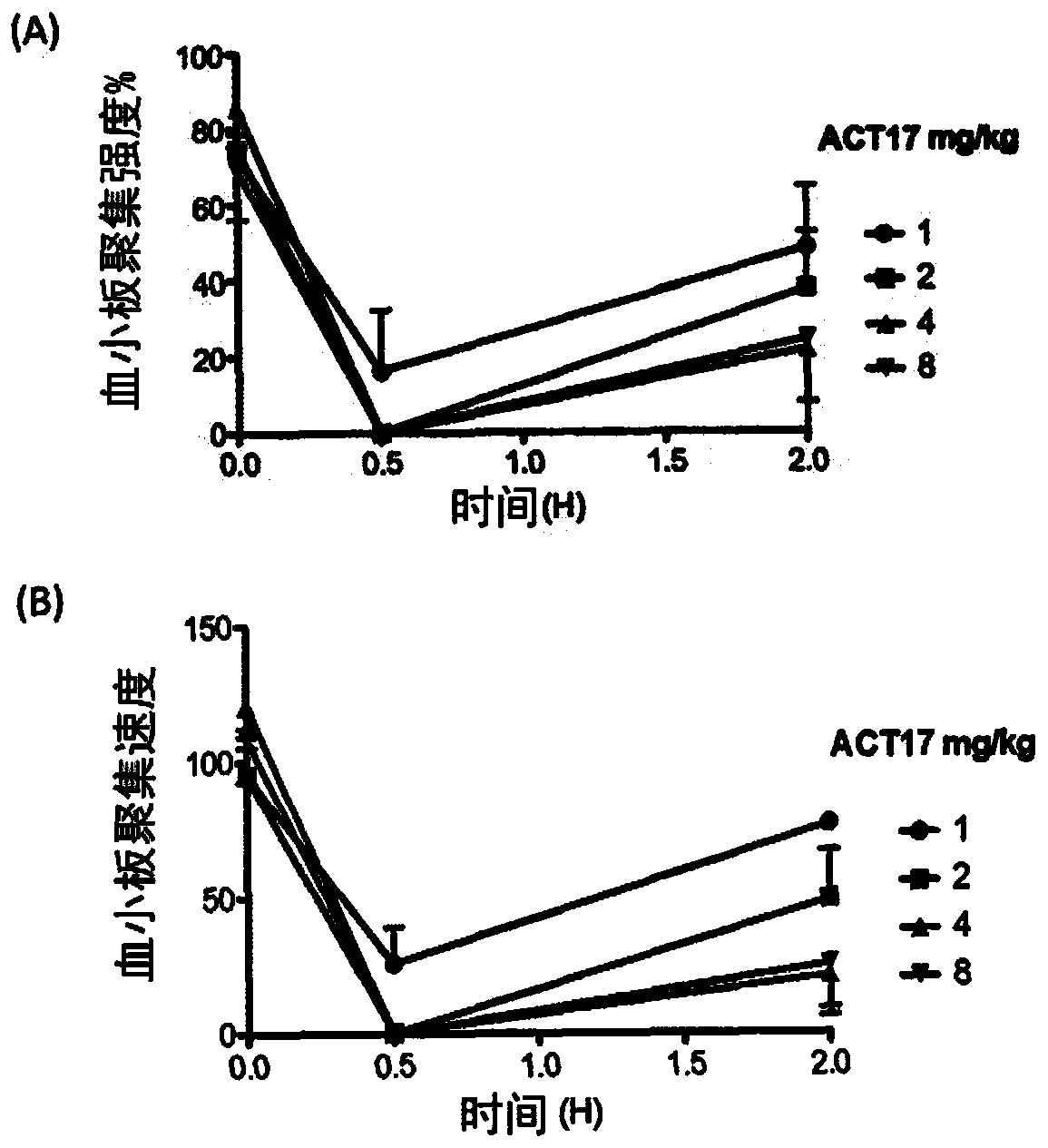
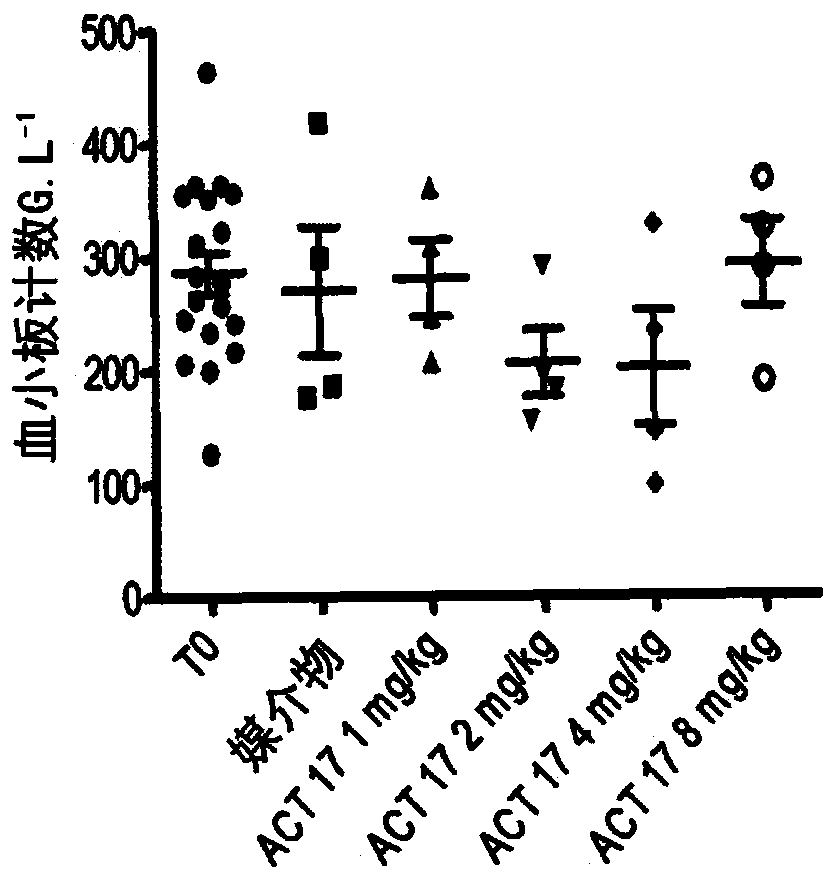
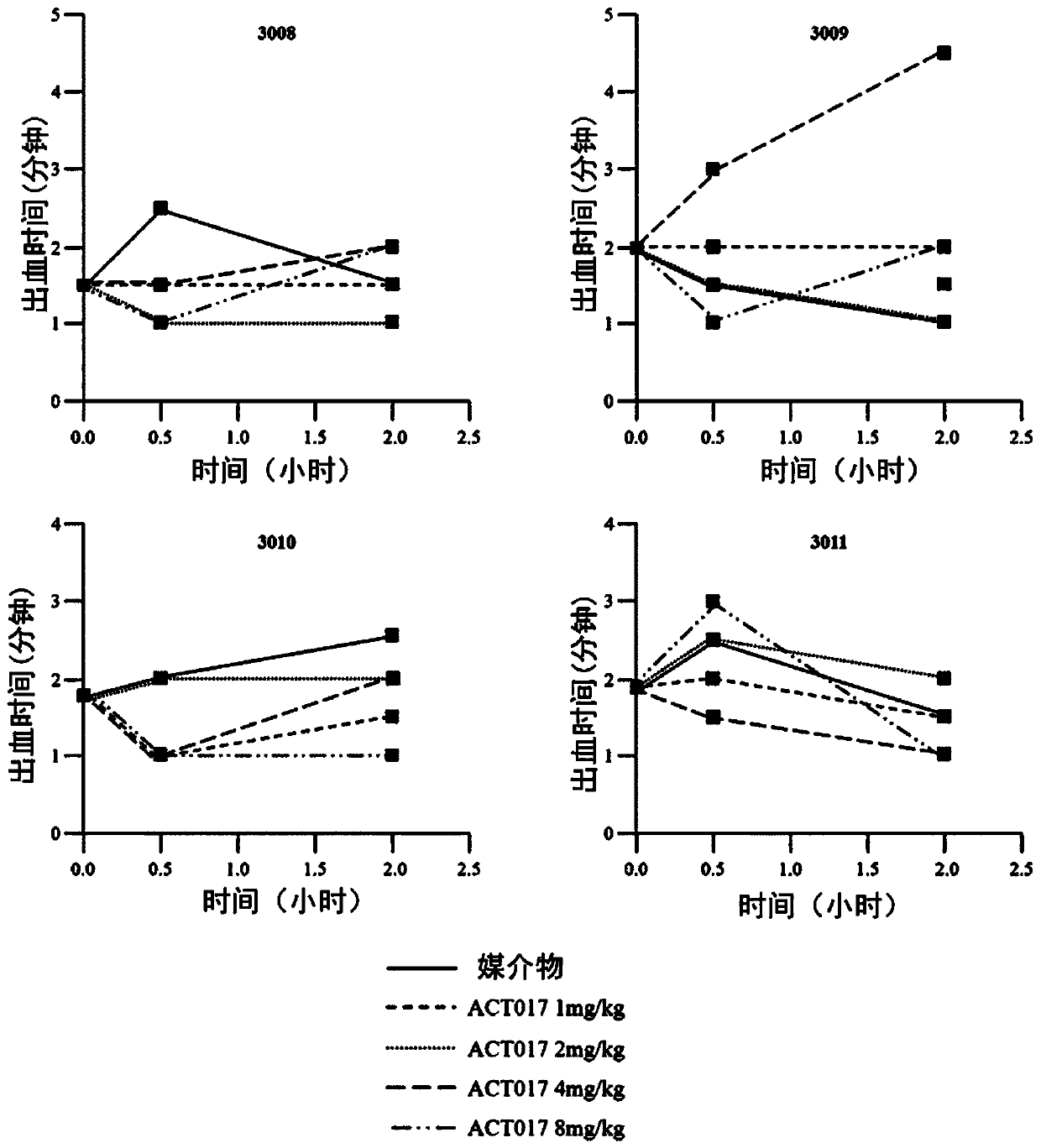
[0436] First, increasing doses of ACT017 (1, 2, 4, 8 mg / kg) or its vehicle (n=4-8) were administered intravenously for 15 minutes. Blood was collected 30 minutes and 2 hours after administration.
[0437] In a second experiment, ACT017 was administered to animals by bolus injection or infusion. Three treatment groups were included in the study: ACT017 at 8 mg / kg (n=4) administered by 25-minute bolus injection, ACT017 at 8 mg / kg (n=8) administered by 1-hour infusion, and ACT017 administered by 15-minute bolus injection ACT017 was administered at 2 mg / kg followed by ACT017 at 6 mg / kg infusion over 5 hours and 45 minutes (n=4). Blood was collected at various times (20 minutes to 24 hours after administration).
[0438] analyze
[0439] Platelet Aggregation: ...
Embodiment 2
[0453] Example 2: Study on the safety, tolerance, pharmacokinetics and pharmacodynamics of ACT017 in healthy volunteers
[0454] Materials and methods
[0455] This study is a randomized, double-blind and placebo-controlled ascending single-dose study on the safety, tolerability, pharmacokinetics and pharmacodynamics of ACT017 in healthy volunteers. subjects
[0456] Subjects involved in the study were healthy male or non-pregnant, non-lactating female subjects, aged between 30 and 60 years (inclusive), with a BMI ≥ 18kg / m2 and ≤ 30kg / m2. A total of 48 subjects participated in 6 ascending dose level cohorts, each cohort consisted of 8 subjects: 6 received active and 2 received placebo. Each cohort was divided into 2 subgroups: one at the start of dosing (1 active and 1 placebo) and the other 48 hours thereafter (5 active and 1 placebo).
[0457] On Day -1 of each dosing period, subjects entered the study center and remained there until at least 48 hours post-dose. Follow-up ...
Embodiment 3
[0482] Example 3: Research on the Epitope Affinity of ACT017 to GPVI
[0483] The ACT017 epitope on GPVI was previously identified by epitope mapping as a conformational epitope comprising two regions on GPVI: amino acids 121-135 and amino acids 169-183 in SEQ ID NO:13. To validate this epitope, a double mutant was constructed containing the following mutations: S125P, S126Q, G128R, Q133K, T136S, T171D, A172L, and H174V, and the affinity of this mutant to collagen and ACT017 was measured.
[0484] Materials and methods
[0485] Soluble GPVI-Fc was produced as follows: after codon optimization, the gene encoding the extracellular domain of human GPVI from the first methionine to asparagine 269 was synthesized by the tripeptide GGR with the human IgG1 Fc structure domain fusion. The gene was cloned into pTT5 vector and then transfected into HEK 293-6E cells. The secreted GPVI-Fc was purified from the conditioned medium of cells by affinity chromatography using MAbselect matri...
PUM
| Property | Measurement | Unit |
|---|---|---|
| concentration | aaaaa | aaaaa |
Abstract
Description
Claims
Application Information
 Login to View More