
System for external fish parasite monitoring in aquaculture
A technology for aquaculture and parasites, applied in general control systems, fish farming, control/regulation systems, etc., can solve problems such as poor performance
- Summary
- Abstract
- Description
- Claims
- Application Information
AI Technical Summary
Problems solved by technology
Method used
Image

Examples
Embodiment Construction
[0033] image capture system
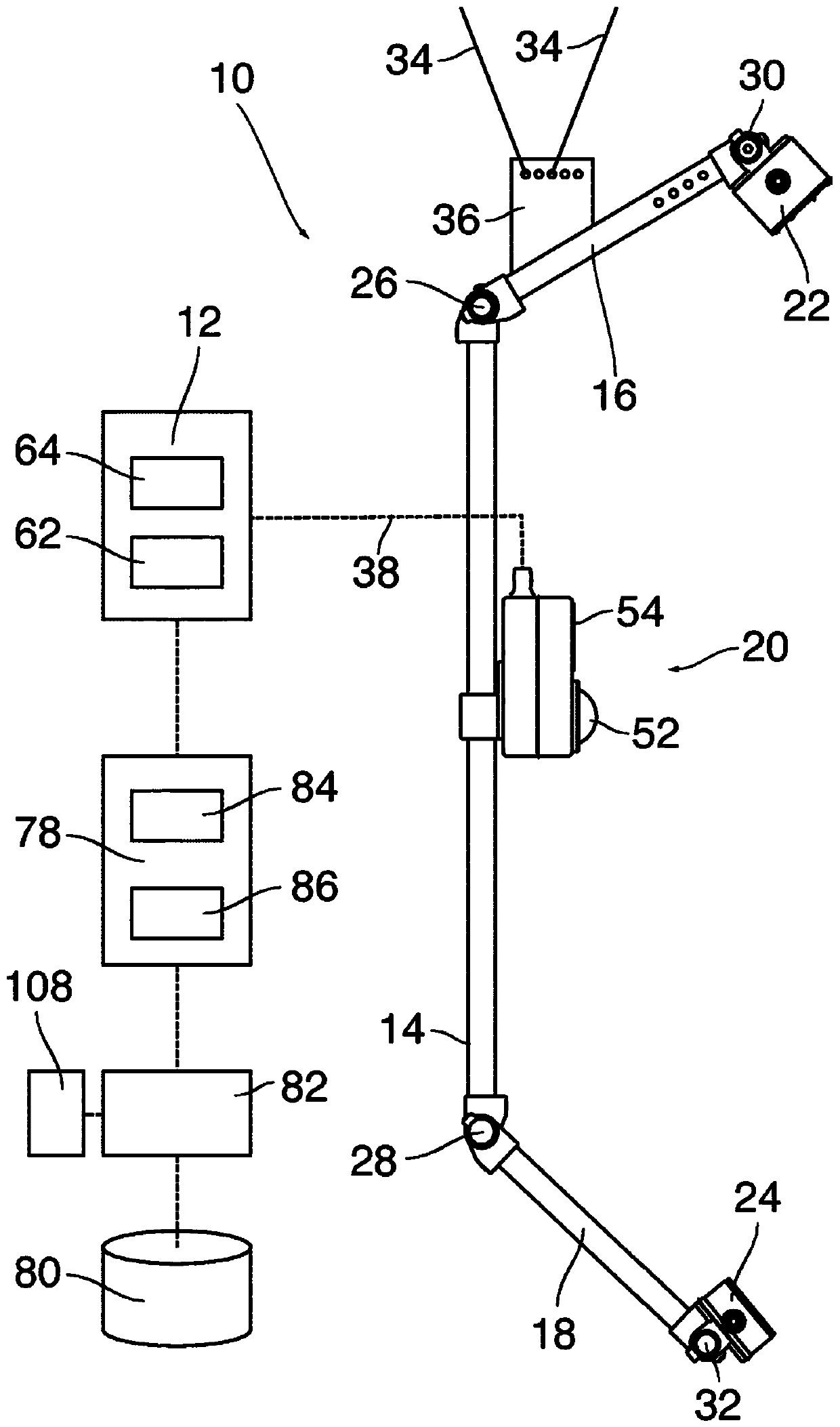
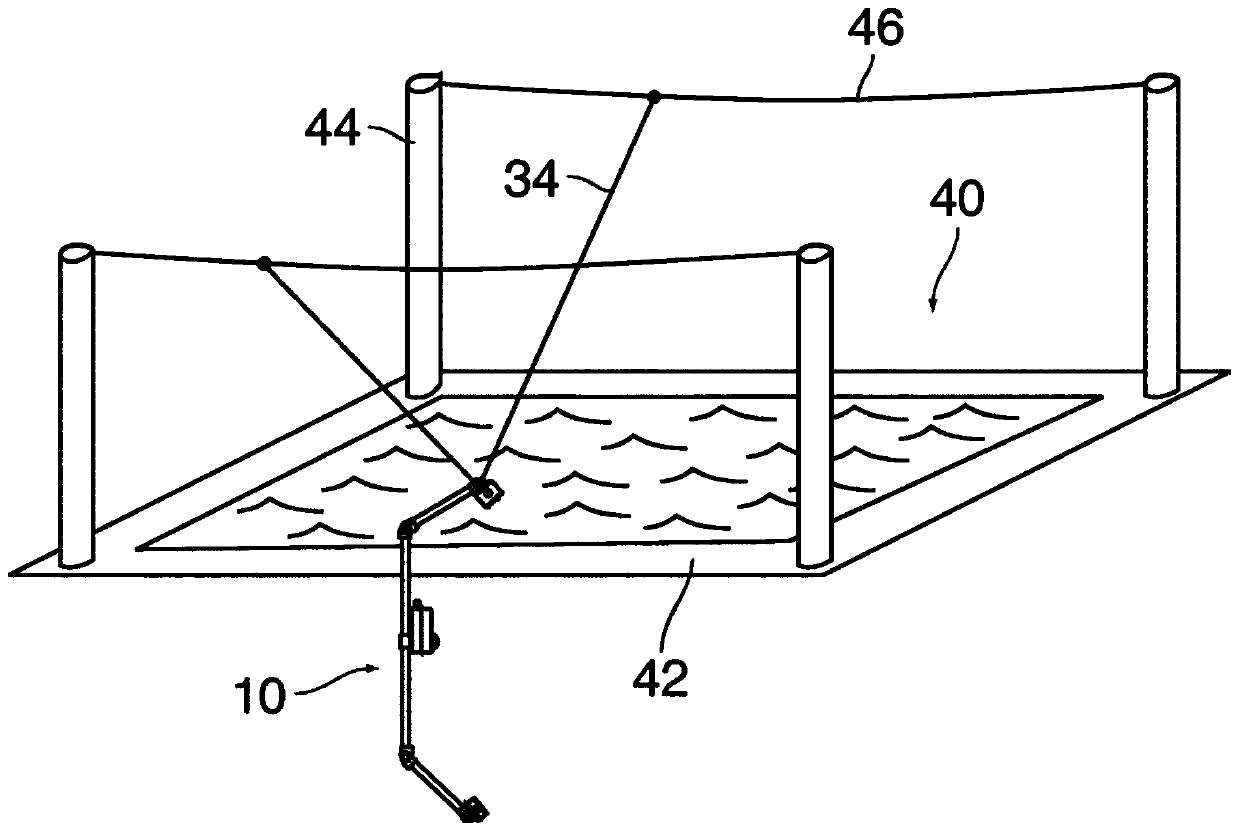
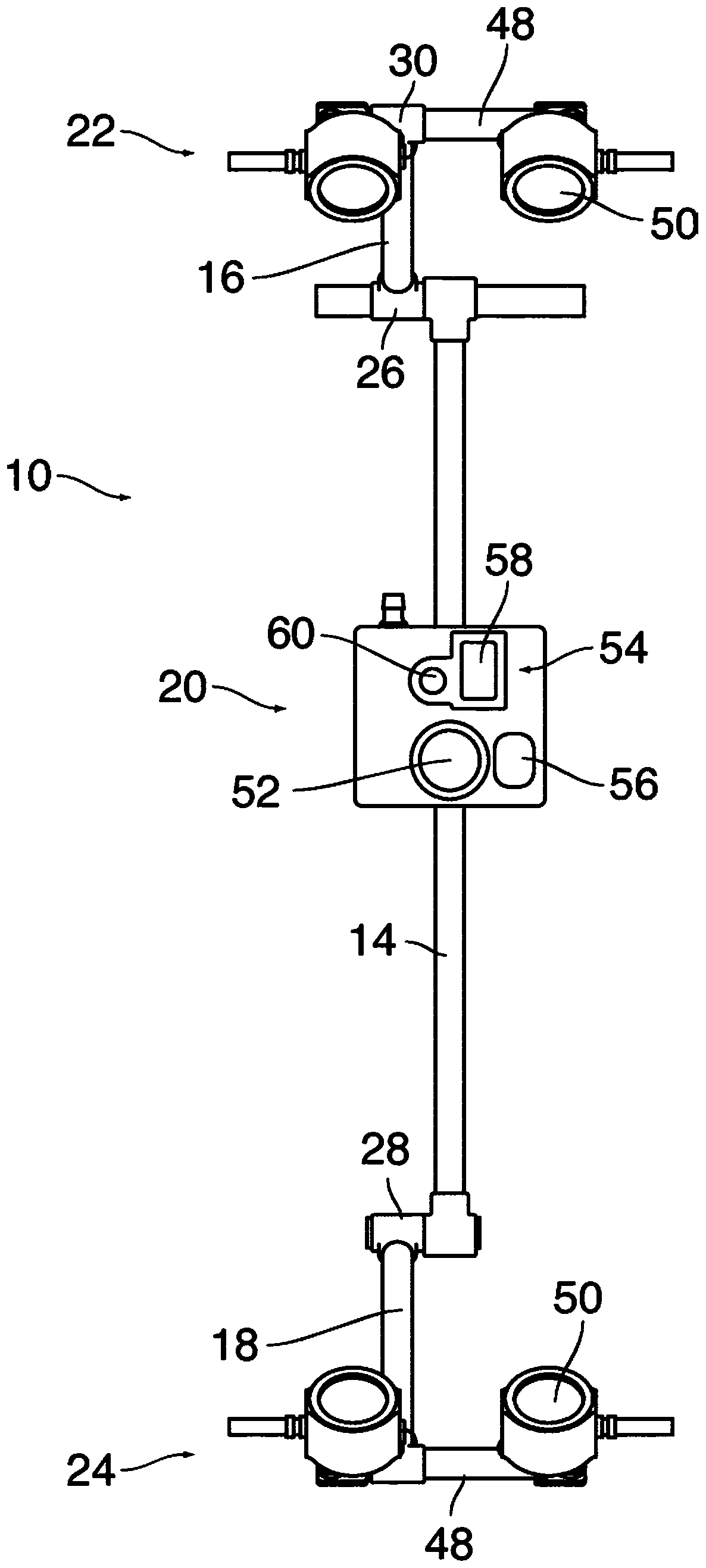
[0034] Such as figure 1 As shown, the image capture system includes a camera and lighting assembly 10 and a camera and lighting control system 12 that enable automatic acquisition of high quality images of fish.
[0035] Camera and lighting assembly 10 includes vertical support member 14 , upper boom 16 , lower boom 18 , camera housing 20 , upper lighting array 22 and lower lighting array 24 . The camera housing 20 is connected to the vertical support member 14 and is preferably height adjustable. The vertical positioning of the camera is preferably such that the field of view of the camera is at least partially (preferably mostly or fully) covered by the illumination cones of the upper and lower illumination arrays 22 , 24 . Also, there is preferably a substantial angular offset between the centerline of the camera's field of view and the centerline of the illumination cone. This minimizes the amount of light backscattered (by particles in t...
PUM
 Login to View More
 Abstract
Description
Claims
Application Information
 Login to View More