

Wind vane for generator based on dry-wet separation
A dry-wet separation and generator technology, which is applied to wind turbines, engines, and wind power generation that store gravitational potential energy, can solve problems such as controlling the operating power of generators, excessive damage to generators, and achieve faster incineration and avoid flames. fire effect
Patent Information
- Authority / Receiving Office
- CN · China
- Patent Type
- Applications(China)
- Current Assignee / Owner
- Publication Date
- 2021-08-24
Smart Images
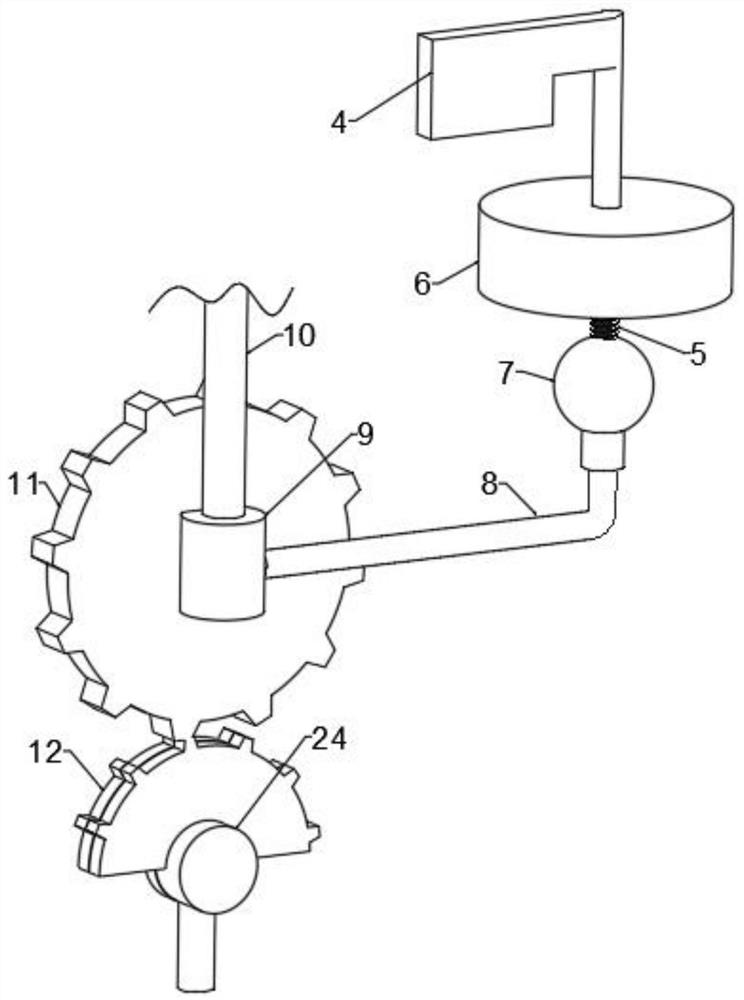
Figure 1 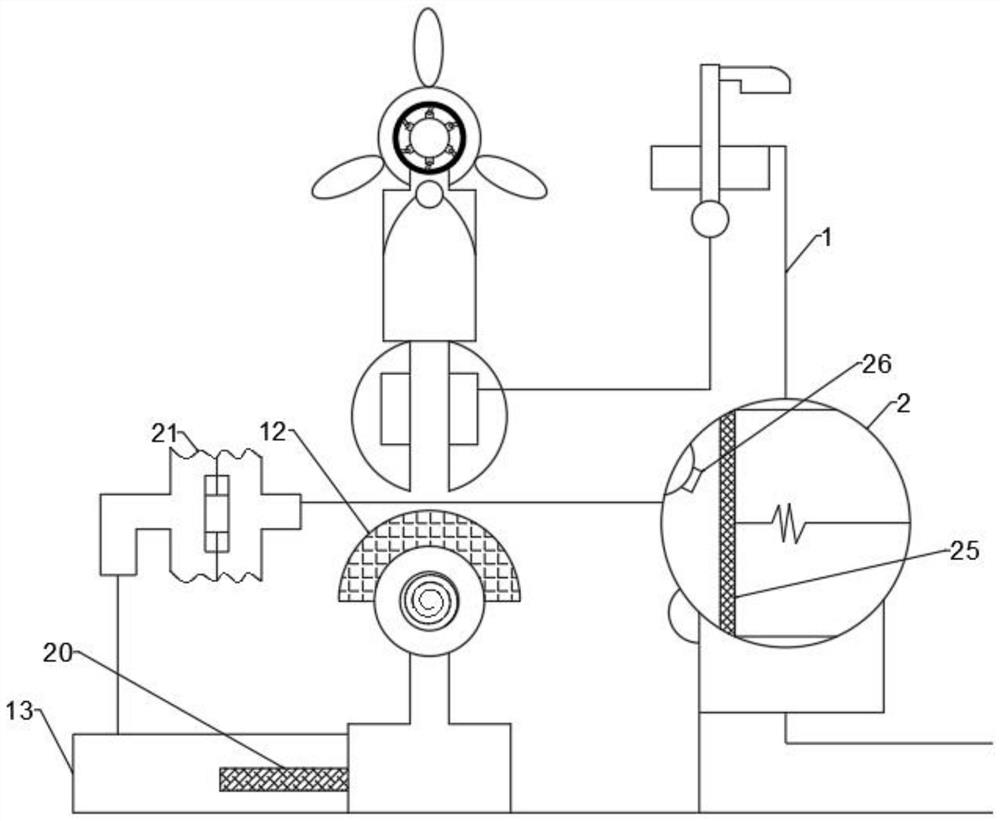
Figure 2 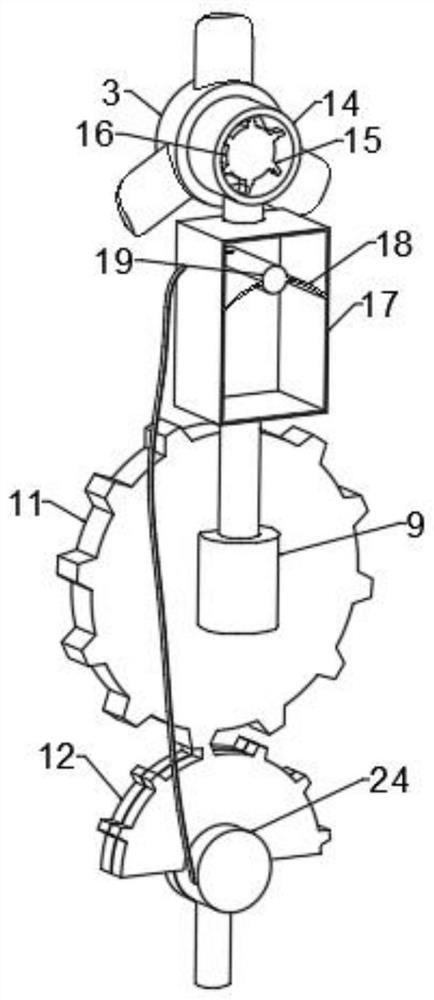
Figure 3
Abstract
Description
technical field
[0001] The invention relates to the technical field of dry-wet separation, in particular to a wind vane for generators based on dry-wet separation. Background technique
[0002] According to the research results, the volume ratio of air volume to hydrogen is about 5:2, which can produce an explosion. The most violent explosion is hydrogen and oxygen. When the volume ratio is 2:1, an explosion will occur. The existing wind vane for generators, in In the process of garbage incineration, the operating power of the generator cannot be controlled by judging the wind direction, which may easily lead to excessive operation of the generator and cause damage, and it is also impossible to electrolyze water through the generator to produce hydrogen and oxygen to support the combustion of garbage incineration, so Therefore, it is necessary to design a wind vane for generators based on dry-wet separation that can automatically change the engine power and adjust the degree...
Examples
Embodiment Construction
[0021] The following will clearly and completely describe the technical solutions in the embodiments of the present invention with reference to the accompanying drawings in the embodiments of the present invention. Obviously, the described embodiments are only some, not all, embodiments of the present invention. Based on the embodiments of the present invention, all other embodiments obtained by persons of ordinary skill in the art without making creative efforts belong to the protection scope of the present invention.
[0022] see Figure 1-4 , the present invention provides a technical solution: a wind vane for a generator based on dry-wet separation, including a housing 1, an incinerator 2 is fixed inside the housing 1, a generator is fixed at the middle bottom of the housing 1, and a gear is connected to the upper part of the generator. Fan 3, the right side of the fan 3 is provided with a wind vane 4, the wind vane 4 is threadedly connected to the top of the housing 1, th...