
Tyre with double-anchoring casing ply
A tire and main fixing technology, which is applied to tire parts, tire edges, wheels, etc., to achieve the effect of simplifying conception and manufacturing
- Summary
- Abstract
- Description
- Claims
- Application Information
AI Technical Summary
Problems solved by technology
Method used
Image

Examples
Embodiment Construction
[0029] "Radially upward" or "radially upward", and "radially outward" herein refer to the direction of the larger diameter, for reference.
[0030] In this specification, the term "cord" can refer to a single wire, or multiple wires, or a combination such as a thick cord, a thin rope, or even any other type of equivalent combination, regardless of the material of these cords. What and what process is used to improve adhesion to rubber, such as surface treatment or coating or pre-coating with glue.
[0031] It is well known that the carcass-type reinforcing structure is radial because its cords are arranged at 90°, but it can also be arranged at about 90° according to the present statement.
[0032] By "characteristics of the cord" is meant its dimensions, composition, mechanical properties (especially its modulus), chemical properties, etc.
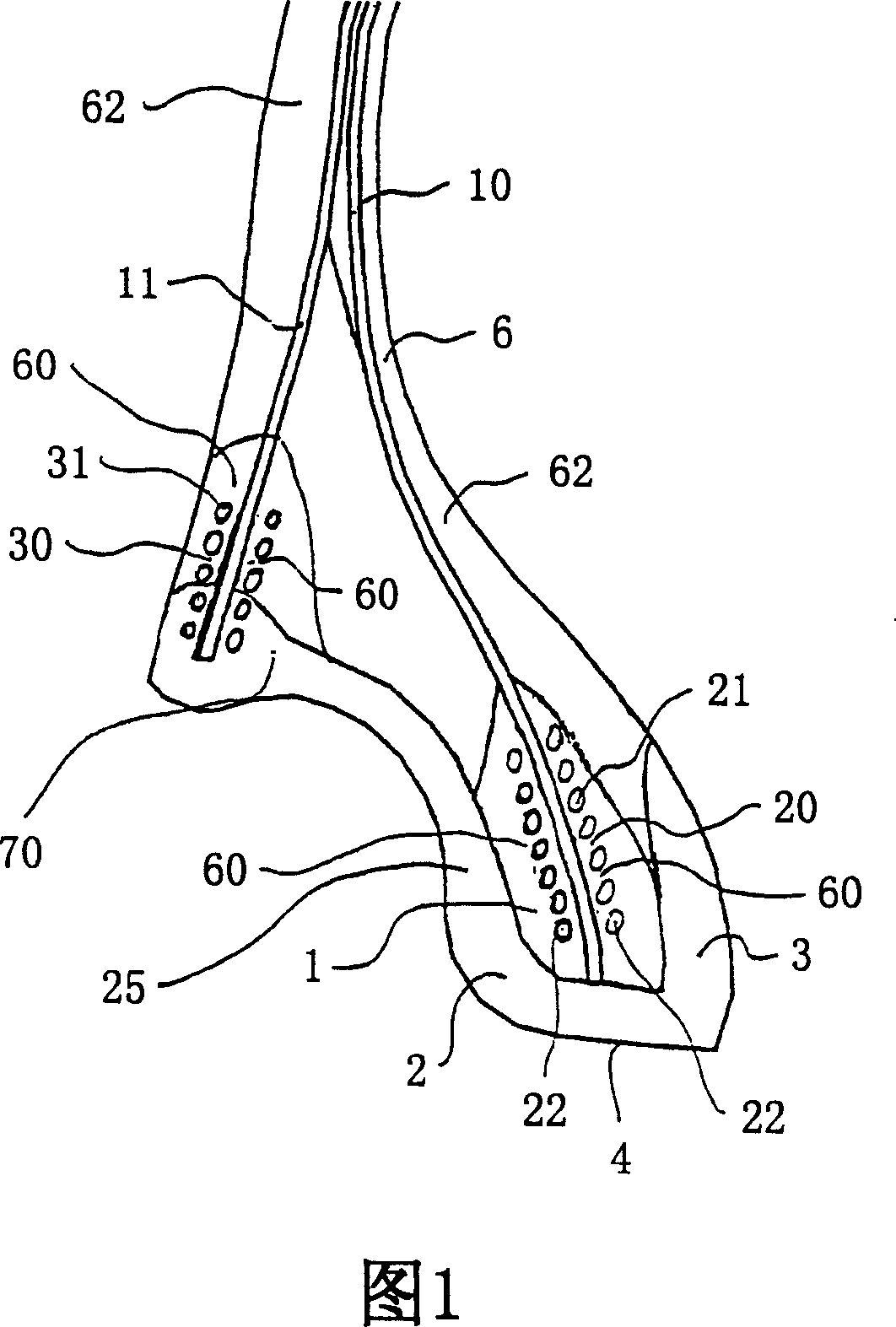
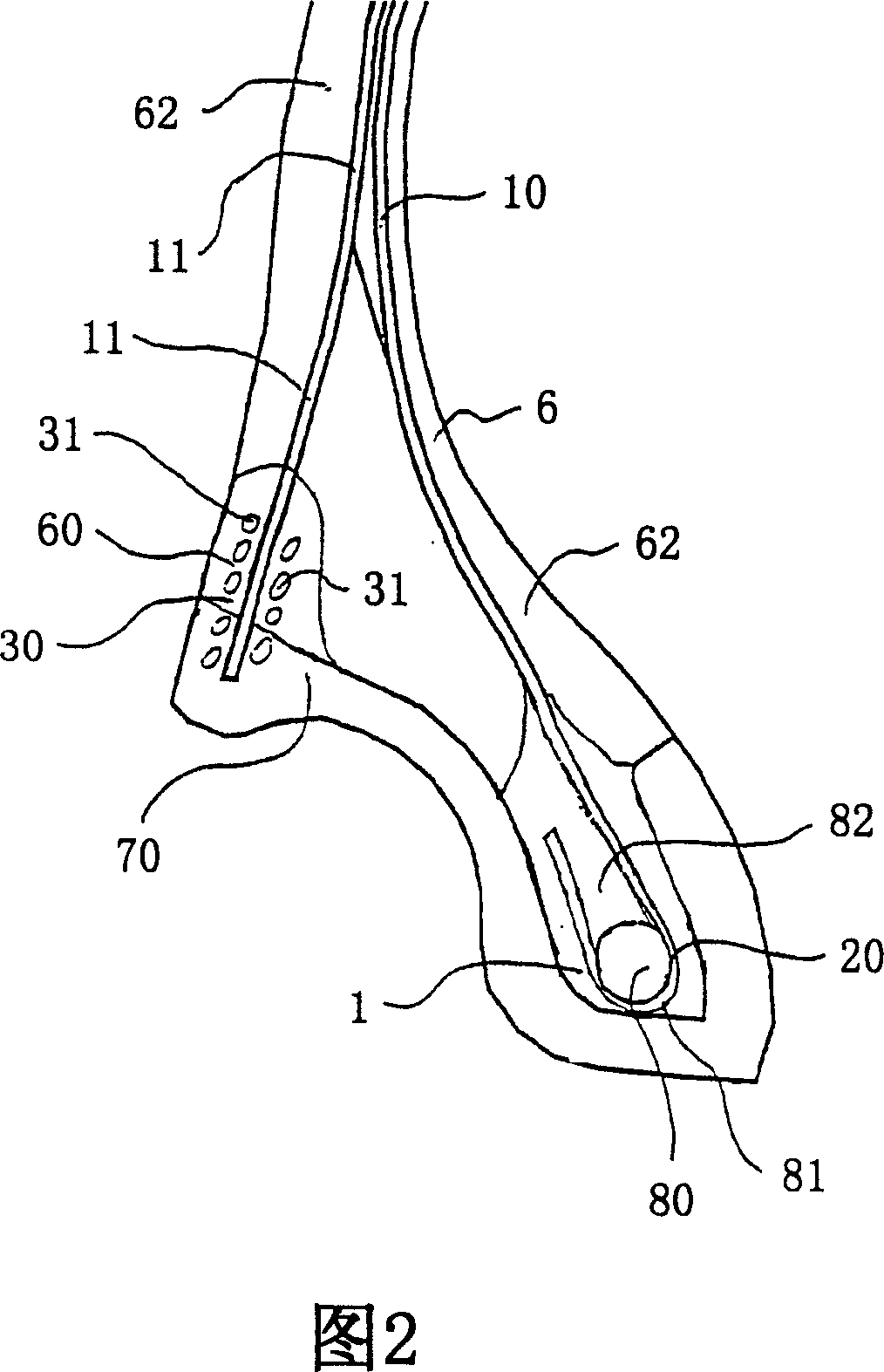
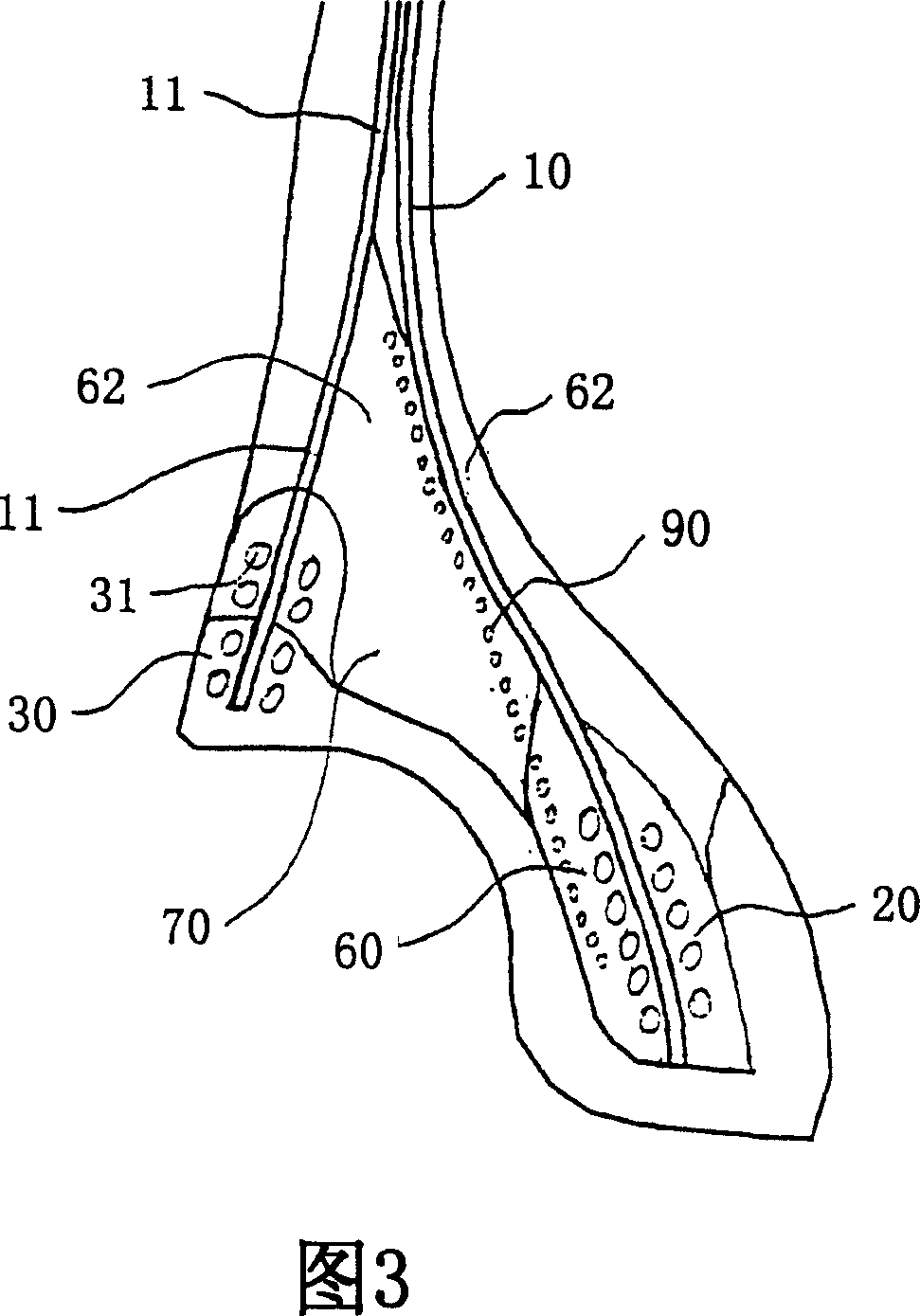
[0033] Figure 1 shows the lower region of a first embodiment of a tire according to the invention, in particular its bead 1 portion. T...
PUM
 Login to View More
 Abstract
Description
Claims
Application Information
 Login to View More