
Illegal position updating processing method
A processing method and illegal technology, applied in the field of location update processing, can solve the problems of channel location update failure, waste of resources, increased signaling load, etc., so as to reduce the number of illegal location updates, improve the use efficiency, and avoid the problem of processing load. Effect
- Summary
- Abstract
- Description
- Claims
- Application Information
AI Technical Summary
Problems solved by technology
Method used
Image

Examples
Embodiment Construction
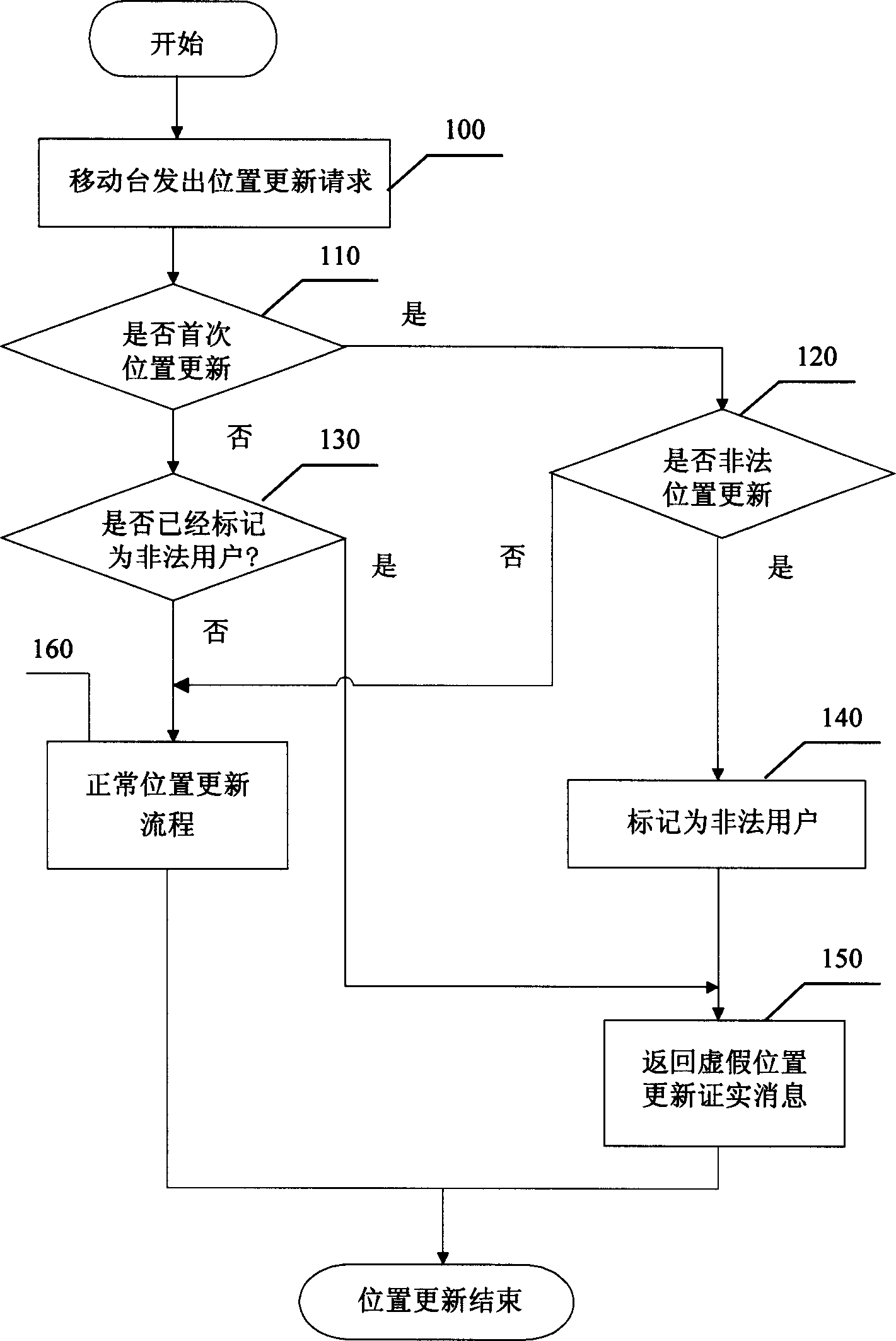
[0020] Now describe in detail a specific embodiment of the inventive method, please refer to figure 1 The method for limiting the number of illegal location updates in the embodiment of the present invention includes the following steps:
[0021] Step 100: the user's mobile phone sends a location update request;
[0022] Step 110: After receiving the location update request, the network side first judges whether the request is the user's first location update request in the VLR? If yes, execute step 120; otherwise, execute step 130;
[0023] Step 120: Determine whether the location update request is an illegal location update request? If yes, execute step 140; otherwise, execute step 160;
[0024] Step 130: Determine whether the user has been marked as an illegal user? If yes, execute step 150; otherwise, execute step 160;
[0025] Step 140: mark the user as an illegal user;
[0026] Step 150: Return a false location update confirmation message to the user's mobile phone...
PUM
 Login to View More
 Abstract
Description
Claims
Application Information
 Login to View More