
Method based on elastic group ring for obtaining link evaluating parameter
An elastic packet ring and evaluation parameter technology, applied in the field of network communication, can solve the problems of inaccurate link evaluation parameters such as link transmission delay and jitter in the RPR ring network, large processing time transmission delay, etc. Maintainability and the effect of improving accuracy
- Summary
- Abstract
- Description
- Claims
- Application Information
AI Technical Summary
Problems solved by technology
Method used
Image

Examples
Embodiment Construction
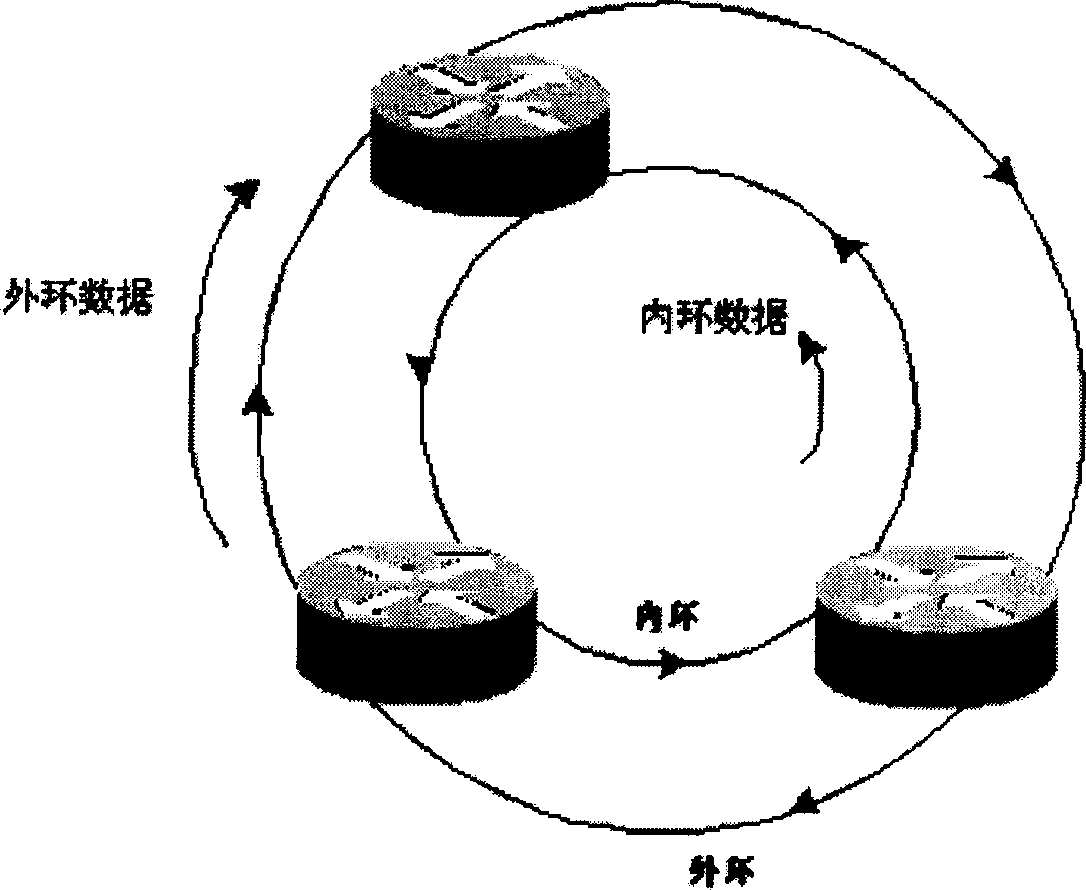
[0042] Link evaluation parameters are important parameters for evaluating link transmission performance. In order to improve the accuracy of link evaluation parameters, it is necessary to fully consider the RPR (Resilient Packet Ring) ring network when determining the link evaluation parameters of data packet transmission links. The processing time of the nodes in the data packet.
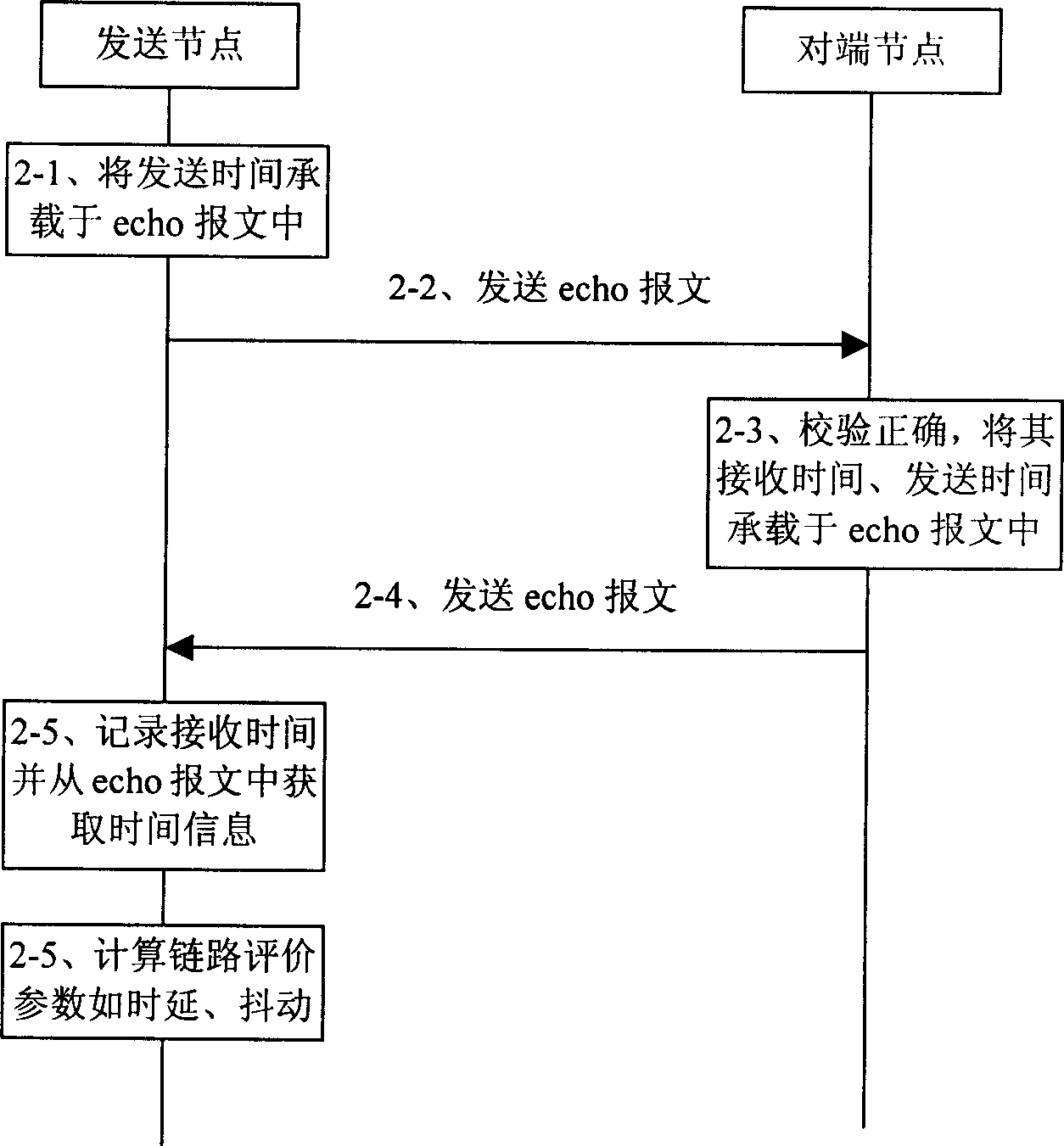
[0043] The core of the present invention is: the sending node sends each request data message to the peer node, and the sending node obtains the sending time of sending each request data message, the receiving time of receiving the response data message returned by the peer node, and the peer pair For the processing time of each request data message and response data message, the sending node determines link evaluation parameters according to the sending time, receiving time, and processing time.
[0044] The technical solution provided by the present invention will be further described below based...
PUM
 Login to View More
 Abstract
Description
Claims
Application Information
 Login to View More