
Rewards method and apparatus for improved neurological training
a neurological training and reward technology, applied in the field of computer based training, can solve the problems of poorer immediate and delayed-recall memory ability, greater cognitive impairment, and greater difficulty in word retrieval or naming for individuals
- Summary
- Abstract
- Description
- Claims
- Application Information
AI Technical Summary
Benefits of technology
Problems solved by technology
Method used
Image

Examples
Embodiment Construction
Discussion of Program “Fast Forward”
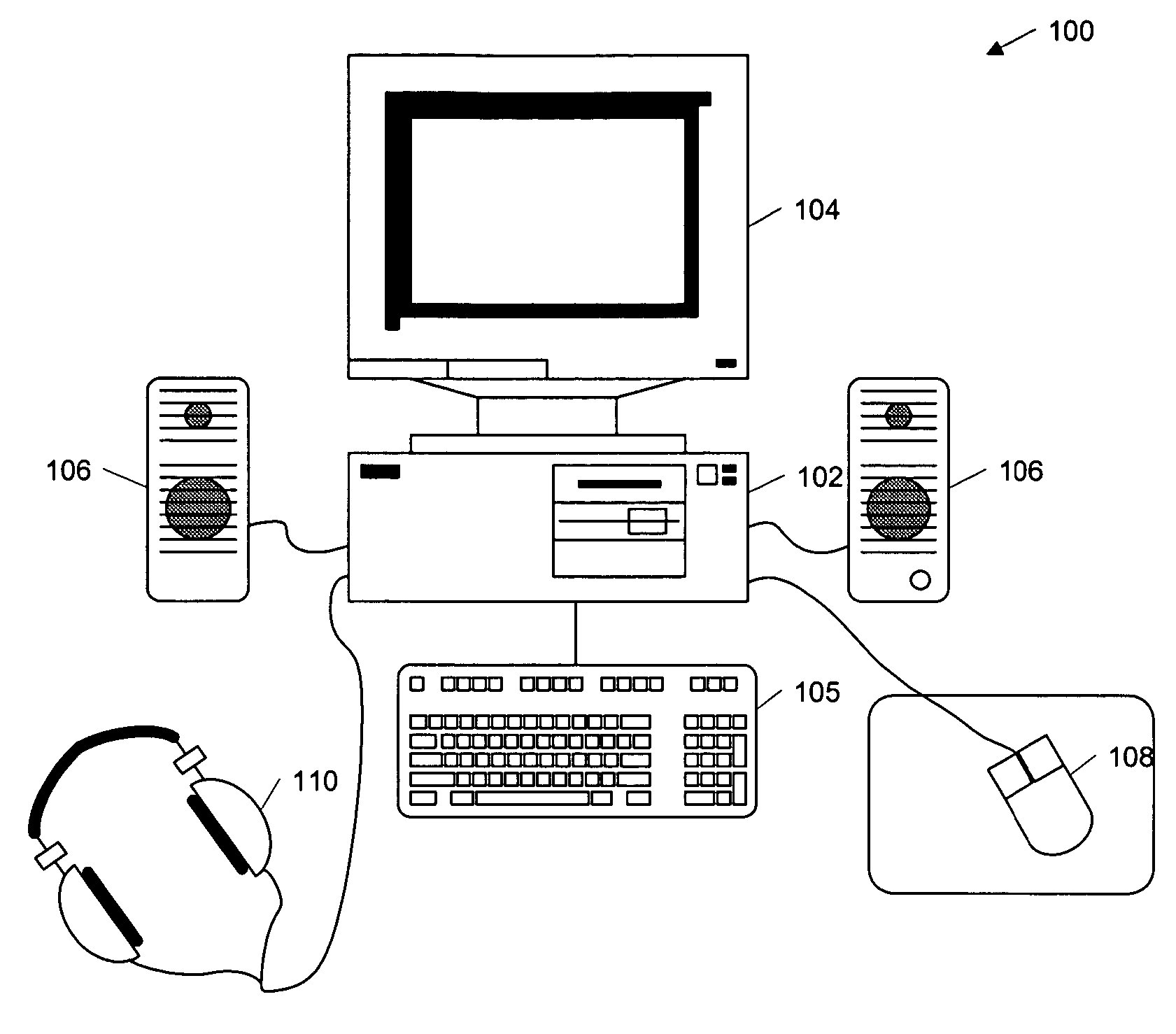
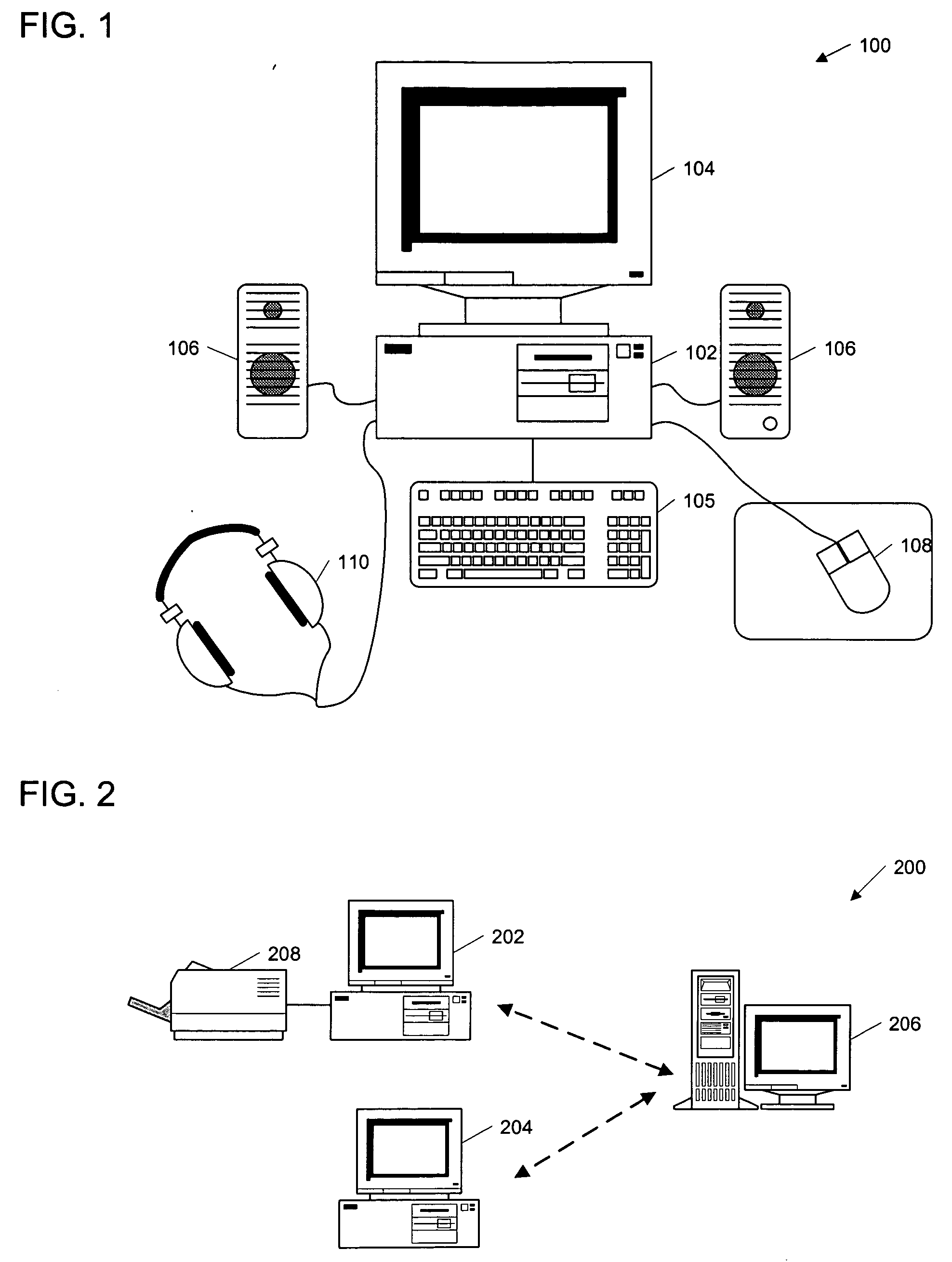
[0047] Referring to FIG. 1, a computer system 100 is shown for executing a computer program to train, or retrain a learning language impaired (LLI) subject, according to the present invention. The computer system 100 contains a computer 102, having a CPU, memory, hard disk and CD ROM drive (not shown), attached to a monitor 104. The monitor 104 provides visual prompting and feedback to the subject during execution of the computer program. Attached to the computer 102 are a keyboard 105, speakers 106, a mouse 108, and headphones 110. The speakers 106 and the headphones 110 provide auditory prompting and feedback to the subject during execution of the computer program. The mouse 108 allows the subject to navigate through the computer program, and to select particular responses after visual or auditory prompting by the computer program. The keyboard 105 allows an instructor to enter alpha numeric information about the subject into the computer 102. ...
PUM
 Login to View More
 Abstract
Description
Claims
Application Information
 Login to View More