
Assembly and kit for marking tubal ostia
a technology for tubal ostia and marking kit, which is applied in the field of anatomical features marking methods and equipment, can solve the problems of limiting the number of components in the marking assembly and limiting so as to limit the number of components and limit the possibility of accidentally spilling dy
- Summary
- Abstract
- Description
- Claims
- Application Information
AI Technical Summary
Benefits of technology
Problems solved by technology
Method used
Image

Examples
Embodiment Construction
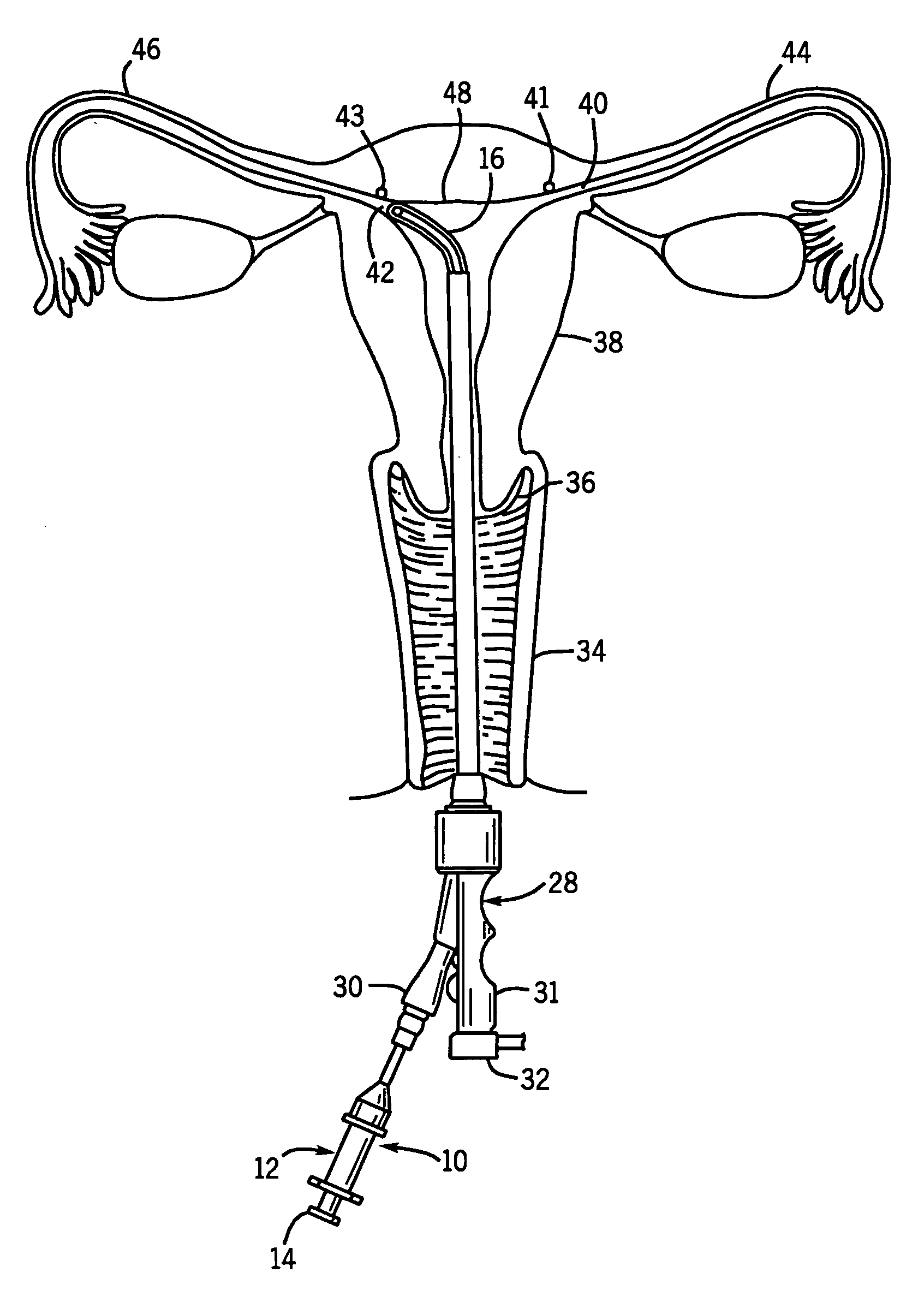
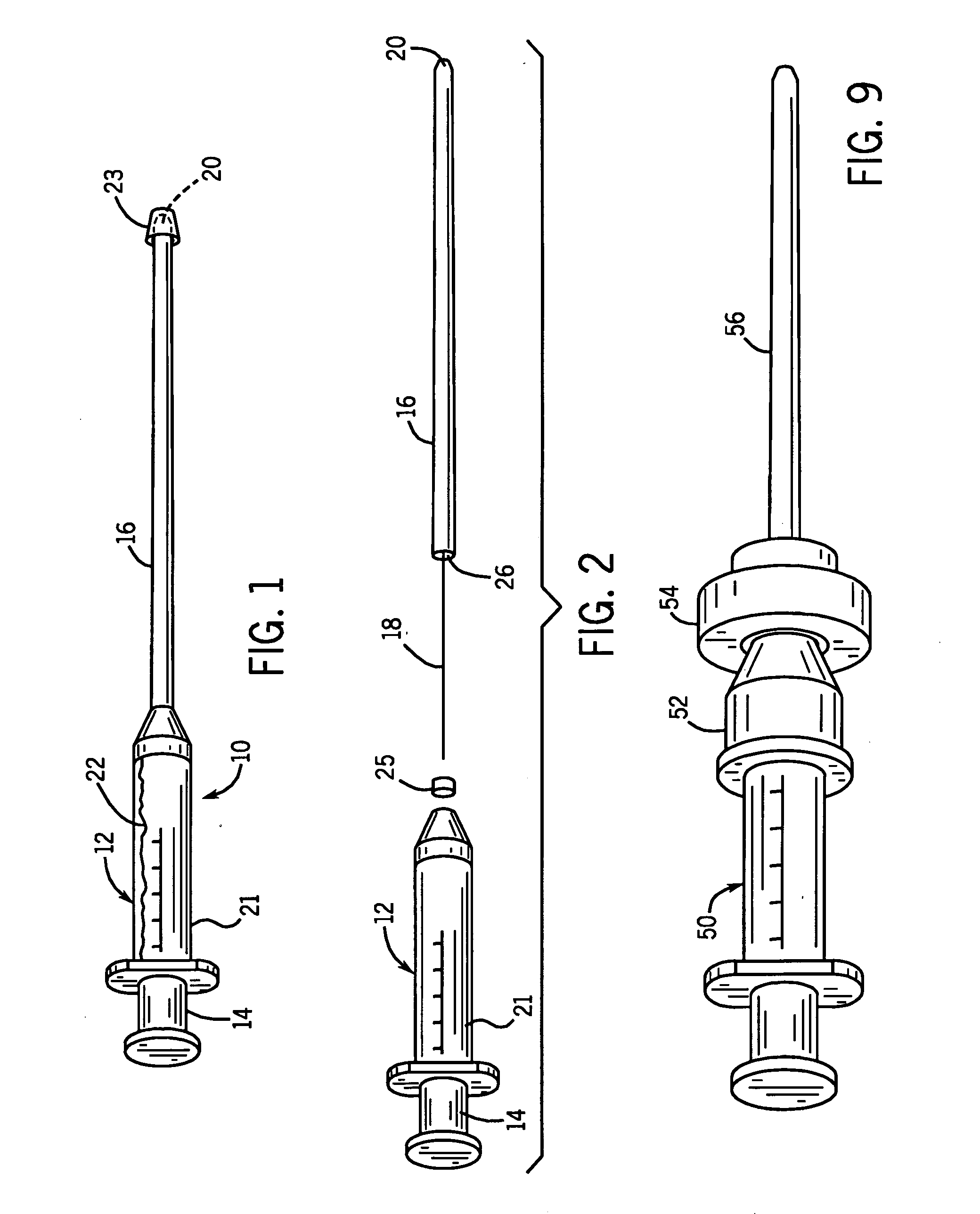
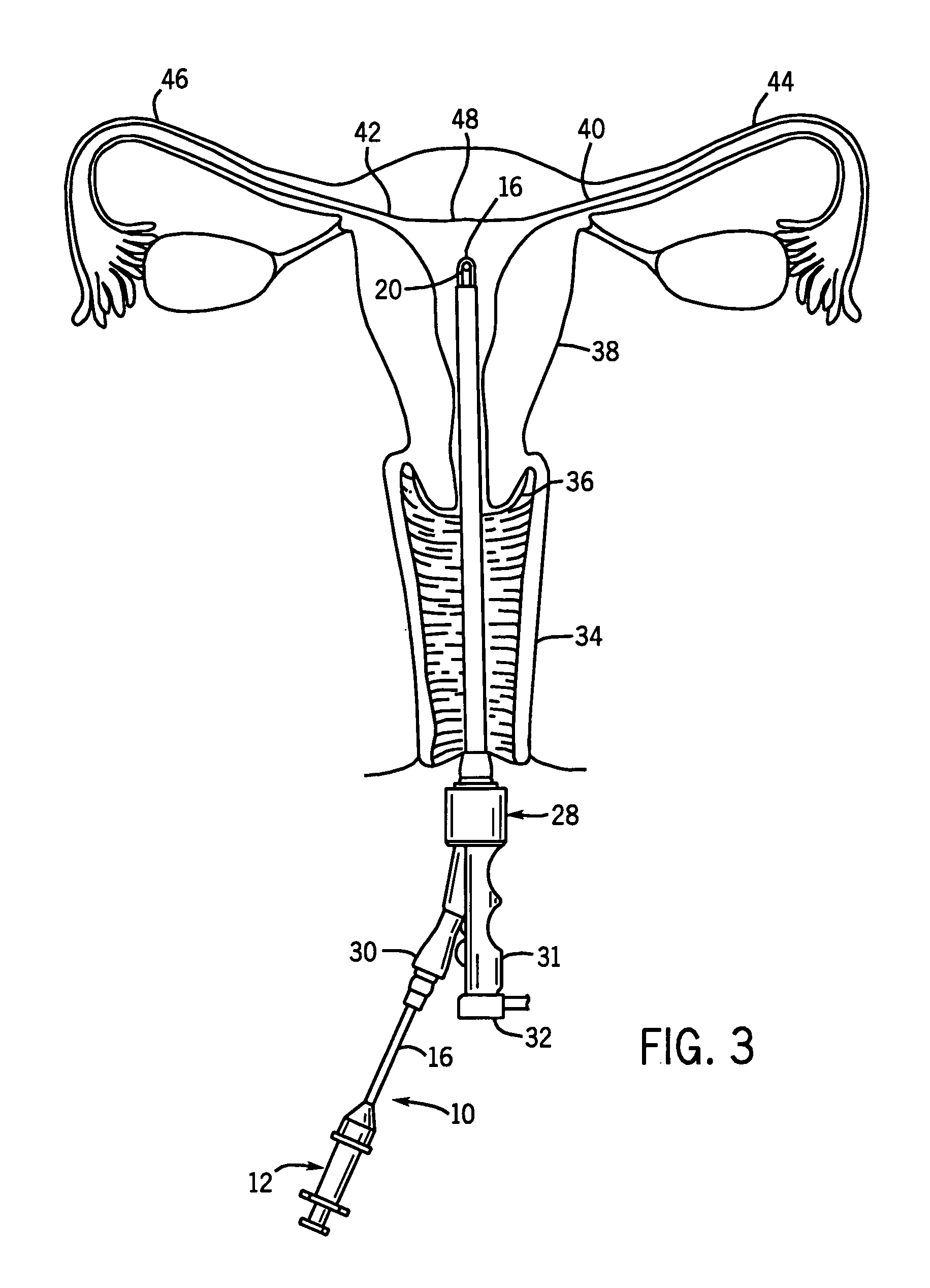
[0022] Referring now to the figures and more particular to FIG. 1, a marking assembly 10 useful for marking tubal ostia in the uterus is shown. The marking assembly 10 comprises a fluid dispenser 12 coupled to a catheter 16 having an opening at a distal end 20. A container 21 for receiving a marking dye 22 is provided in the fluid dispenser 12, and an actuator 14 is provided for forcing the marking dye 22 out of the container 21, into the catheter 16, and out of the opening at the distal end 20 of the catheter 16. A cap 23, which can be, for example, snap fit onto the catheter 16, can be provided to enclose the open end 20 to prevent accidental spillage of the marking dye 22 prior to use. The marking dye 22 is selected to be biocompatible and to provide marks that can be seen relatively easily when used to mark positions inside internal body cavities. Dyes which are relatively viscous and therefore easier to control when providing the mark are preferred. Although a number of marking...
PUM
 Login to View More
 Abstract
Description
Claims
Application Information
 Login to View More