
Knotless fixation of tissue to bone with suture chain
a technology of tissue and bone fixation, applied in the field of surgical fixation, can solve the problems of difficult and demanding suture securement during surgery, and it is not clear how to achieve in situ surgical refinement, and achieve the effect of high strength suture and refined tension on the fixation
- Summary
- Abstract
- Description
- Claims
- Application Information
AI Technical Summary
Benefits of technology
Problems solved by technology
Method used
Image

Examples
Embodiment Construction
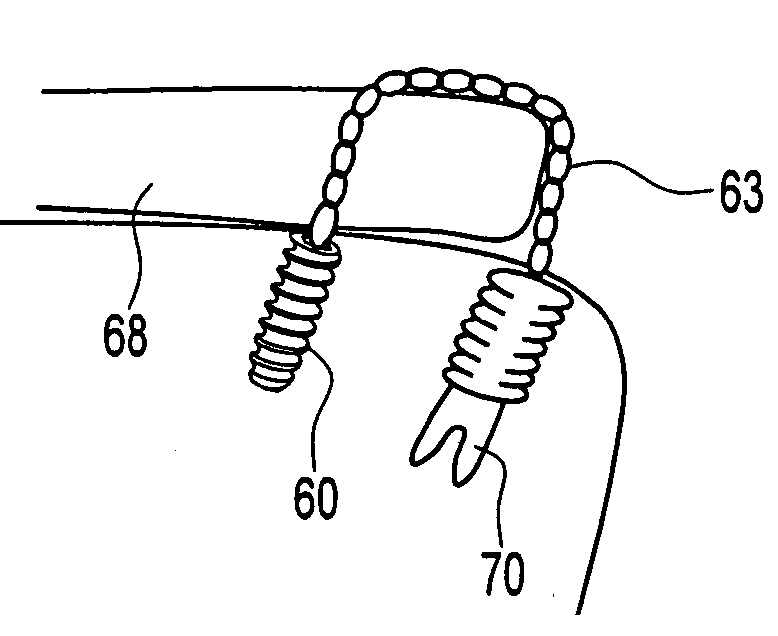
[0041] The present invention provides apparatus and methods for knotless tissue fixation using serial suture loop constructs. The construct preferably includes at least two loops of suture, preferably high strength suture. The suture loop constructs allow for surgical fixation of tissue without the need to tie knots. The loops are captured with anchoring implants or similar devices.
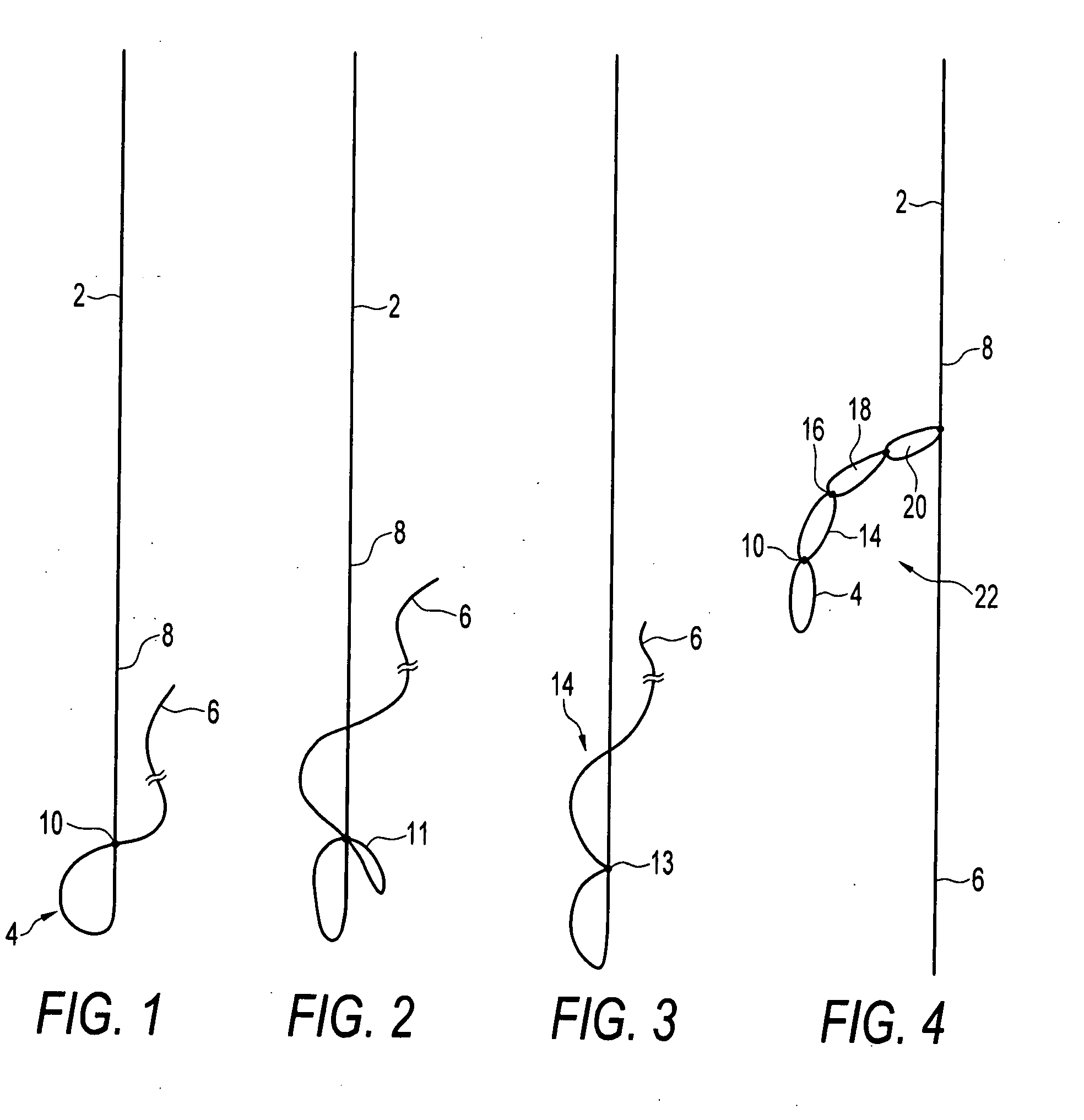
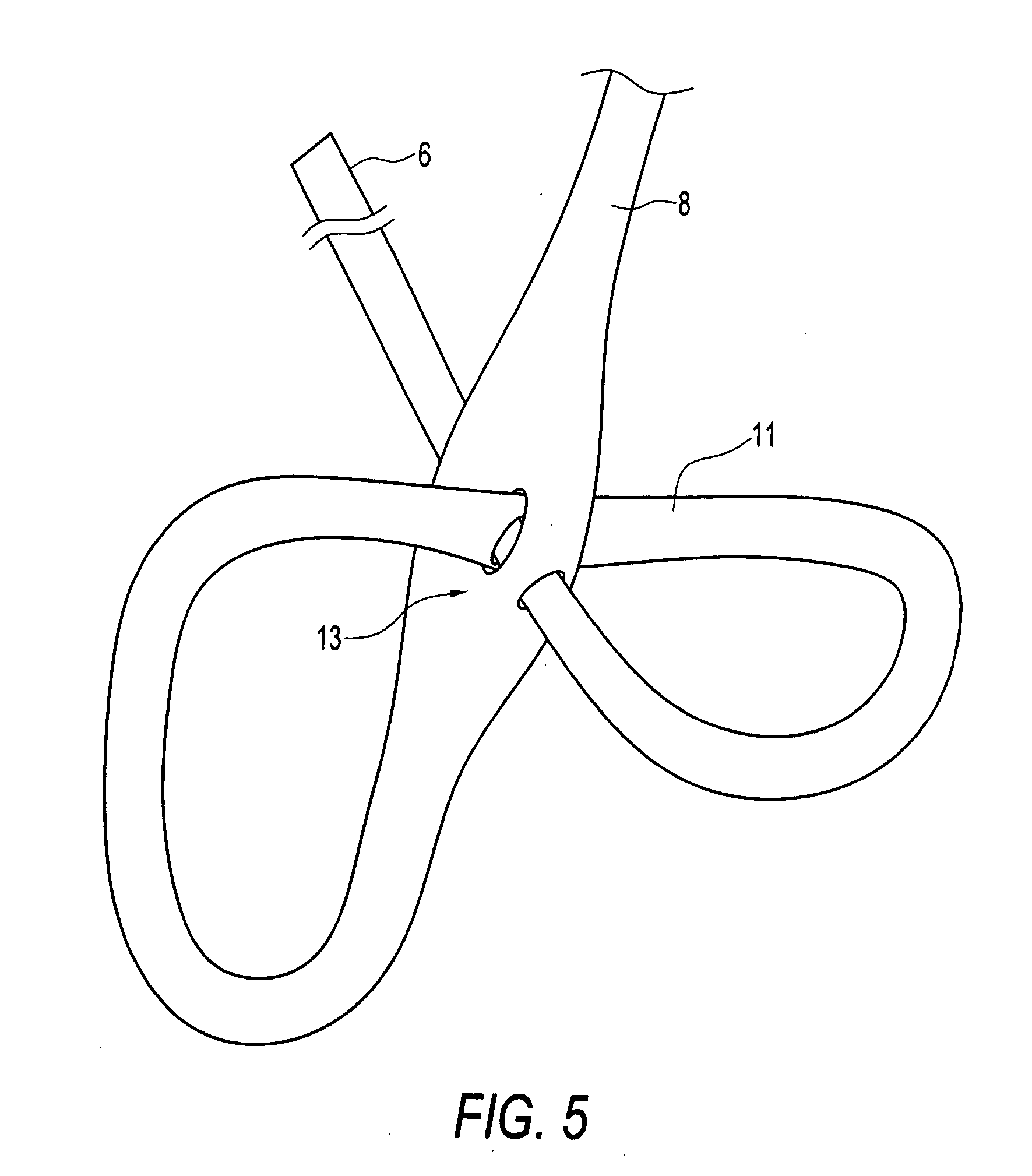
[0042] The invention also provides a method of forming a chain of suture loops, preferably of braided high strength suture loops, for surgical applications. As described in more detail below, the suture chain can comprise a series of closed loops of suture formed in a conventional “chain.” Alternatively, at least one of the loops or “links” of the chain can be formed first by “piercing” or “lacing” an end of the suture through a standing part of the suture, to form an initial suture “intersection” in a first direction (for example, in the x-y direction). The suture intersection is then locked by lacing t...
PUM
 Login to View More
 Abstract
Description
Claims
Application Information
 Login to View More