
Information processing apparatus, history management method
a technology applied in the field of information processing apparatus and history management method, can solve problems such as inability to address errors, limited to extremely simple errors, and errors that may occur
- Summary
- Abstract
- Description
- Claims
- Application Information
AI Technical Summary
Benefits of technology
Problems solved by technology
Method used
Image

Examples
1st embodiment
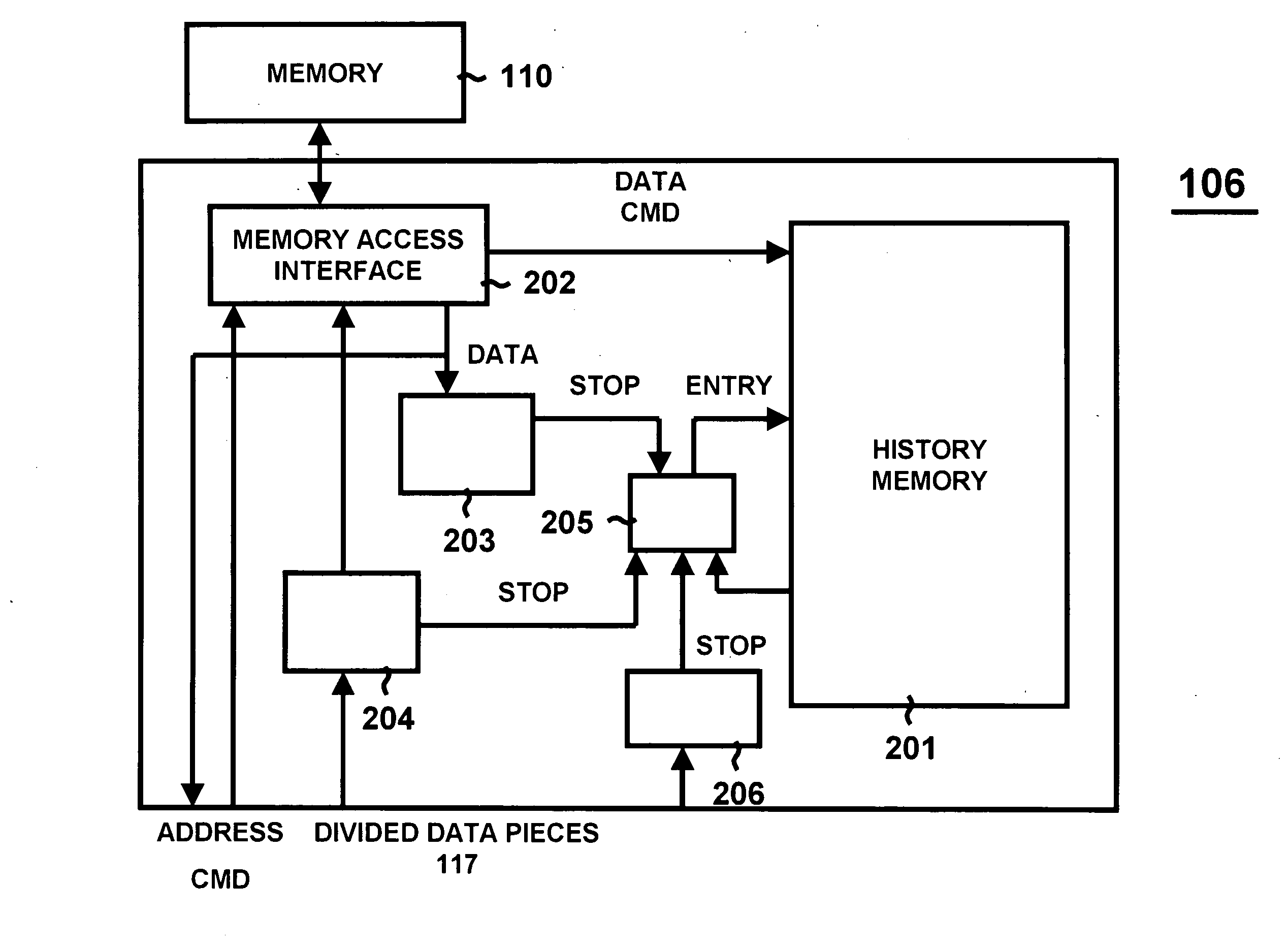
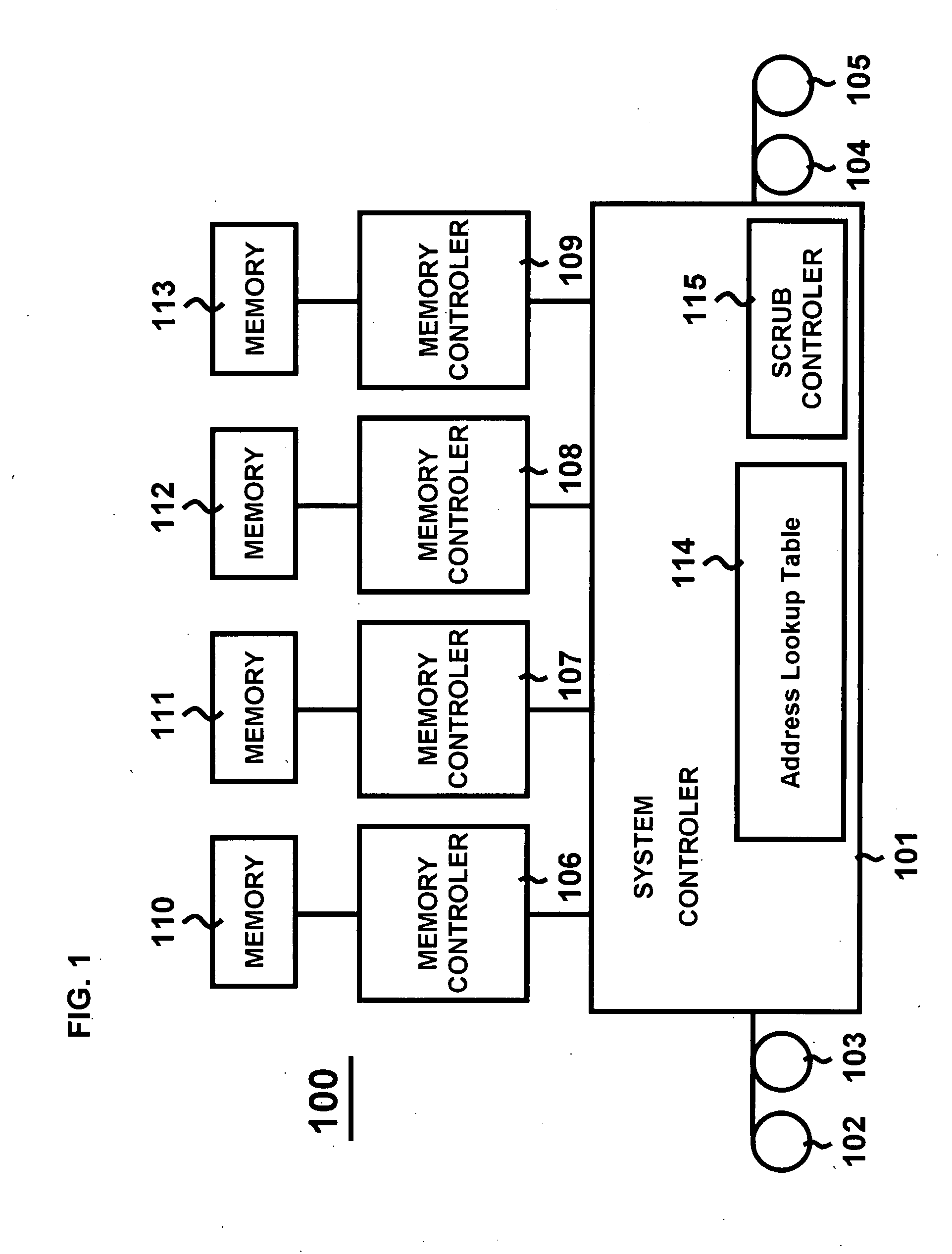
[0025]FIG. 1 shows a conceptual diagram of an information processing apparatus 100 of one embodiment. This embodiment describes a Non-Mirror mode.
[0026][Conceptual Diagram of Server 100]
[0027]The information processing generally represents an apparatus that performs data processing, such as a server and a personal computer. The information processing apparatus in this embodiment will be called server, hereinafter.
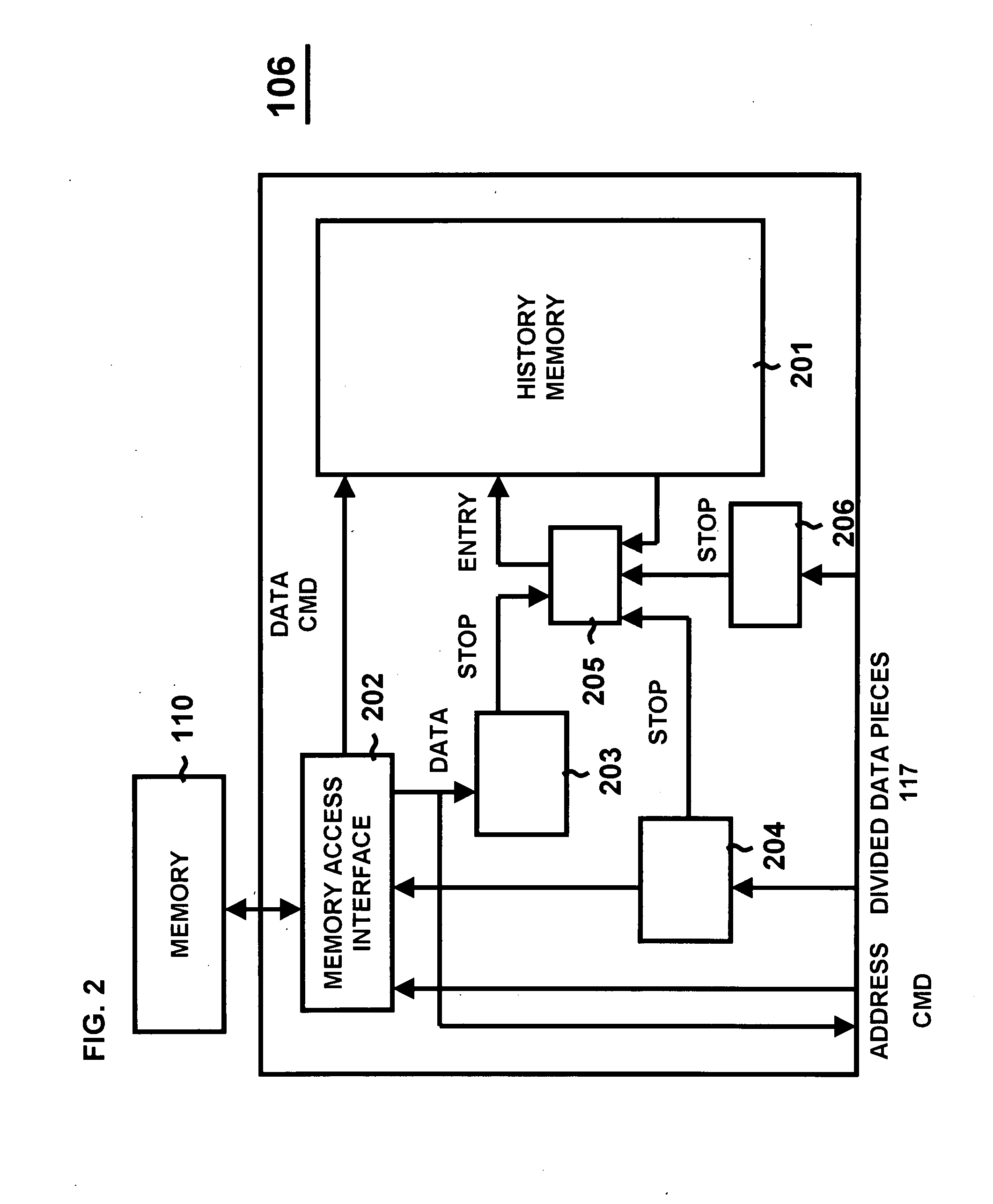
[0028]The server 100 includes a system controller 101, CPUs (central processing units) 102, 103, 104 and 105, memory controllers 106, 107, 108 and 109 and memories 110, 111, 112 and 113. The server 100 operates in a Non-Mirror mode. The Non-Mirror mode is a mode that handles the memories 110, 111, 112 and 113 as one cache line and synchronously controls the memories 110, 111, 112 and 113. In this embodiment data 116 is divided into divided data pieces 117, 118, 119 and 120. Then, the memories 110, 111, 112 and 113 store the divided data pieces 117, 118, 119 and 120, respect...
2nd embodiment
[0076]FIG. 9 shows a conceptual diagram of a server 900 according to this embodiment. 2nd embodiment describes a Mirror mode.
[Conceptual Diagram of Server 900]
[0077]The server 900 includes a system controller 901, CPUs (central processing units) 902, 903, 904 and 905, memory controllers 906, 907, 908 and 909 and memories 910, 911, 912 and 913. The server 900 operates in a Mirror mode. The Mirror mode is a mode that stores identical data in a pair of the memories 910 and 911 and a pair of 912 and 913 and synchronously controls the memories 910, 911, 912 and 913. In this embodiment, data 916 and data 917 are data having an identical description. A divided data piece 918 stored in the memory 910 and a divided data piece 920 stored in the memory 912 are divided data pieces having an identical description. Similarly, a divided data piece 919 stored in the memory 911 and a divided data piece 921 stored in the memory 913 are divided data pieces having an identical description.
[0078]FIG. 10...
PUM
 Login to View More
 Abstract
Description
Claims
Application Information
 Login to View More