
Angiocatheter and method of operating the same
a technology of angiocatheter and angiocatheter, which is applied in the field of angiocatheter, can solve the problems of adding discomfort to the patient, requiring at least two steps to complete the procedure,
- Summary
- Abstract
- Description
- Claims
- Application Information
AI Technical Summary
Benefits of technology
Problems solved by technology
Method used
Image

Examples
Embodiment Construction
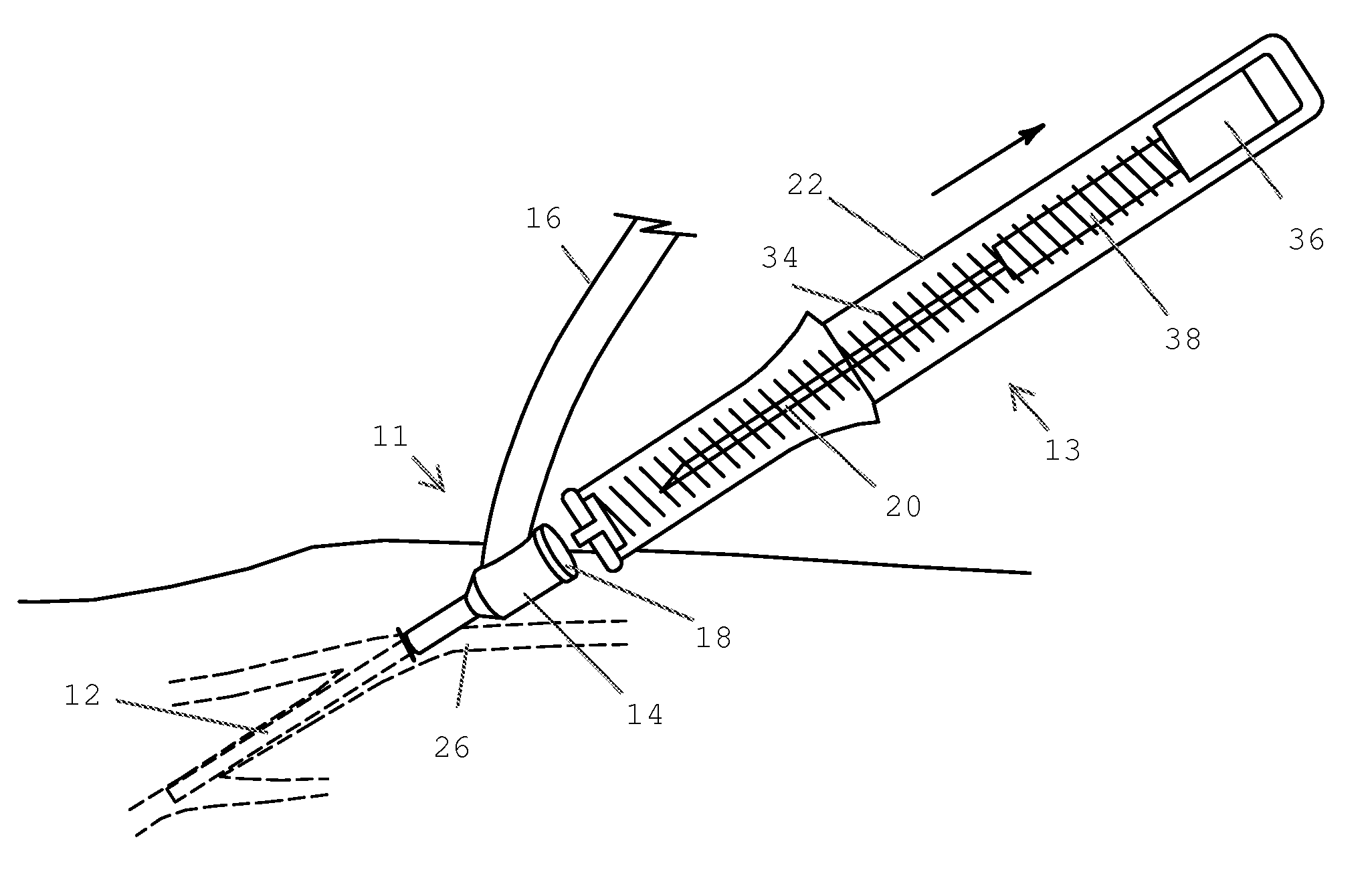
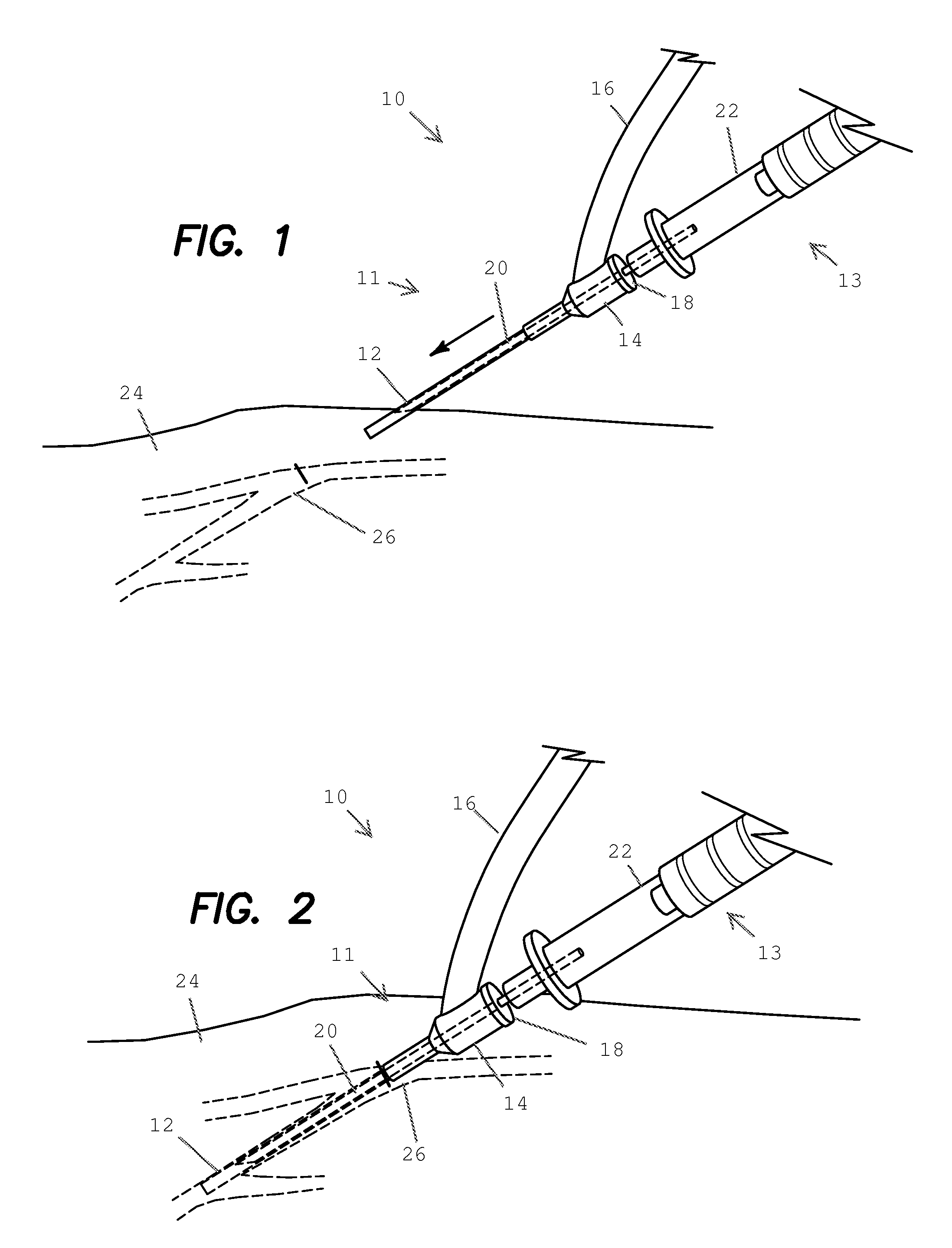
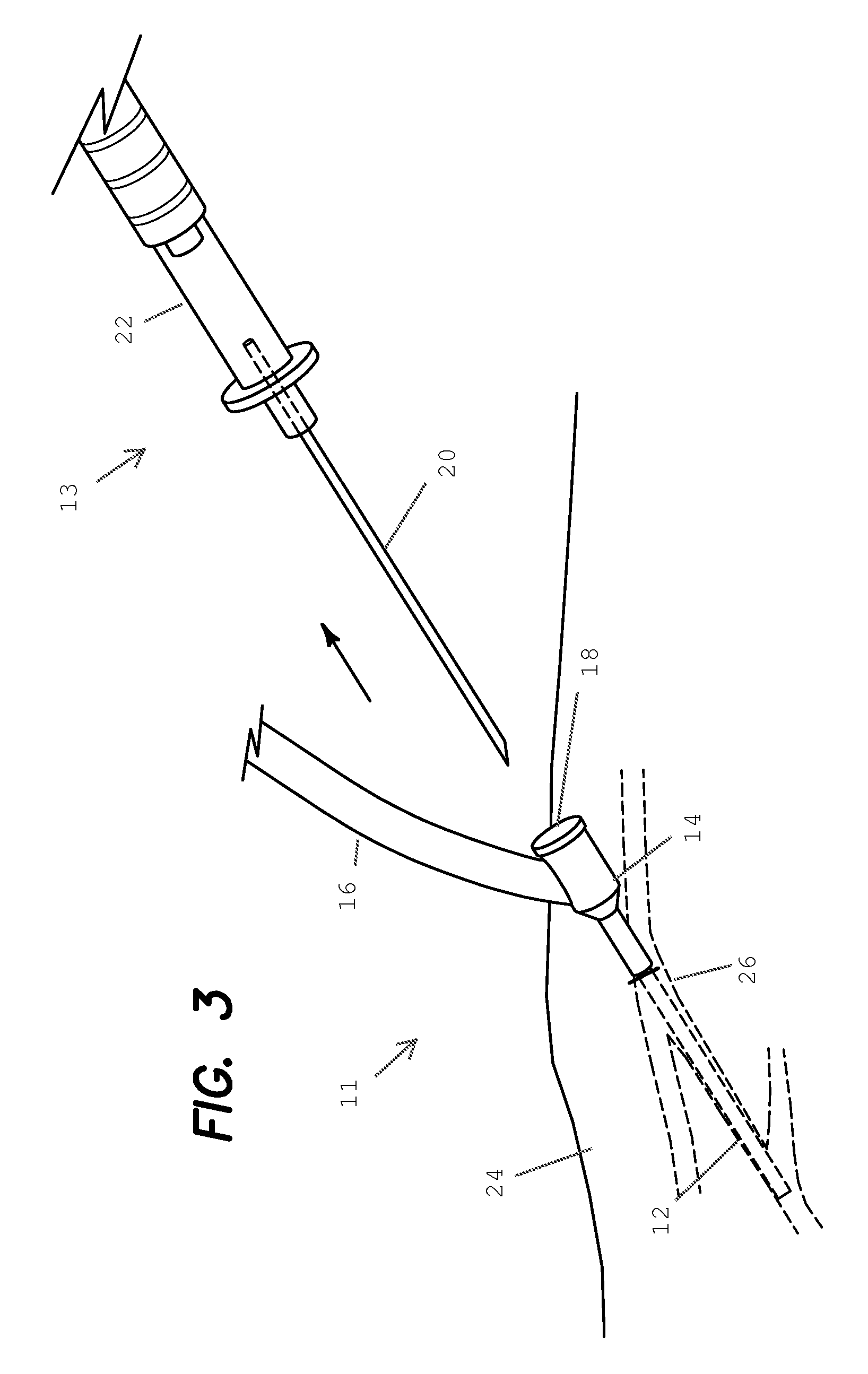
[0027]An improved angiocatheter device for introducing a catheter or other medical lead into the lumen or vessel of a patient is disclosed in the following. In the following reference will be made generally to a lumen, but it is to be understood that a lumen includes any body cavity and in particular any vessel or artery in the vascular system. At the point of the medical procedure where an insertion means or needle assembly is to be removed with the catheter or lead remaining implanted, a spring in the needle portion of the device is expanded thereby retracting a needle from the puncture site and allowing the operator to remove the needle portion from the device. This feature allows for quick insertion and removal from the patient without the necessity of sliding or otherwise removing the insertion means or needle assembly from the catheter in a multiple step process. In this manner, the catheter or lead can implanted quickly and safely while also protecting the operator from accid...
PUM
 Login to View More
 Abstract
Description
Claims
Application Information
 Login to View More