
Method and apparatus for discrete element modeling with a virtual geometry object
a virtual geometry object and discrete element technology, applied in the field of simulation systems, can solve problems such as the complexity of simulation outpu
- Summary
- Abstract
- Description
- Claims
- Application Information
AI Technical Summary
Benefits of technology
Problems solved by technology
Method used
Image

Examples
Embodiment Construction
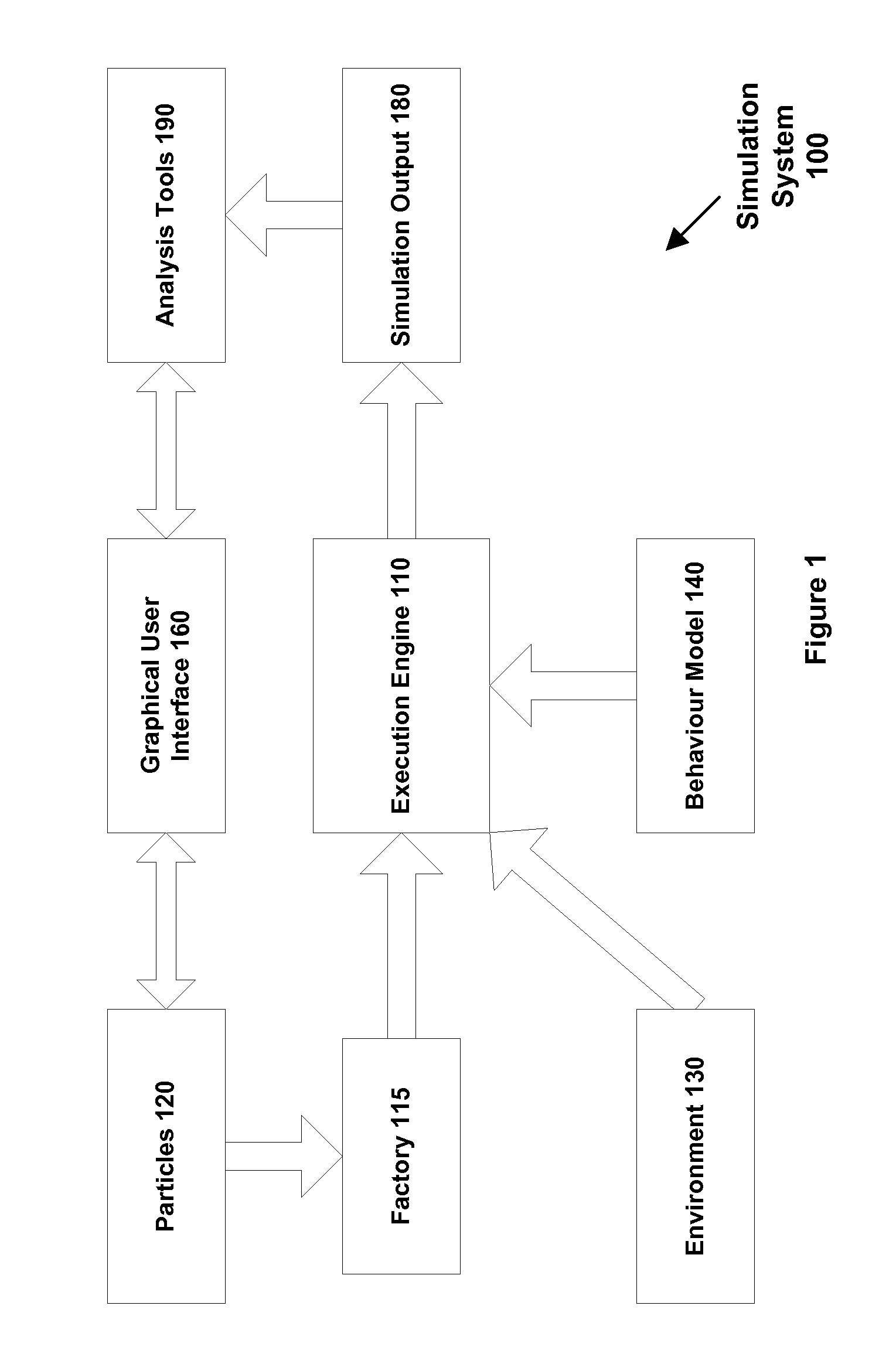
FIG. 1 is a schematic diagram showing the operation of a simulation system 100 in accordance with one embodiment of the invention. The simulation system is based on an execution engine 110 which takes as input:
a set of particles 120 with properties, such as shape, size, etc. The properties typically specify physical attributes of the particles, as well as parameters for use in the simulation, such as residence time. The system supports multiple different types of particles in a single simulation. Particles may have various shapes and may comprise one or more particle elements. In one embodiment, the particle elements are spheres, but other embodiments may use other geometric shapes based on other surface geometry functions such as lines, discs, triangles, other planar elements, torus, ellipsoids, hyperellipsoids, etc.
an environment 130 specifying the surroundings of the particles, including boundary conditions and physical geometry elements. The environment determines the presence o...
PUM
 Login to View More
 Abstract
Description
Claims
Application Information
 Login to View More