
Comprehension and intent-based content for augmented reality displays
a technology of augmented reality and content, applied in the field of comprehension and intent-based content for augmented reality displays, can solve the problems of not accurately presenting virtual imagery to the user, limited computational resources, and general mobility of near-eye display devices, and achieve the effects of enhancing user experience, diminishing the appearance of objects, and enhancing the appearance of objects
- Summary
- Abstract
- Description
- Claims
- Application Information
AI Technical Summary
Benefits of technology
Problems solved by technology
Method used
Image

Examples
Embodiment Construction
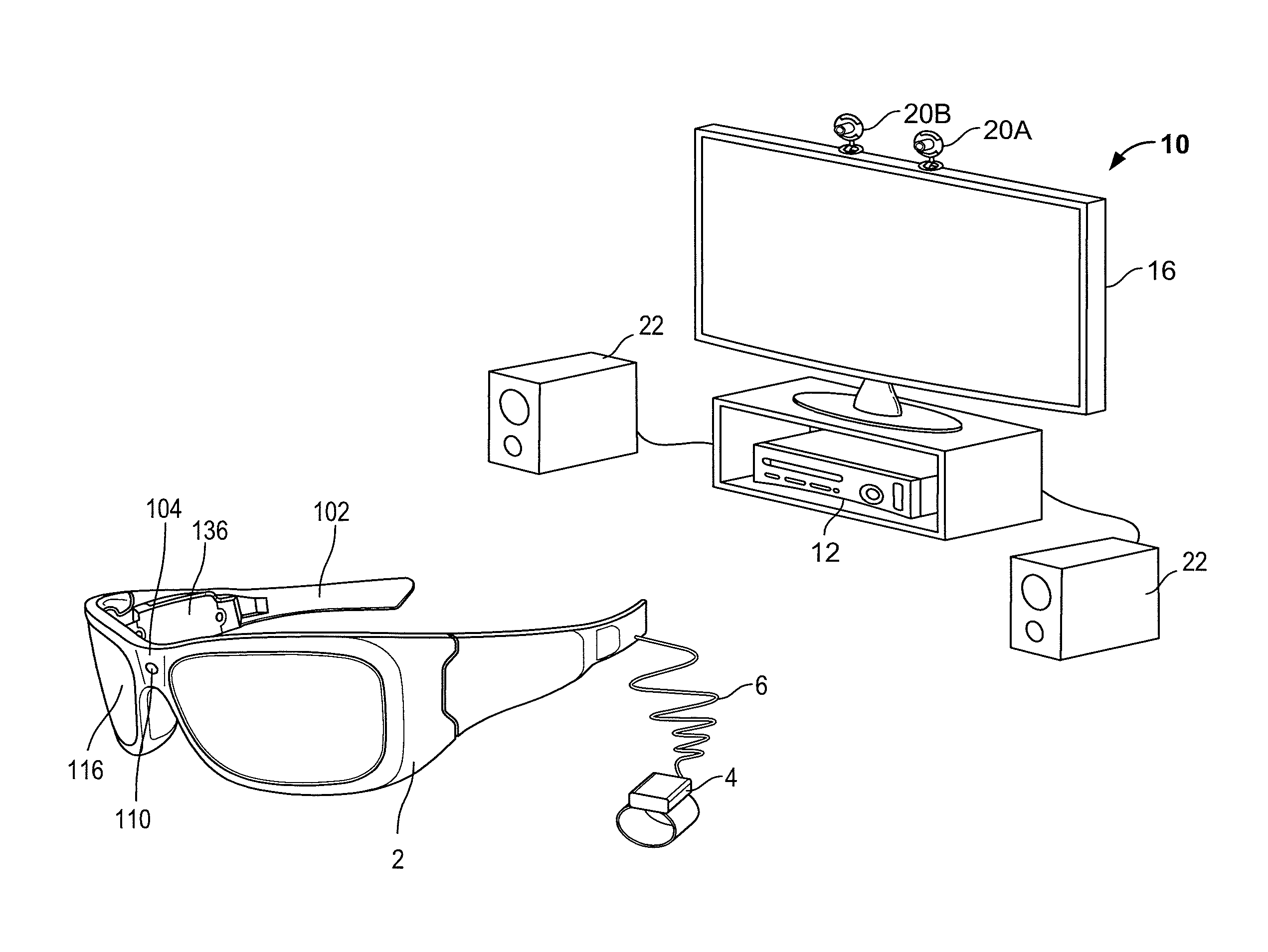
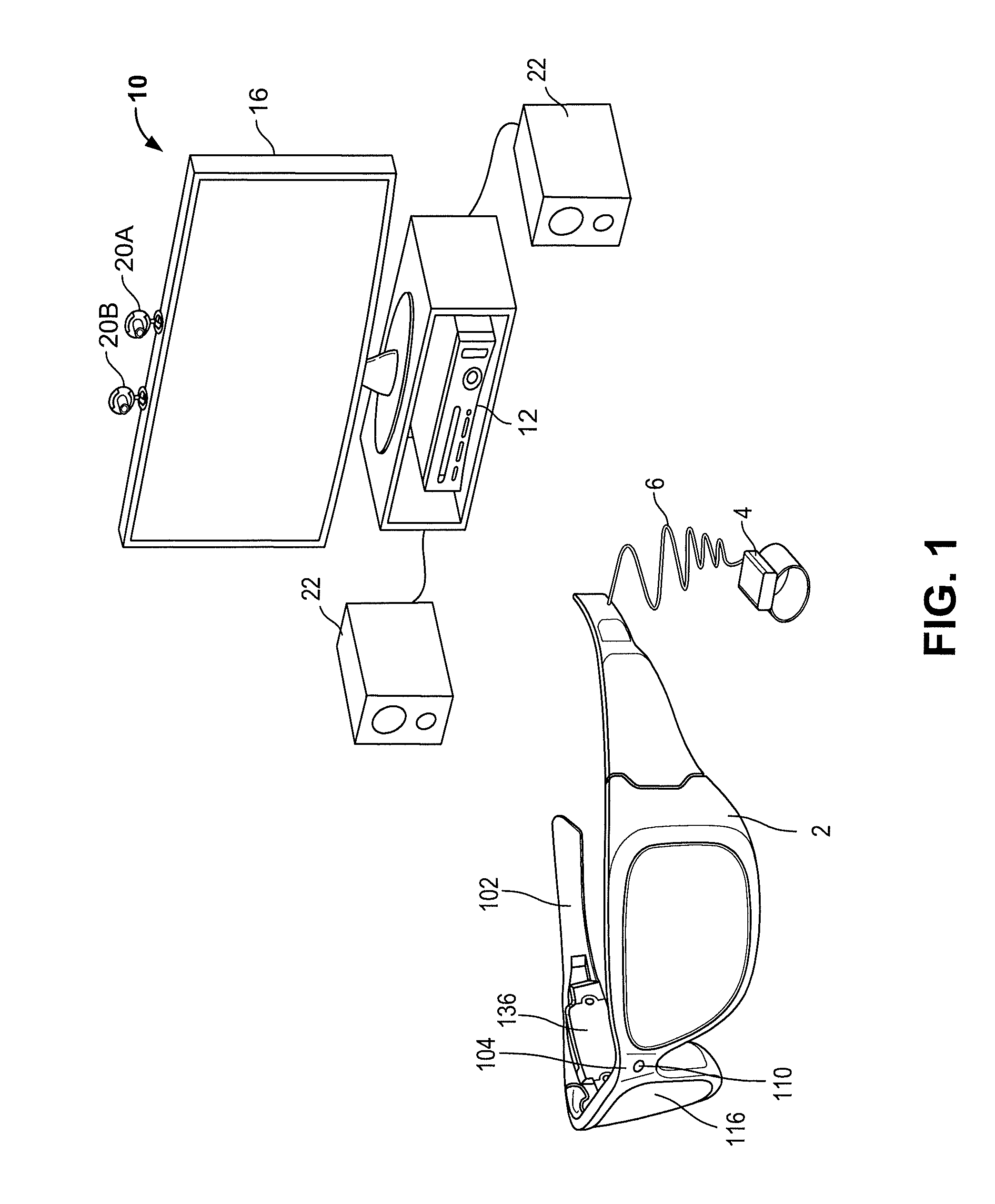
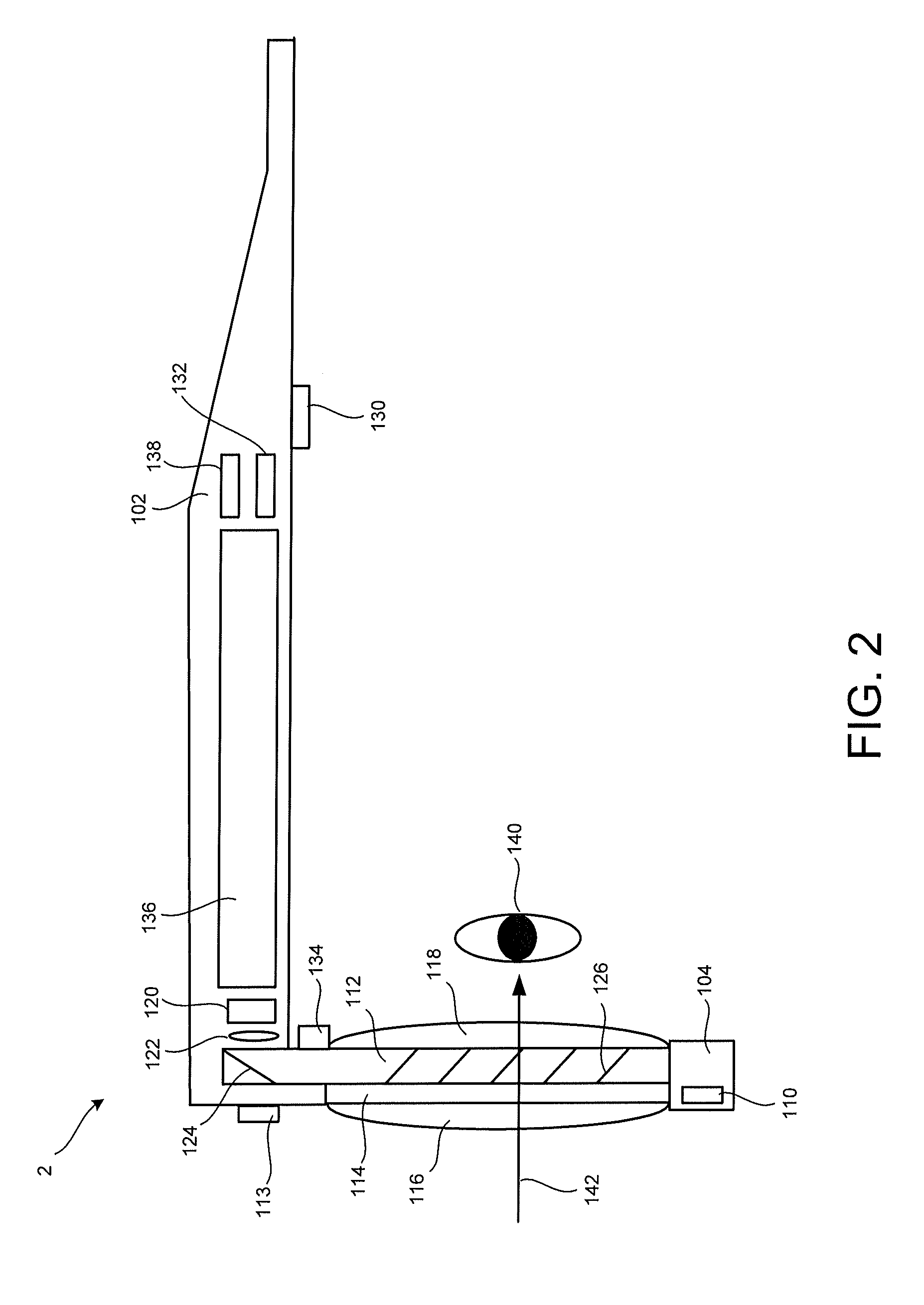
[0032]Technology is disclosed by which a user's experience when using a near eye display device is enhanced. A user looks at a scene via a near eye display device such as a head mounted display device. The user's field of view, which is a portion of the environment or space that the user may observe, is determined. Objects of possible interest within the field of view are also determined. The field of view may include a user's focal region, or what the user is actually focusing on within the field of view. The user's focal region is determined by tracking the position of the user's eyes in the field of view. The user's inferred or expressed intent to interact with one or more objects in the user's focal region is then determined. In one approach, the user's intent to interact with one or more objects in the user's focal region is determined by detecting the user's eye movement patterns in the user's focal region and determining the intensity of the user's gaze on one or more objects...
PUM
 Login to View More
 Abstract
Description
Claims
Application Information
 Login to View More