
Magnetic Lumbar Orthosis with Rigid Support
a lumbar orthosis and rigid technology, applied in the field of lumbar supports, can solve the problems of not providing enough back support, not providing a sufficiently rigid orthosis, and not providing magnetic therapy to patients with mild back pain
- Summary
- Abstract
- Description
- Claims
- Application Information
AI Technical Summary
Benefits of technology
Problems solved by technology
Method used
Image

Examples
Embodiment Construction
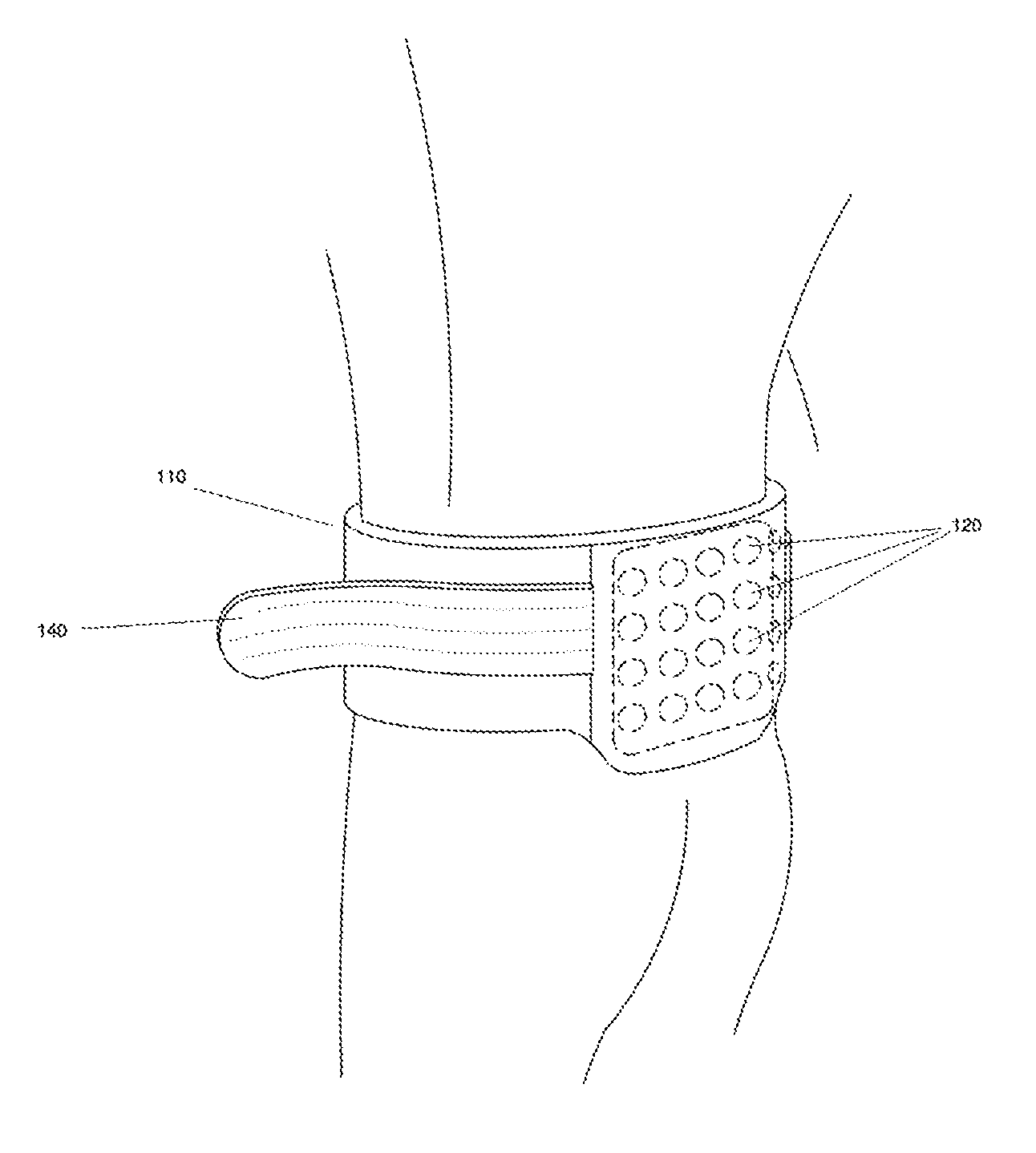
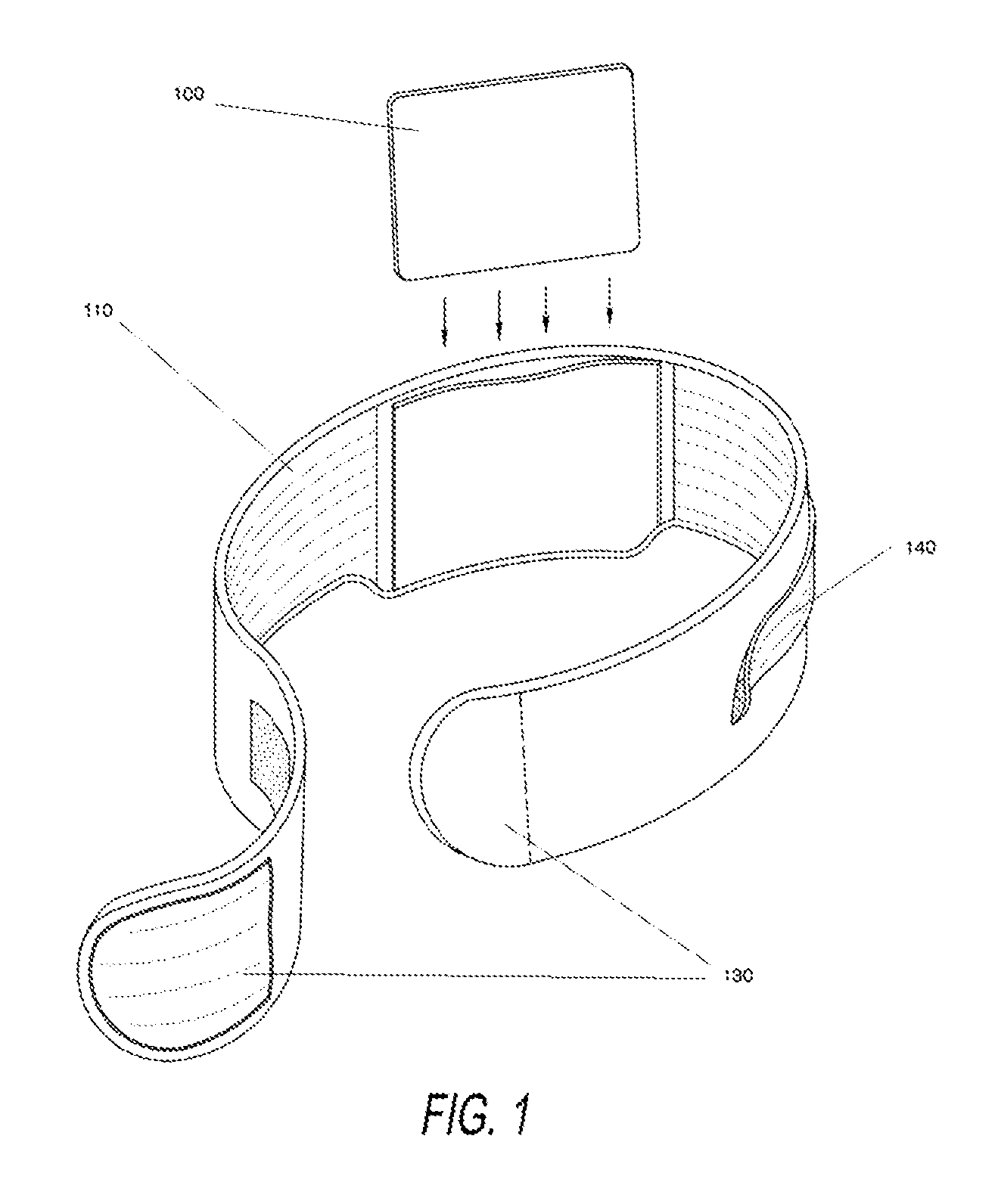
[0020]FIG. 1 shows a view of the preferred embodiment of the lumbar orthosis. Rigid backplate 100 is inserted into a pocket on belt 110. The rigid backplate 100 is preferably made of a thermoplastic material typically used for orthoses, as is well known in the art of orthotics. The material can be heated and molded to the patient's individual contours for greater comfort and better support.
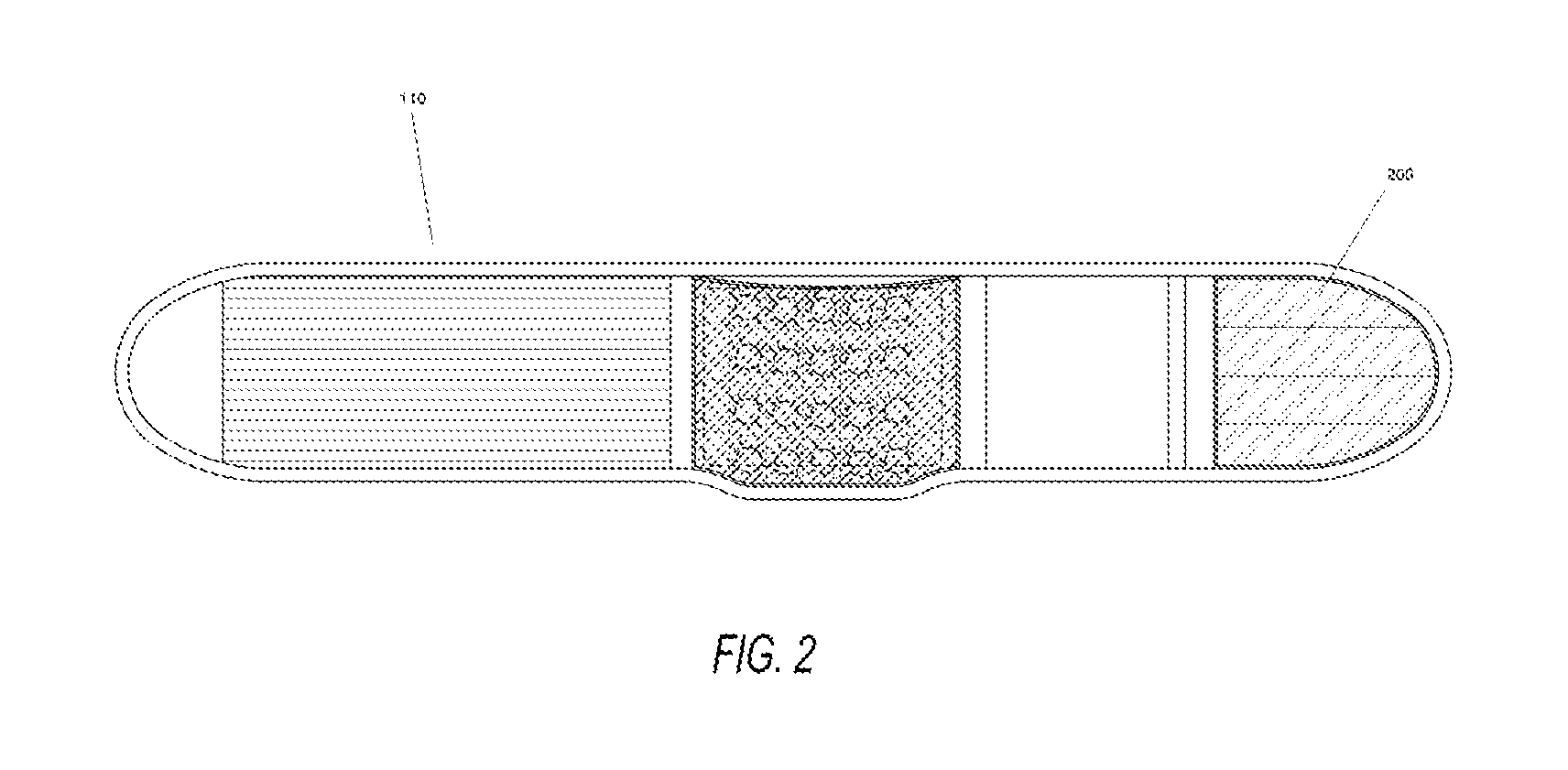
[0021]Belt 110 is fastened around the patient's waist by means of primary fastener 130. This primary fastener 130 is preferably a Velcro fastener to allow easy attachment and removal without too much bulk. Other types of fasteners may also be used. In the preferred embodiment of the invention, the belt is anywhere between 6″ and 8″ wide, and may be made of a heat-retention fabric to provide therapeutic heat to the injured area.
[0022]Supplementary fasteners 140 are located at the patient's sides. These fasteners allow the patient to tighten or loosen the orthosis without disturbing the primary fast...
PUM
 Login to View More
 Abstract
Description
Claims
Application Information
 Login to View More