
System for Detecting Rotation Angle of a Catheter in an X-ray Image
a technology of rotation angle and x-ray image, which is applied in the field of ultrasonic catheters, can solve the problems of confusing or misleading, impeded diagnosis of patient medical conditions, and unclear or misleading data displayed in the presentation of data
- Summary
- Abstract
- Description
- Claims
- Application Information
AI Technical Summary
Benefits of technology
Problems solved by technology
Method used
Image

Examples
Embodiment Construction
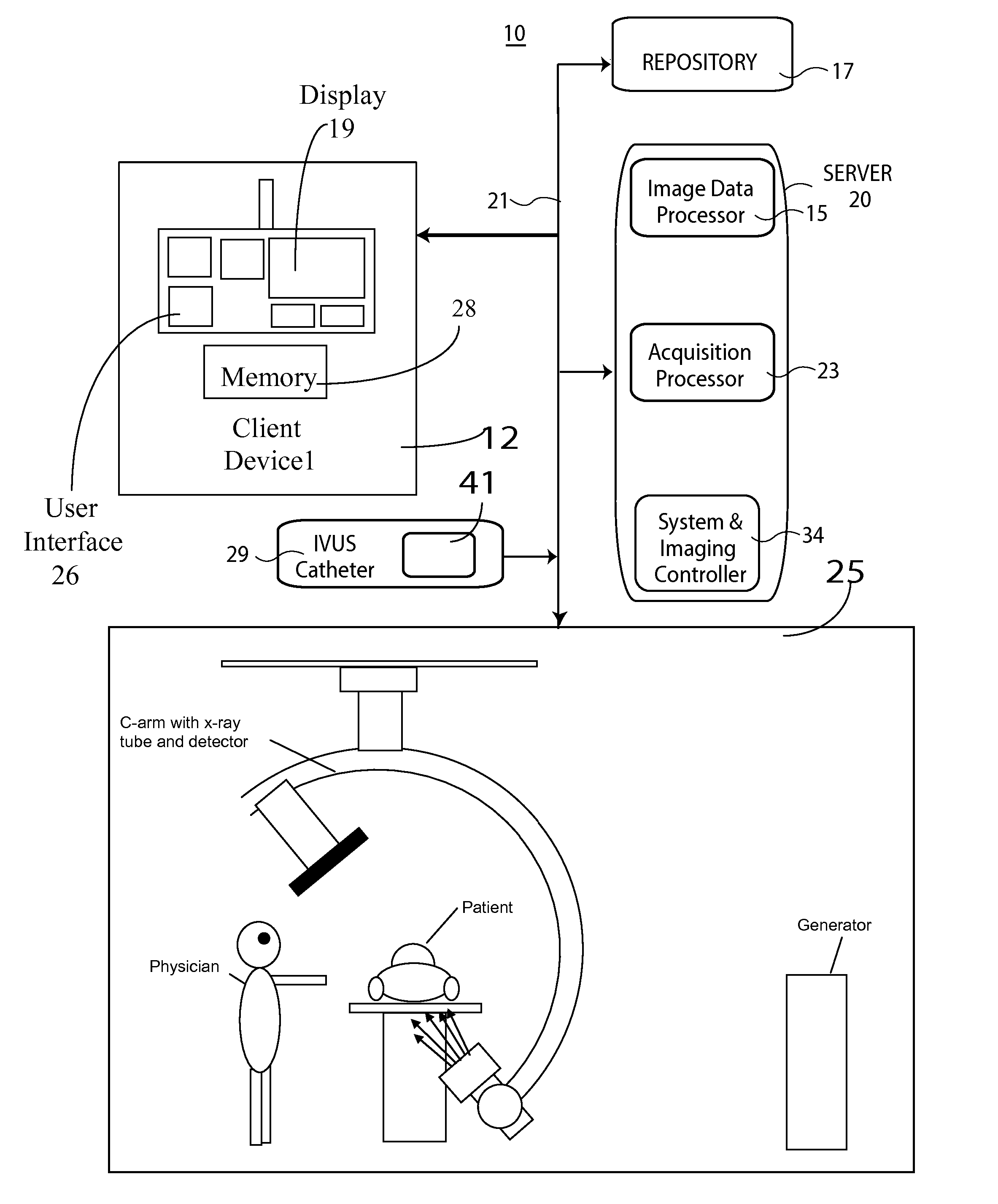
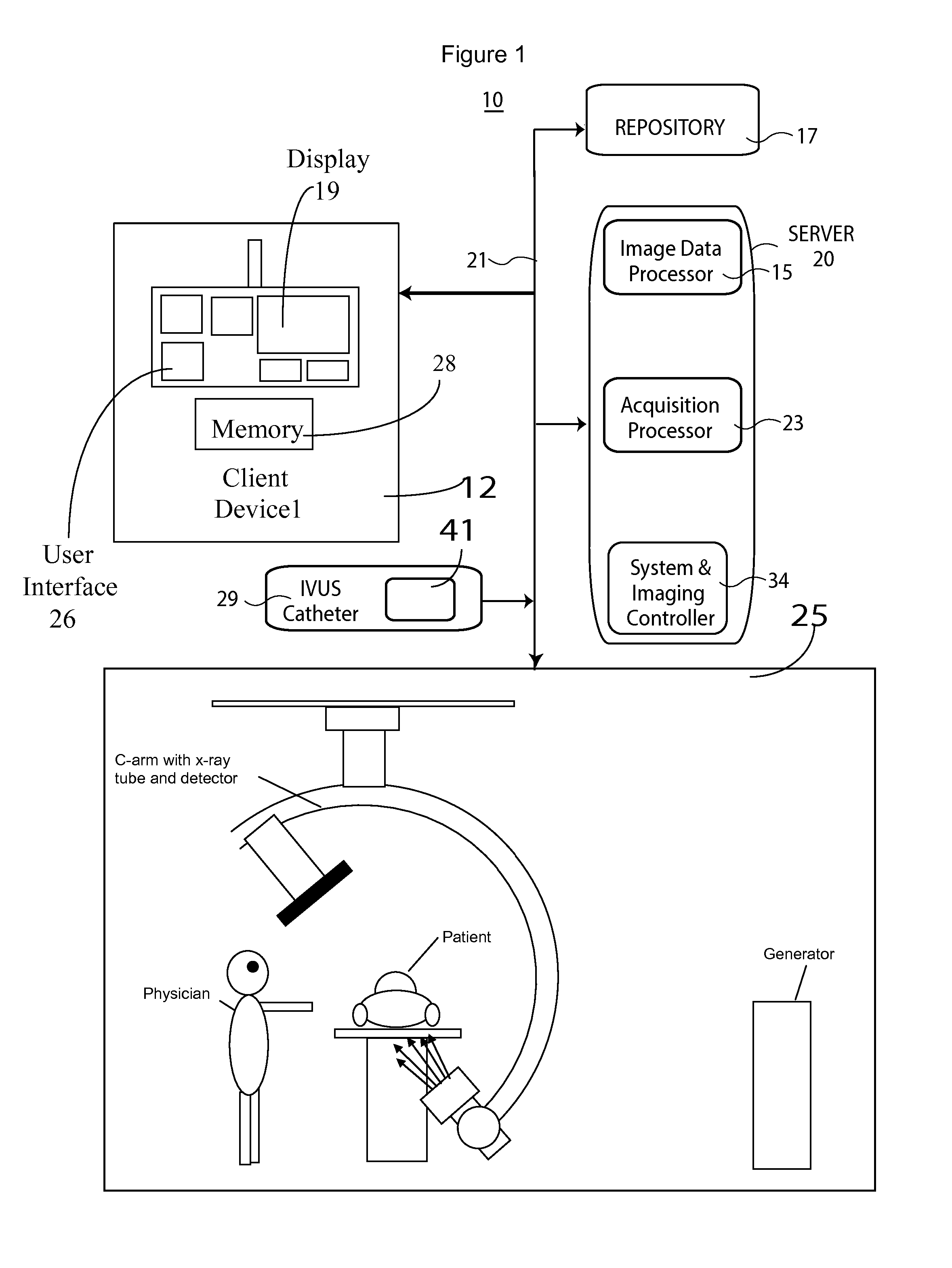
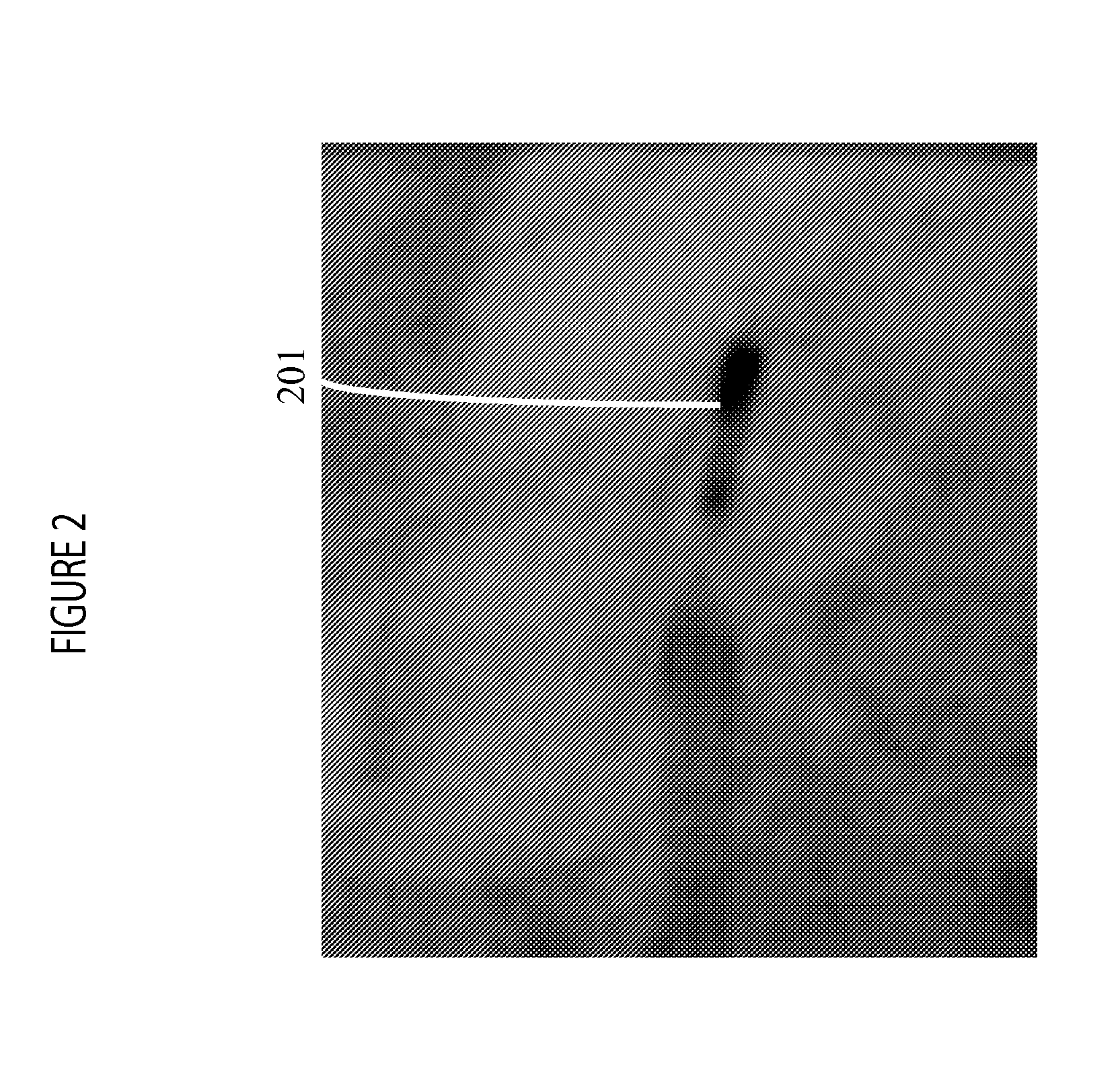
[0011]A system detects a rotation angle of a catheter to provide orientation information for aligning intravascular ultrasound (IVUS) images acquired by a catheter during advancement or retraction of the catheter in a vessel, for example. An IVUS catheter is shown in an X-ray image and is advantageously provided with a particular radio-opaque pattern enabling detection of catheter rotation angle with respect to an X-ray imaging source. The rotation angle information is of particular use in co-registering IVUS image data with correctly oriented patient anatomy in an angiographic X-ray or CT image, for example. FIG. 2 shows a known common IVUS catheter 201 that is symmetric in shape and appears on an X-ray image as a solid rod shape. Catheters may also have an asymmetric shape so that appearance of a catheter in an X-ray image varies with twist or rotation angle. The system advantageously provides a radio-opaque pattern enabling detection of a twist (rotation) angle in an X-ray image....
PUM
 Login to View More
 Abstract
Description
Claims
Application Information
 Login to View More