While the collectors and creators of nutritional substances generally obtain and / or generate information about the source, history, caloric content and / or
nutritional content of their products, they generally do not pass such information along to the users of their products.
There is generally no
consumer access to, and little
traceability of, information regarding the creation and / or origin, preservation,
processing, preparation, or consumption of nutritional substances.
While there has recently been greater attention by
consumer organizations, health organizations and the public to the
nutritional content of foods and beverages, the food and
beverage industry has been slow in responding to this attention.
While each of these
silo industries may be able to maintain or increase the
nutritional content of the foods and beverages they
handle, each
silo industry has only limited information and control of the nutritional substances they receive, and the nutritional substances they pass along.
However, the producer of the ready-to-eat dinner, in the prior example, has very little information to share other than possibly the source of the elements of the ready-to-eat dinner and its
processing steps in preparing the dinner.
Generally, the producer of the ready-to-eat dinner does not know the nutritional content and
organoleptic state of the product after it has been reheated or cooked by the
consumer.
The preparation of the nutritional substance for consumption can also degrade the nutritional content of nutritional substances.
For example, in the
milk supply chain, at least 10% of the milk produced is wasted due to safety margins included in product expiration dates.
While grocery stores, restaurants, and all those who process and sell food and beverages may obtain some information from current nutritional substance tracking systems, such as labels, these current systems can provide only limited information.
Nutritional substances collectors and / or producers, such as growers (plants), ranchers (animals) or synthesizer (synthetic compounds), routinely create and collect information about their products, however, that information is generally not accessible by their customers.
Even if such producers wished to provide such information to their customers, there is no current method of labeling, encoding or identifying each particular product to provide such information (even though all plants, animals and in general, nutritional substances have a natural
fingerprint).
While there are limited methods and systems available, they are excessively costly,
time consuming, and do not trace, or provide access to, the nutritional substance
organoleptic and / or nutritional state across the product's lifecycle.
While they have some knowledge of the nutritional substances they purchase, and make such selections to meet the needs of the consumers, they generally do not transmit that information along to consumers, nor change the way they transform the nutritional substances based on the history or current condition of the nutritional substances they receive for transformation.
However, such feedback is disorganized and haphazard and can only be traced generally to the actual nutritional substances being commented on.
While grocery stores, restaurants, and all those who process and sell food and beverages may obtain some information from current nutritional substance tracking systems, such as labels, these current systems can provide only limited information.
While they have some knowledge of the nutritional substances they purchase, and make such selections to meet the needs of the consumers, they generally do not transmit that information along to consumers, nor change the way they transform the nutritional substances based on the history or current condition of the nutritional substances they receive for transformation.
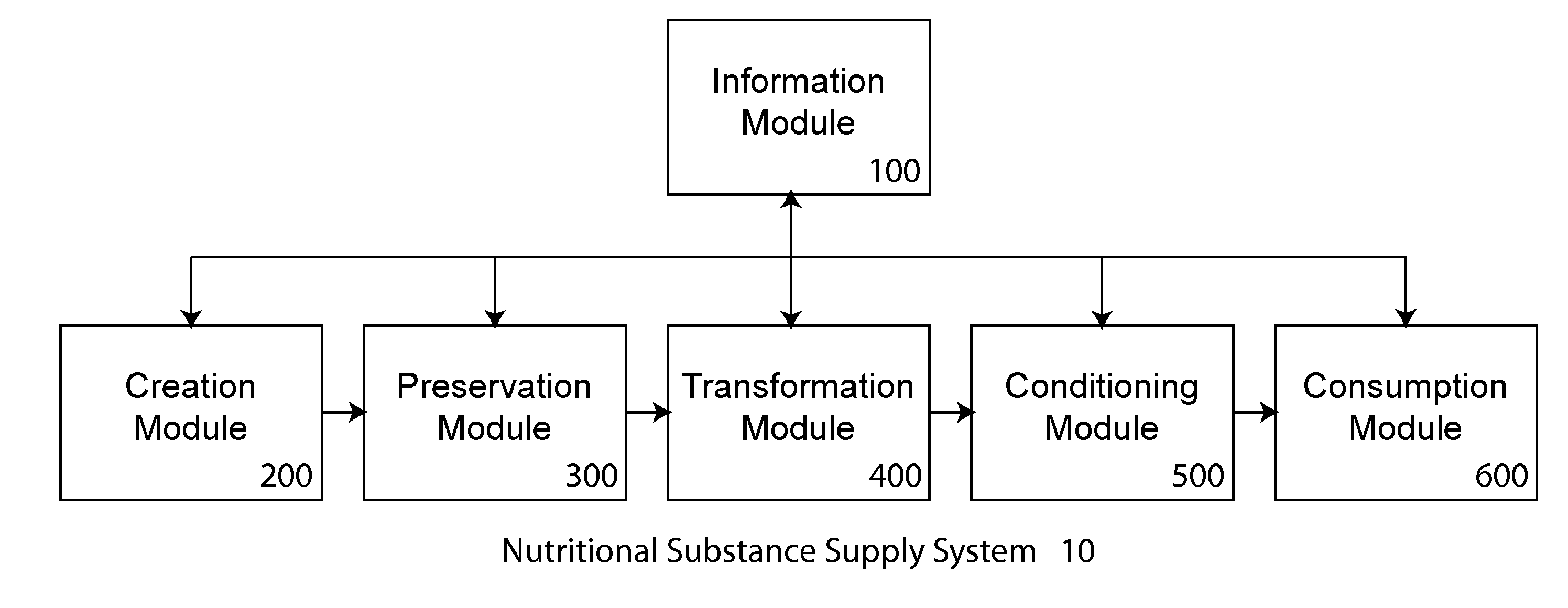
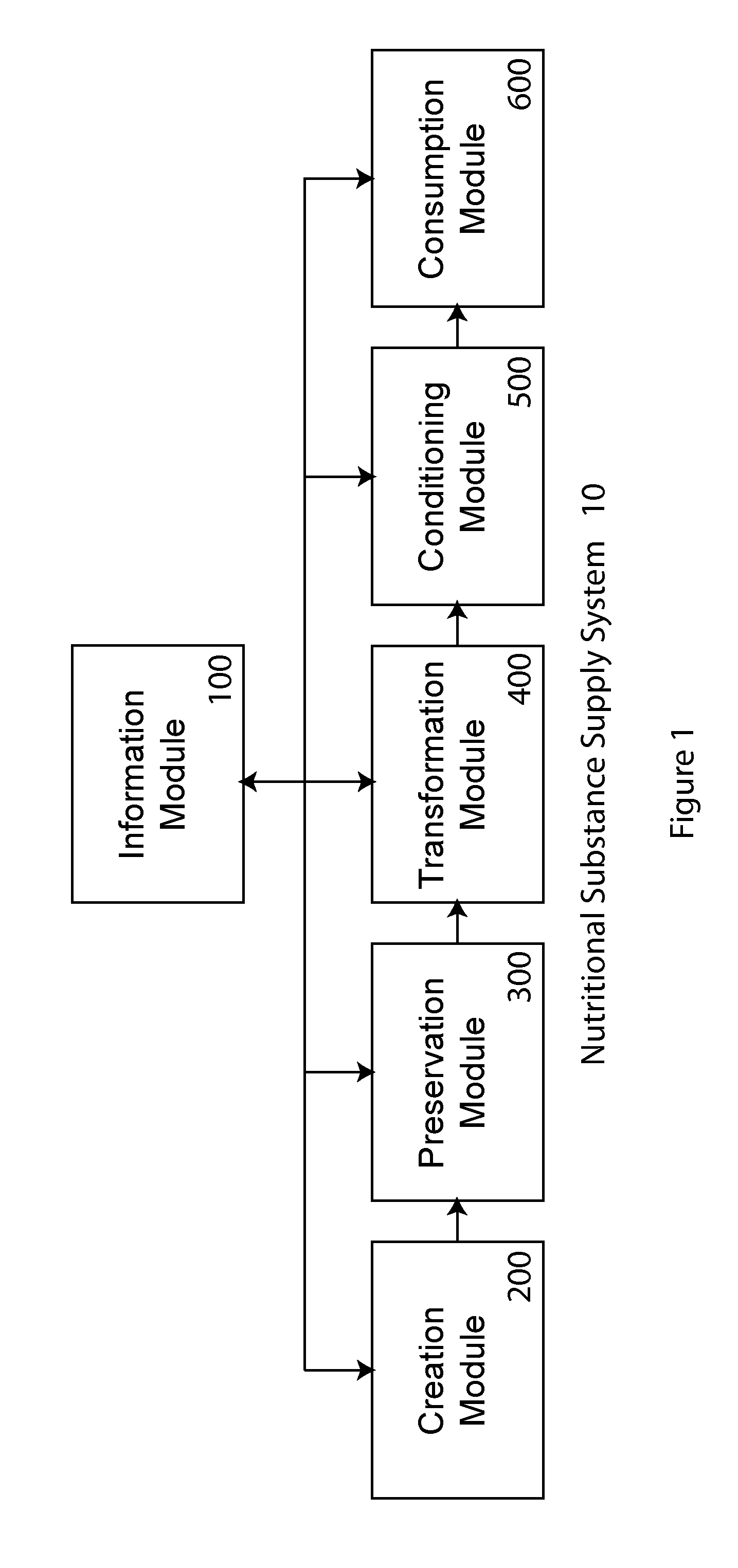
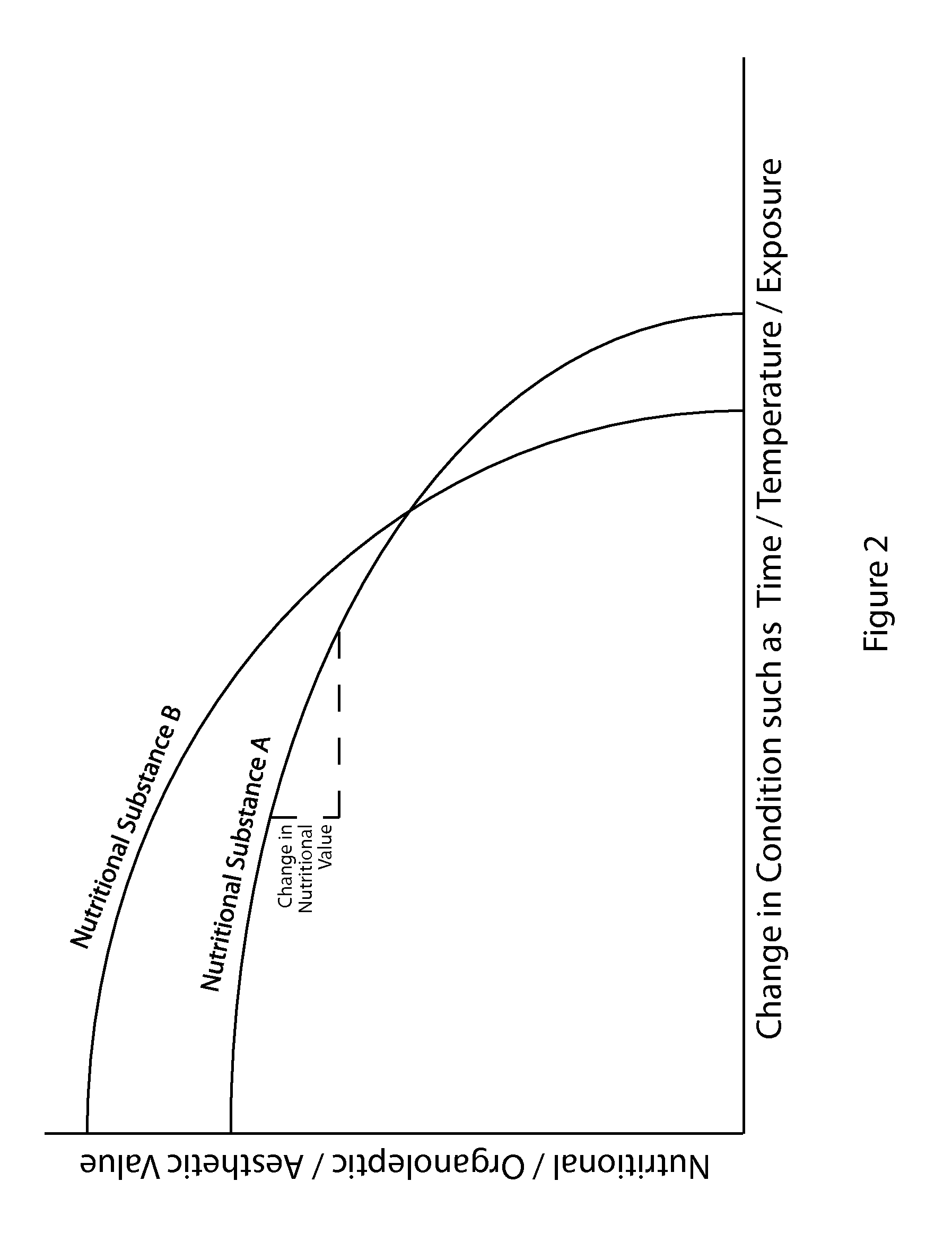
An important issue in the creation, preservation, transformation, conditioning, and consumption of nutritional substances are the changes that occur in nutritional substances due to a variety of internal and external factors.
Because nutritional substances are composed of biological, organic, and / or chemical compounds, they are generally subject to degradation.
This degradation generally reduces the nutritional,
organoleptic, and / or aesthetic values of nutritional substances.
However, being able to consume nutritional substances at the farm, at the slaughterhouse, at the
fishery, or at the
food processing plant is at least inconvenient, if not impossible.


 Login to View More
  Login to View More