
Frictional rope control device with on the fly friction adjustment
a technology of friction adjustment and control device, which is applied in the direction of life-saving devices and building rescue, etc., can solve the problem of insufficient total friction of the rappel device, and achieve the effect of safe us
- Summary
- Abstract
- Description
- Claims
- Application Information
AI Technical Summary
Benefits of technology
Problems solved by technology
Method used
Image

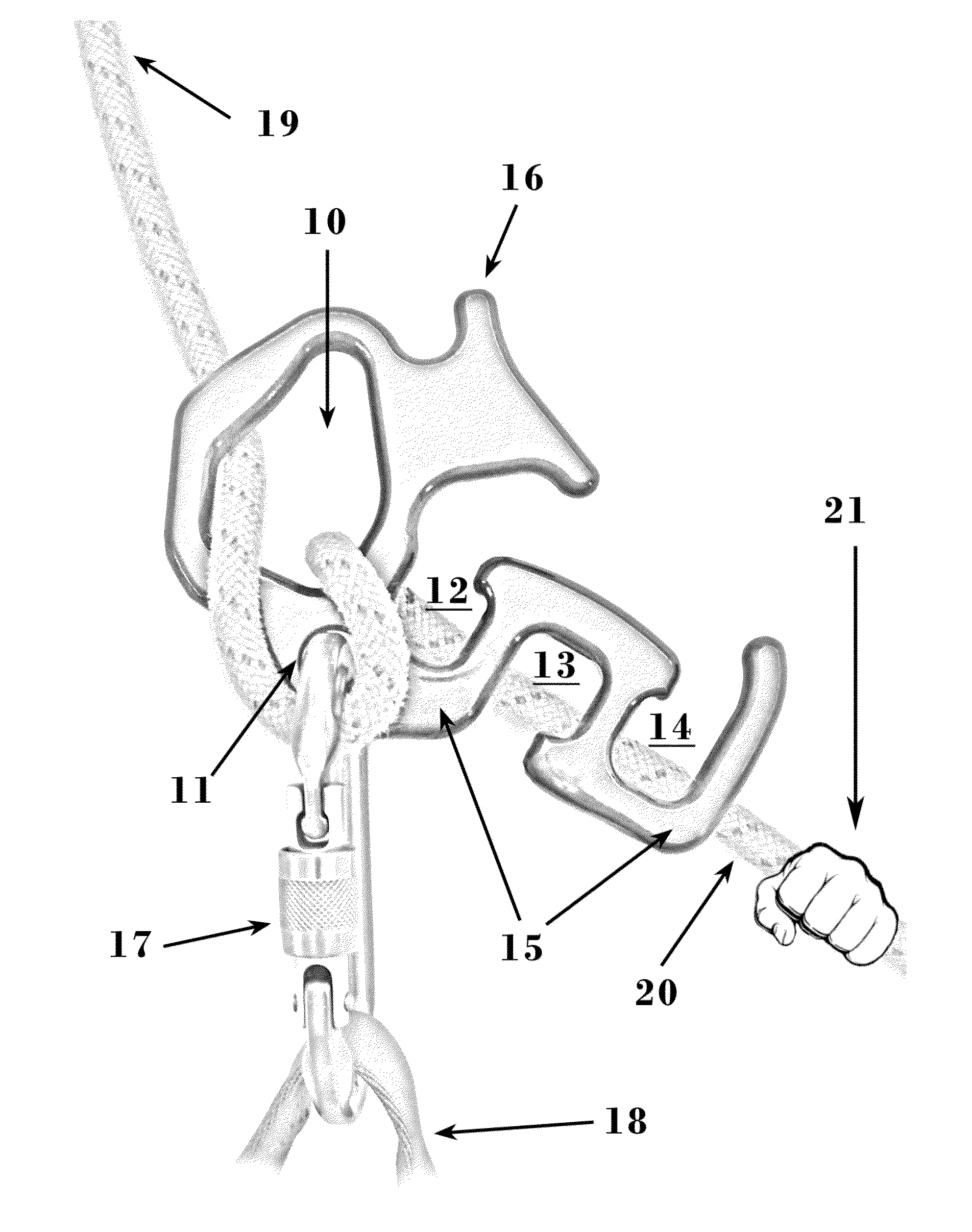
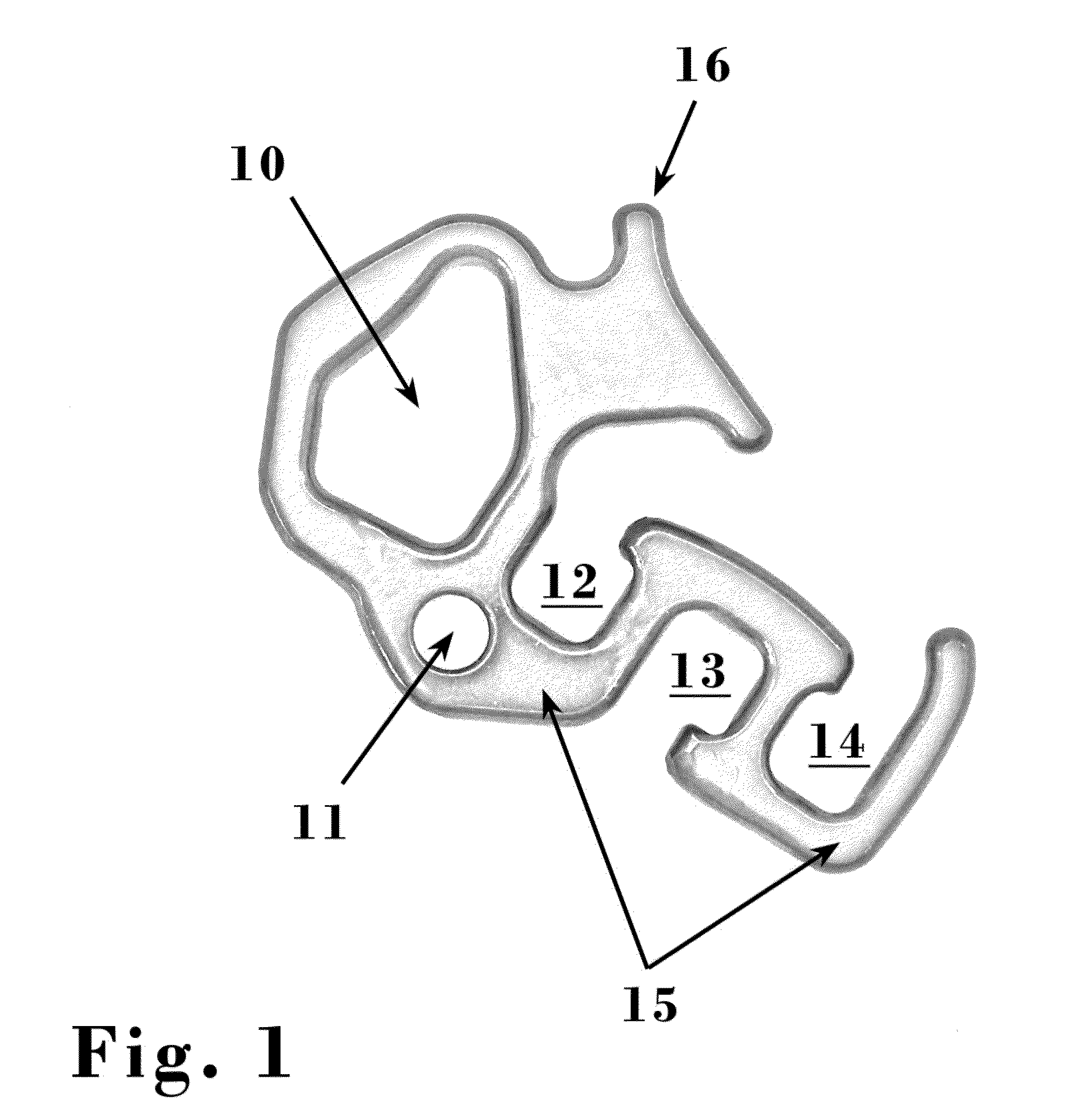
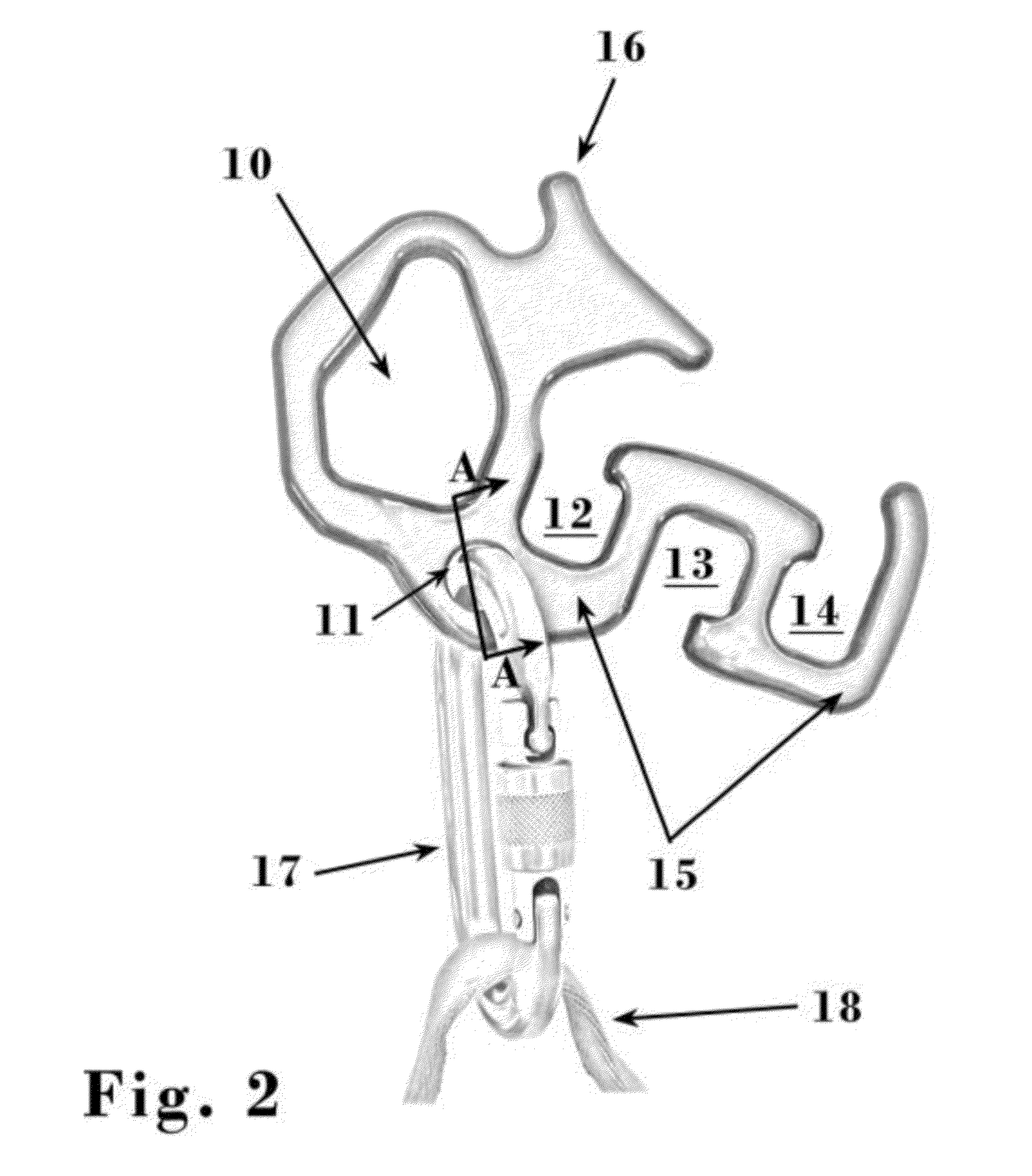
Examples
Embodiment Construction
[0031]It is advantageous to define several terms before describing the invention. It should be appreciated that the following definitions are used throughout the application.
[0032]Where the definition of terms departs from the commonly used meaning of the term, applicant intends to utilize the definitions provided below, unless specifically indicated.
DEFINITIONS
[0033]For the purposes of the present invention, directional terms such as “up”, “down”, “top”, “bottom”, “above”, “below”, “left”, “right”, “horizontal”, “vertical”, etc. are merely used for convenience in describing the various embodiments of the present invention. The embodiments of the present invention may be oriented in various ways.
[0034]For the purposes of the present invention, the term “rappel device” refers to a device which allows rope to be directed through the device to frictionally control movement of a load relative to an anchor point which may take the form of a sliding descent down the rope, lowering a load ...
PUM
 Login to View More
 Abstract
Description
Claims
Application Information
 Login to View More