
Methods and systems of evaluating a risk of lung cancer
a risk and cancer technology, applied in the field of cancer diagnosis, can solve the problems of advanced lung cancer, unnecessary testing and invasive procedures, and low survival rate of lung cancer
- Summary
- Abstract
- Description
- Claims
- Application Information
AI Technical Summary
Benefits of technology
Problems solved by technology
Method used
Image

Examples
Embodiment Construction
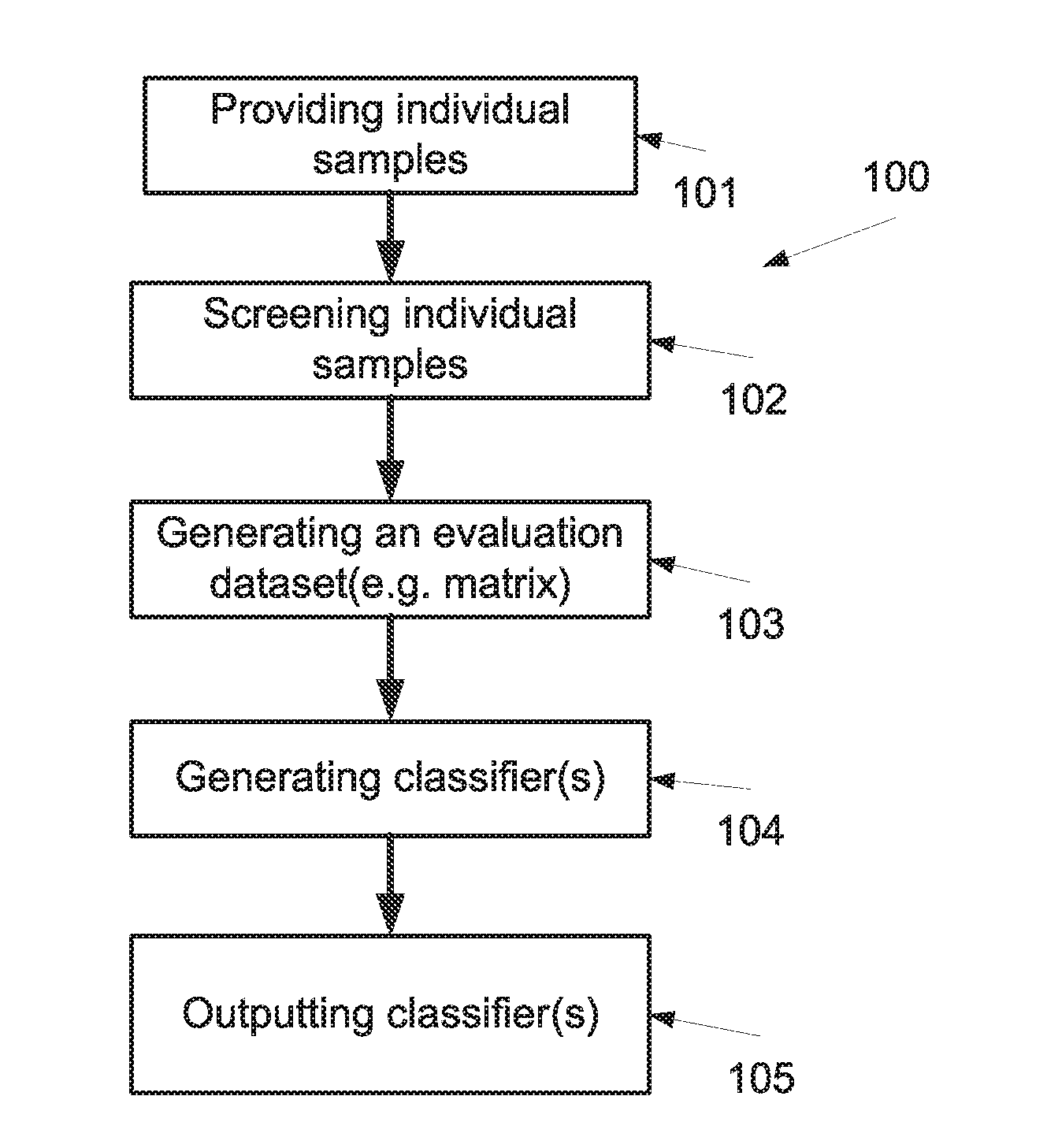
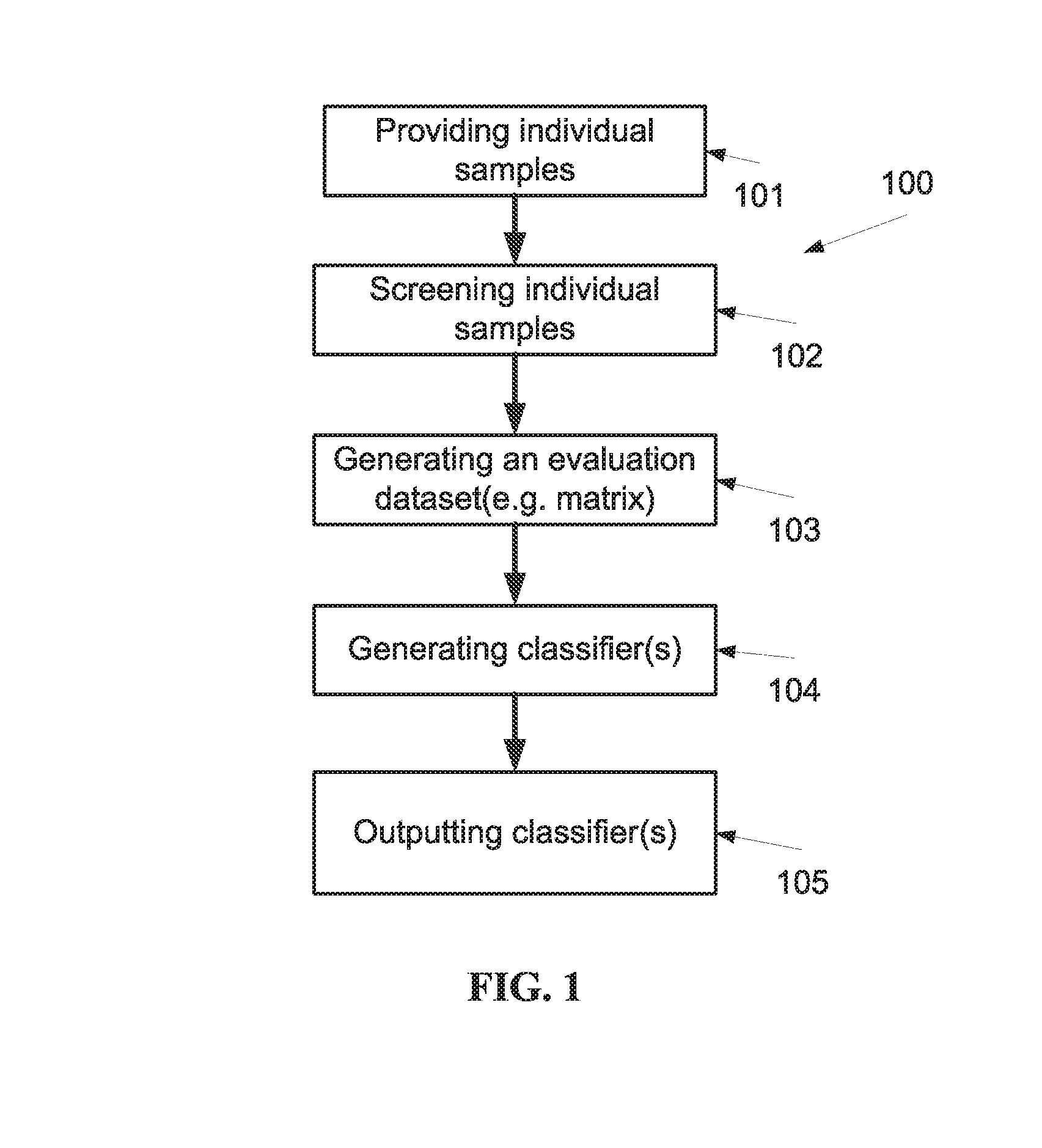
[0009]According to some embodiments of the present invention, there is provided a computerized method of evaluating lung cancer risk. The method comprises generating a set of features comprising a plurality of current blood test results from a blood collected from a target individual, providing at least one classifier generated according to an analysis of a plurality of respective historical blood test results of each of another of a plurality of sampled individuals, and evaluating, using a processor, a lung cancer risk of the target individual by classifying the set of features using the at least one classifier. Each of the plurality of historical and current blood test results comprises results of at least one the following blood tests: white blood cells blood test results including at least one of neutrophils count, basophils count, eosinophils count, lymphocytes count, monocytes count, WBC count, neutrophils percentage, basophils percentage, eosinophils percentage, lymphocytes p...
PUM
 Login to View More
 Abstract
Description
Claims
Application Information
 Login to View More