
TRI-AGONIST FOR THE GLu, GLP-1 AND NPY2 RECEPTORS
a technology of glucagon receptor and glucagon, which is applied in the field of peptide agonists, can solve the problems of public health threat, cardiovascular disease and stroke risk,
- Summary
- Abstract
- Description
- Claims
- Application Information
AI Technical Summary
Benefits of technology
Problems solved by technology
Method used
Image

Examples
Embodiment Construction
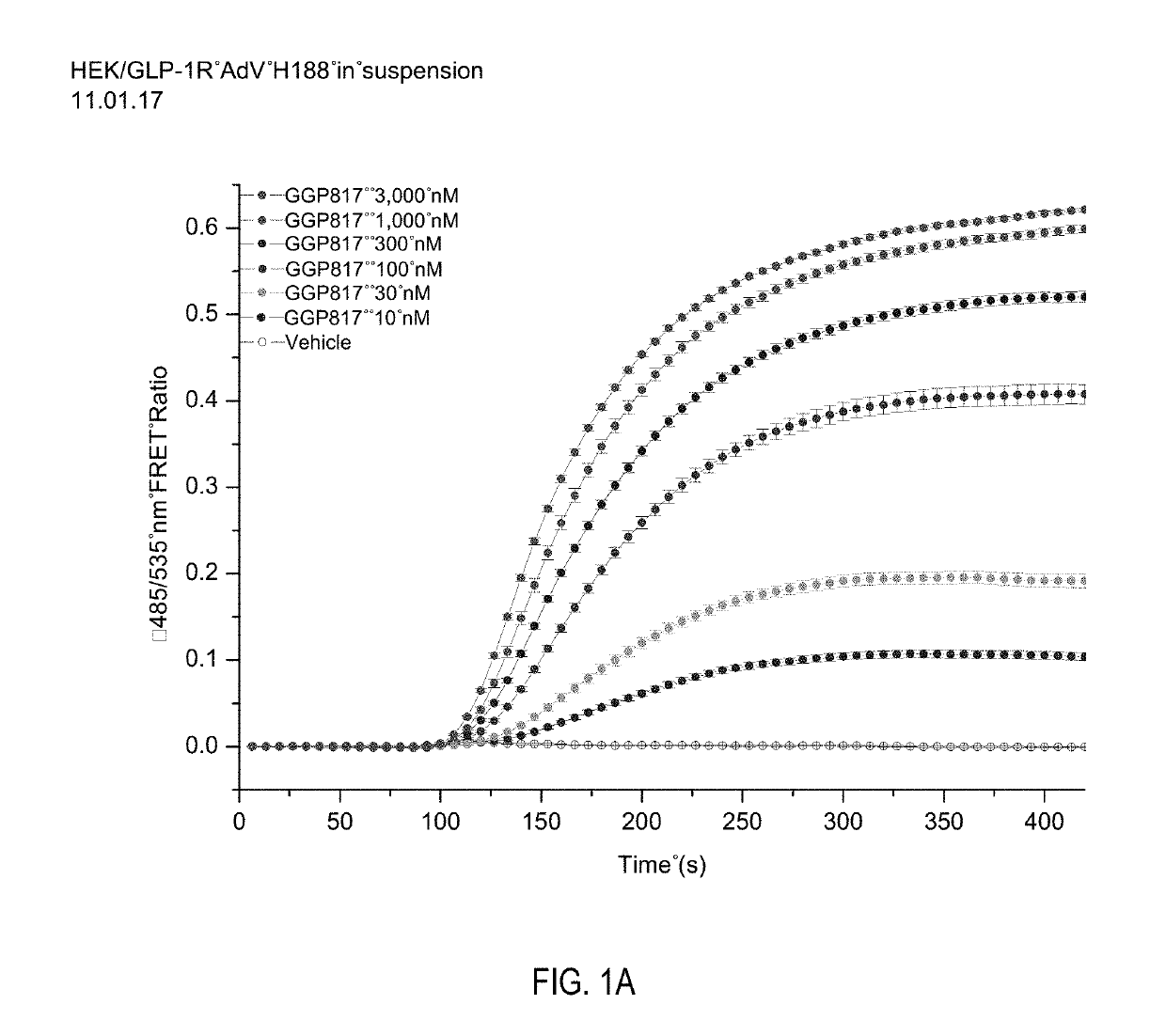
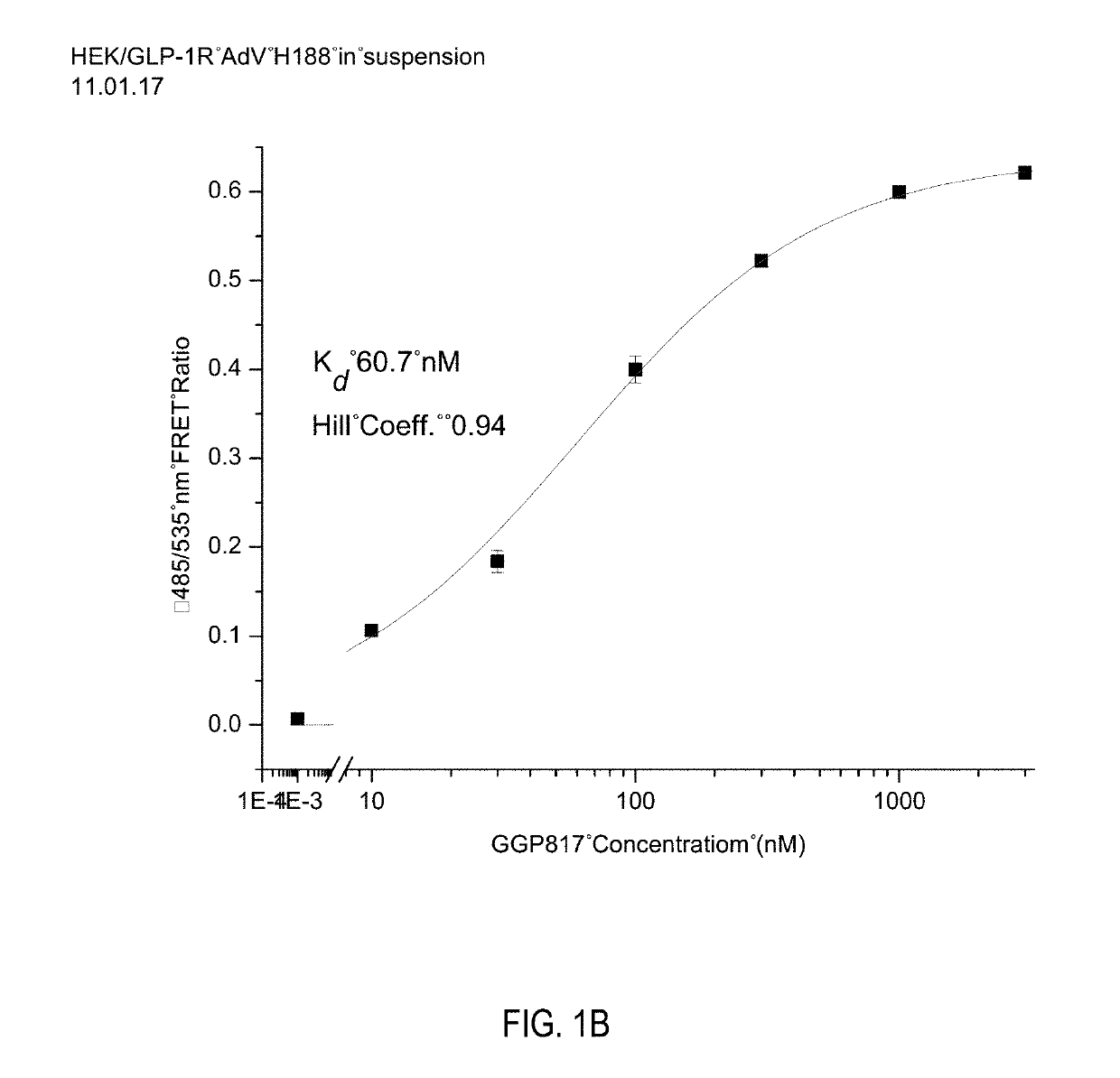
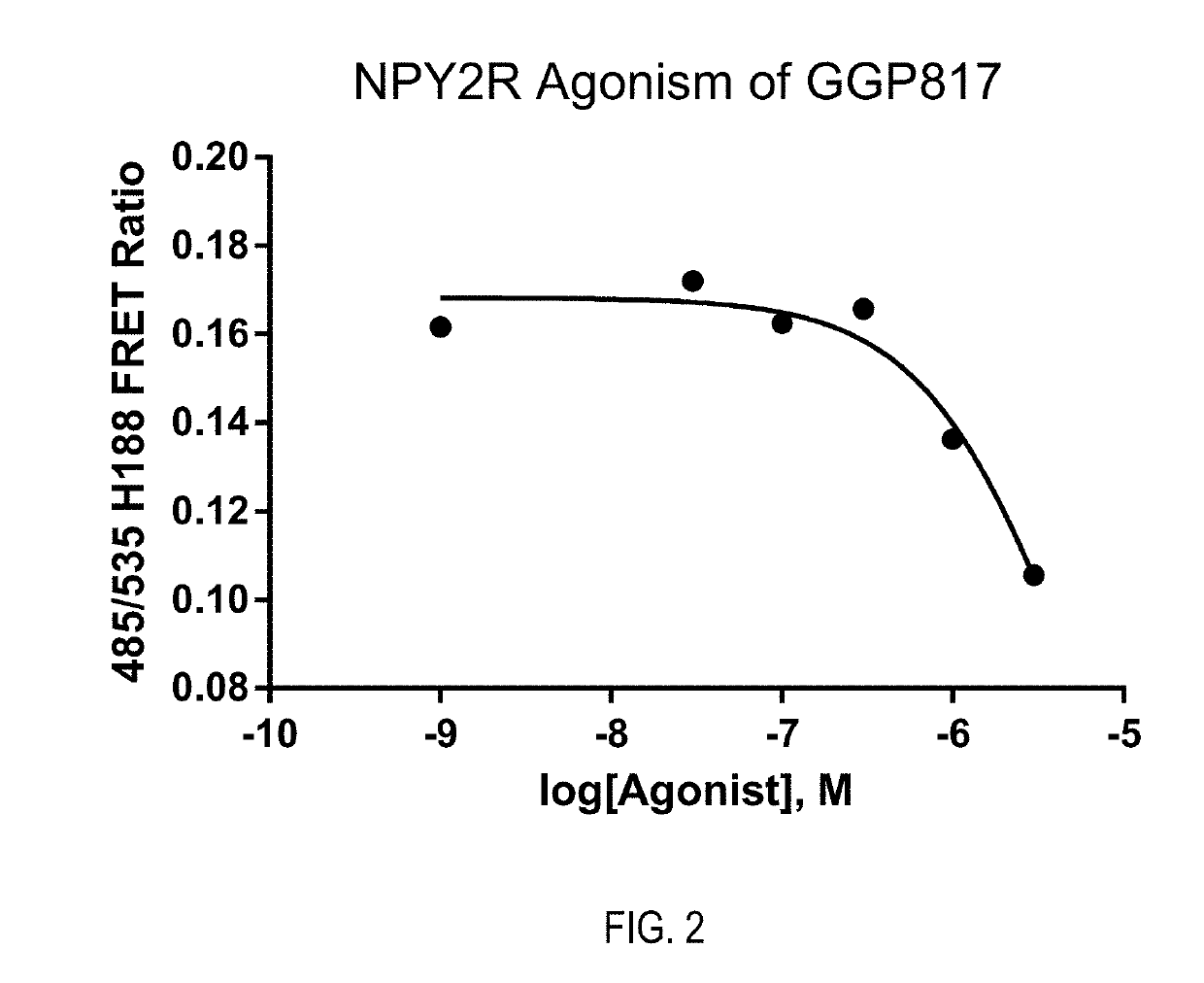
[0037]Referring to the figures, wherein like numeral refer to like parts throughout, the present invention comprises a synthetic peptide that can simultaneously target the glucagon receptor (GluR), the glucagon-like peptide 1 receptor (GLP1-R) and neuropeptide Y2 receptor (NPY2-R). The peptide sequence may comprise
(SEQ. ID NO: 1)HSQGTFTSDYSKYLDSRRAQDFVQWLMNTRHYLNLVTRQRY-NH2,
referred to as GGP817. GGP817 was designed from the naturally occurring native substrates for the glucagon receptor (GluR), the glucagon-like peptide 1 receptor (GLP1-R) and neuropeptide Y2 receptor (NPY2-R), e.g., PYY(3-36), IKPEAPGEDASPEELNRYYASLRHYLNLVTRQRY-NH2 (SEQ. ID. NO: 2), glucagon, HSQGTFTSDYSKYLDSRRAQDFVQWLMNT (SEQ. ID NO: 3) and GLP-1, HAEGTFTSDVSSYLEGQAAKEFIAWLVKG-NH2 (SEQ. ID NO: 4). GGP817 is a novel synthetic hybrid peptide that contains first sequence representing full-length glucagon to which a 12 amino acid C-terminal fragment of PYY(3-36) is fused at the C-terminal of the glucagon sequence.
[00...
PUM
| Property | Measurement | Unit |
|---|---|---|
| width | aaaaa | aaaaa |
| energy | aaaaa | aaaaa |
| concentration | aaaaa | aaaaa |
Abstract
Description
Claims
Application Information
 Login to View More